Japan's weather agency has cancelled a mistakenly issued warning of a catastrophic magnitude 9.9 earthquake, after a computer error caused it to drastically overestimate the size of a tremor off the country's north.
The Japan Meteorological Agency issued the warning for a wide area stretching from northern to central Japan at 12:40 on Friday, reporting an earthquake in the Chishima Islands, also known as the Kuril Islands, off Hokkaido.
The alert triggered temporary disruption to public transport in parts of the country before the agency determined that its computer system had erroneously calculated the quake's focus, producing the wildly inflated magnitude reading.
A near-maximum reading
A magnitude 9.9 earthquake would rank among the most powerful ever recorded – stronger even than the magnitude 9.0 Great East Japan Earthquake of March 2011, which killed nearly 20,000 people and triggered the Fukushima nuclear disaster.
The false reading therefore carried enormous weight in a country where earthquake early warnings are taken with the utmost seriousness, and where memories of 2011 remain raw.
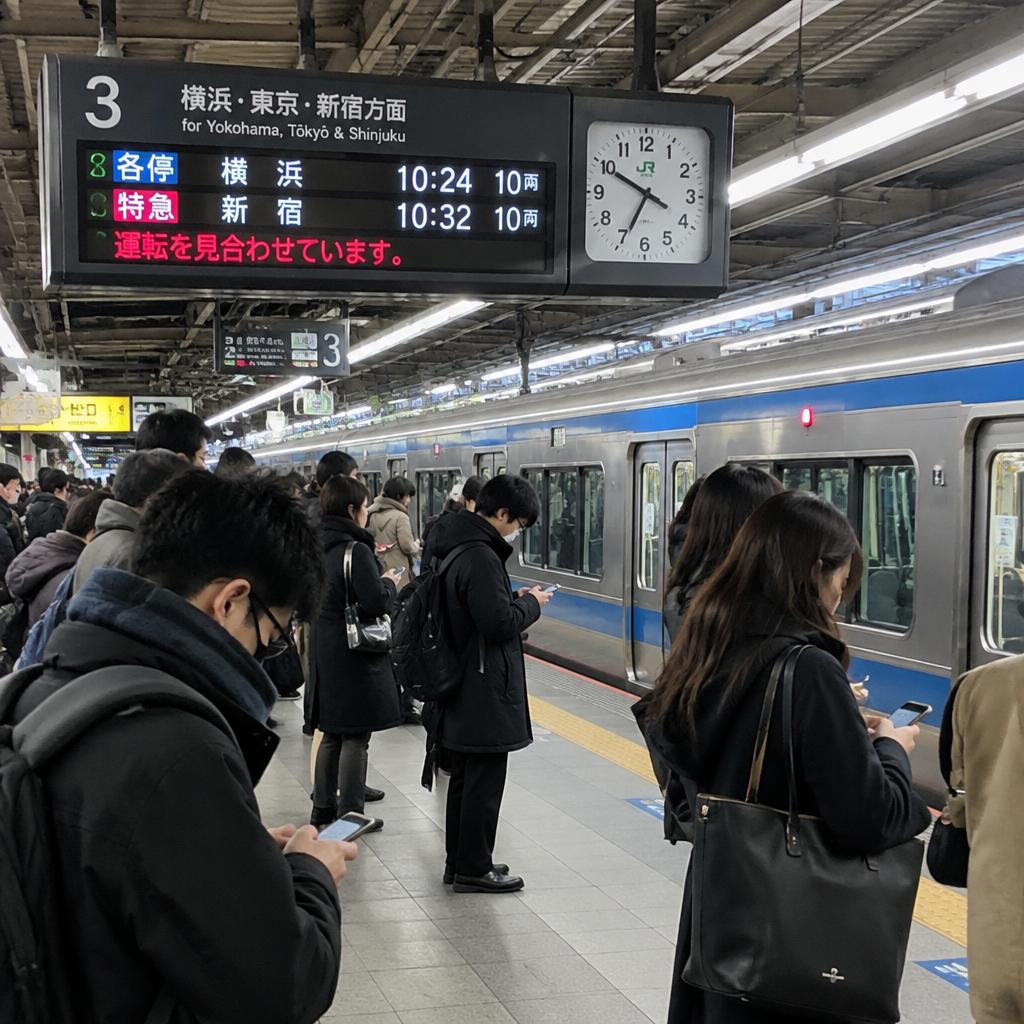
Train operators halted services as a precaution when the alert was issued, and passengers across northern and central Japan experienced delays and cancellations while the situation was assessed.
System error blamed
The JMA said its computer system had erroneously determined the earthquake's focus – the point within the earth where the rupture begins – leading to the magnitude being overestimated.
The agency moved to cancel the warning once the error was identified, and services gradually resumed. There were no reports of damage or injuries from the actual tremor, which was far smaller than the alert suggested.
Japan's early warning system is among the most sophisticated in the world, designed to detect the first fast-moving waves of an earthquake and issue alerts before the slower, more destructive waves arrive. Even a few seconds of warning can allow trains to brake, elevators to stop and people to take cover.
But the system depends on rapid automated analysis of seismic data, and false alarms – while rare – are an acknowledged risk. A warning of this scale, however, is highly unusual.
Public reaction
The false alert caused alarm among residents who received it on their phones and through broadcasters. In a nation that conducts regular disaster drills and where schoolchildren are taught from an early age how to respond to earthquakes, a warning of a near-record magnitude would have been understood by many as a potential national emergency.
Officials moved quickly to reassure the public once the mistake was confirmed, and the agency is expected to review how the erroneous reading was generated and broadcast.
The incident comes at a sensitive time for the agency, which faces constant pressure to maintain public trust in a warning system that must balance speed against accuracy. Issuing warnings too slowly costs lives in a real disaster; issuing false ones risks complacency.
Seismologists note that the Kuril Islands region is genuinely one of the most seismically active in the world, capable of producing very large earthquakes. Friday's alert was false – but the underlying hazard it pointed to is real, and Japanese authorities are likely to treat the episode as a serious test of their systems rather than a harmless glitch.