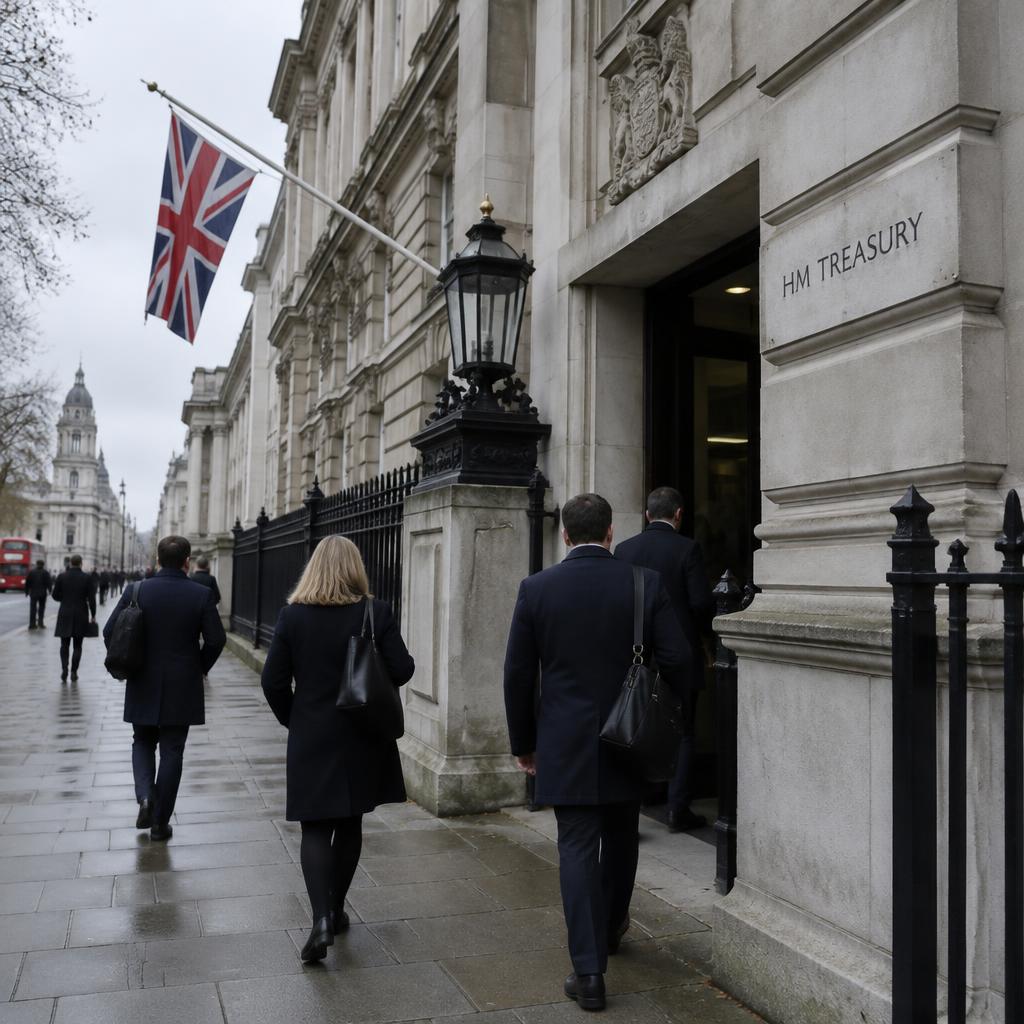
John Healey is poised to raise taxes on Britain's banks in his first Budget later this month, in a move that has already knocked billions off the sector's value and set up a confrontation with the City.
Bank shares fell on Friday as reports of the plan circulated, with investors braced for an increase in the bank corporation tax surcharge or the bank levy — or both — as the Chancellor hunts for revenue to repair the public finances.
The Treasury has declined to comment on Budget speculation, but officials have pointedly refused to rule out a higher tax take from a sector that has enjoyed years of strong profits on the back of elevated interest rates.
Why the banks?
The logic inside the Treasury is straightforward. Banks have been among the biggest beneficiaries of the high-rate environment, earning billions in net interest income on deposits and on reserves held at the Bank of England.
With the Chancellor committed to protecting public services and ruling out rises in the main rates of income tax, national insurance and VAT, the list of places he can raise serious money is short. The banks, politically and economically, are near the top of it.
Labour figures also argue there is a fairness case: while households have absorbed nearly £14,000 in extra bills since 2021, according to TUC analysis this week, the big high street lenders have reported record or near-record profits.
The City's warning
The banking lobby has responded with familiar warnings. UK Finance, the industry body, has argued that Britain's banks are already among the most heavily taxed in the developed world, and that further increases would reduce lending, weaken the City's competitiveness and ultimately cost jobs.
Some analysts are sceptical of the gloomier predictions, noting that similar warnings accompanied previous levy rises without the predicted exodus. But the share price reaction on Friday showed investors take the threat seriously.
The wider market was already under pressure from the technology sell-off on Wall Street and oil prices above $105 a barrel, and the bank tax reports added a domestic reason for caution.
A Budget taking shape
The bank tax is one piece of a Budget jigsaw that is coming into focus. The Chancellor is also expected to target help with energy bills at poorer households, crack down on VAT evasion by online marketplaces and find savings across Whitehall.
He has warned the public to expect a tough statement, arguing that the combination of the Iran-related energy shock, weak growth and high debt interest has left him with no easy options.
Business groups are lobbying hard in the final fortnight. The CBI has urged the Chancellor to prioritise measures that repair the economic damage of Brexit, while unions want the proceeds of any bank tax directed at the cost of living.
What it means for customers
The immediate question for customers is whether banks would pass on higher taxes through worse savings rates, higher mortgage margins or reduced branch services. Consumer groups say they will be watching closely.
For now, nothing is final. Budget measures can change up to the last moment, and the scale of the raid on the banks will be one of the most closely guarded secrets in Whitehall until the Chancellor rises to his feet on 28 October.
But the direction of travel is clear. After years in which the banks profited from the rate rises that squeezed everyone else, the bill is coming due.
The political calculation is equally plain. Taxing banks is among the least unpopular revenue raisers available to any chancellor, and Labour backbenchers have been openly encouraging Mr Healey to be bold. The risk lies not in Westminster but in the markets: a sector already rattled by the global sell-off could see further falls if the Budget lands harder than expected, with knock-on effects for pension funds heavily invested in financial stocks. Treasury officials insist the measure will be calibrated carefully, balancing revenue needs against the City's role as one of Britain's few world-leading industries. The banks, for their part, are expected to mount a final lobbying push in the days before the statement, armed with analysis showing the sector's contribution to tax receipts and employment across the country.