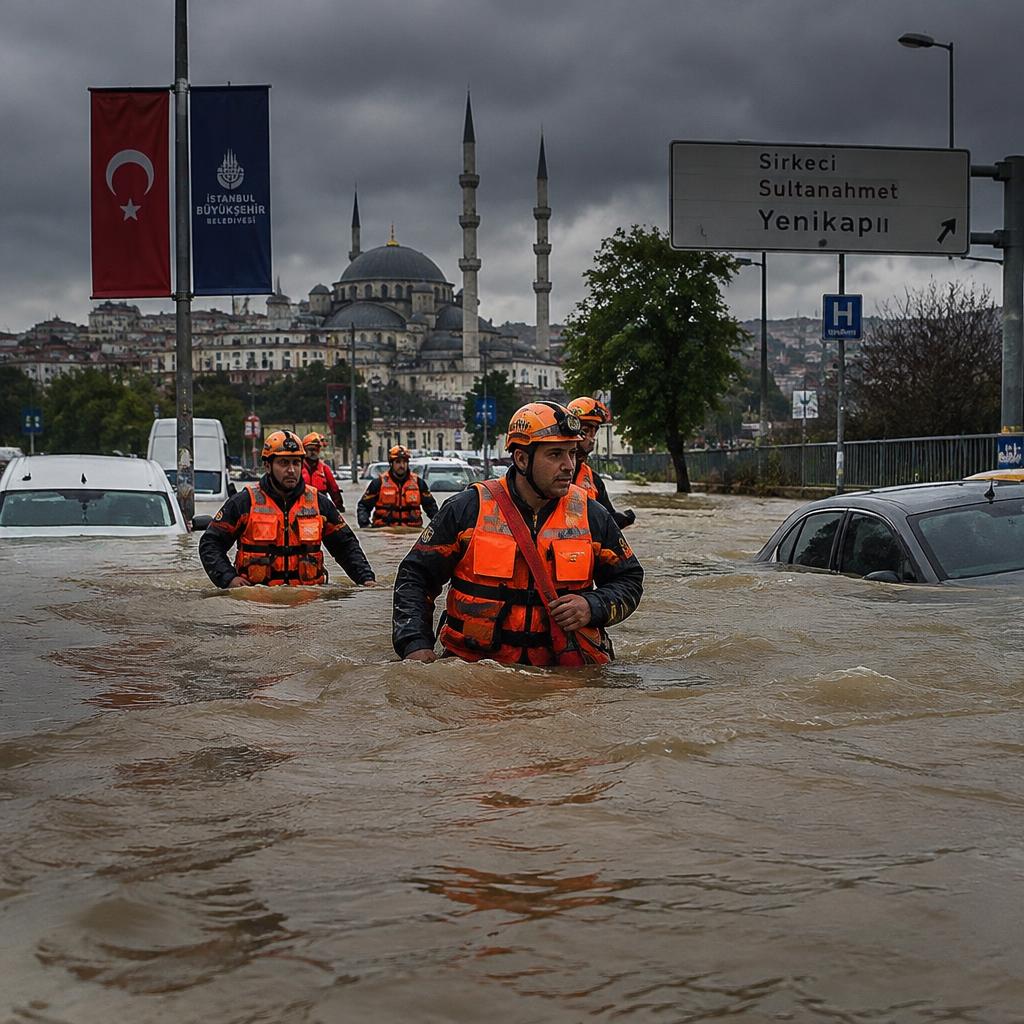
The death toll from severe flash floods in Istanbul has risen to four, with three people still missing, after what Turkey's interior minister described as the city's worst flooding since 1942.
Search and rescue teams recovered the body of a 66-year-old man beneath a bridge along a creek in the Ayazaga neighbourhood of the Sariyer district, one of the areas hardest hit by the deluge.
Interior Minister Mustafa Ciftci confirmed the updated toll while speaking to reporters in Ayazaga, where torrential rain turned streets into rivers and inundated homes, shops and vehicles.
A city overwhelmed
The floods struck after intense rainfall overwhelmed drainage systems across Turkey's largest city, home to some 16 million people. Creeks and streams burst their banks, sending torrents of muddy water through densely built neighbourhoods.
Footage from the affected districts showed cars submerged to their roofs, residents wading through chest-deep water and rescue teams in boats reaching people trapped in upper floors and vehicles.
Emergency services worked through the night, and search operations continued on Saturday for the three people still unaccounted for. Authorities warned that the toll could rise as teams reach areas cut off by the floodwater.
The Ayazaga area, in the Sariyer district on the European side of the city, saw some of the worst destruction. The recovery of the 66-year-old man's body under a bridge there underlined the force of the water, which swept debris, vehicles and people downstream.
Worst since 1942
Mr Ciftci's description of the disaster as Istanbul's worst flood since 1942 places it among the most severe weather events in the city's modern history. That comparison carries weight in a metropolis that has grown explosively over recent decades, often with construction in areas vulnerable to flooding.
Urban planners have long warned that rapid development, the paving over of absorbent ground and building along stream beds have left Istanbul acutely exposed to extreme rainfall. Climate scientists say such intense downpours are becoming more frequent across the Mediterranean region as the atmosphere warms.
The disaster is likely to renew scrutiny of infrastructure investment and planning enforcement in the city, where previous deadly floods have prompted promises of reform.
Rescue effort continues
Hundreds of emergency personnel, including divers and specialist search teams, have been deployed across the flooded districts. The Turkish disaster management agency coordinated the response alongside municipal crews.
Residents described terrifying scenes as the water rose with little warning. Some were rescued from cars caught in the torrent; others climbed to rooftops or upper storeys to escape.
Power cuts were reported in several neighbourhoods, and transport was severely disrupted, with roads closed and some public transport routes suspended.
Authorities urged residents to avoid travel in affected areas and to heed warnings as further rain was forecast. Shelters were opened for those whose homes were inundated.
For Istanbul, a city that straddles two continents and has weathered earthquakes, fires and floods across its long history, the events of this week rank among its most destructive natural disasters in living memory. The priority now, officials said, is finding the missing and supporting the thousands whose homes and livelihoods have been damaged.