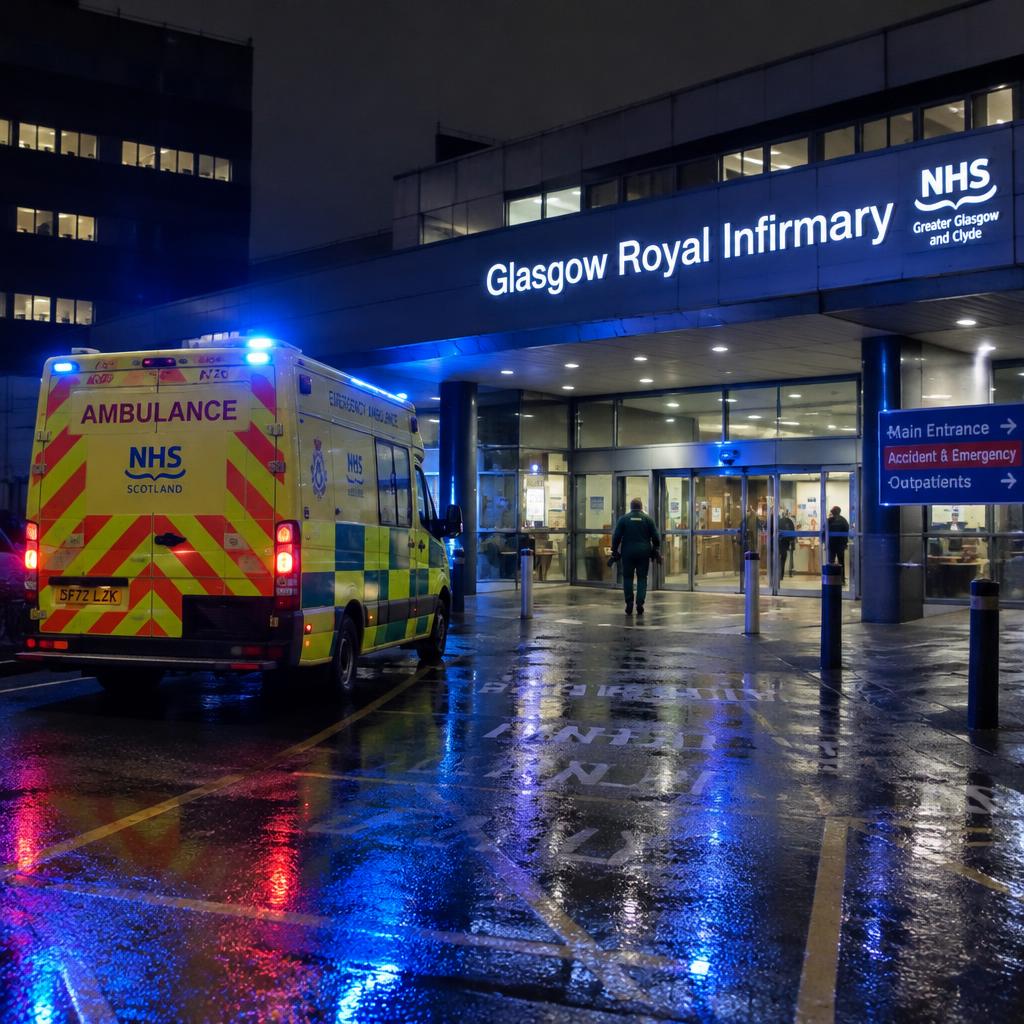
A family has been left devastated after a mother died in a Glasgow hospital within hours of what they believe was the wrong treatment being administered.
The woman, a mother whose family say she had sought help in good faith, deteriorated rapidly after the treatment and could not be saved. Her relatives are now demanding a full account of what happened in her final hours.
NHS Greater Glasgow and Clyde has confirmed that the death is being investigated, and the family have been offered meetings with senior clinicians.
A family's questions
The family say they were told little at the time and have since been left to piece together events themselves. Their central question is stark: how could a woman walk into hospital seeking help and be dead within hours?
They allege that the treatment she was given was inappropriate for her condition, and that warning signs of her deterioration were not acted upon quickly enough.
Their account, reported by the Daily Record, describes a family still in shock, angry at what they see as a failure of care and determined that lessons should be learned.
The investigation
Deaths in such circumstances are subject to a significant adverse event review — the health board's process for examining what went wrong and why. Depending on its findings, the case could also be reported to the Crown Office and Procurator Fiscal Service.
Such reviews examine the clinical decisions taken, the observations recorded, the escalation of concerns and the communication with the patient and family. They can take months to complete.
The family have indicated they will pursue every available avenue, including the possibility of legal action, if they are not satisfied with the answers they receive.
A system under strain
The case comes at a time of intense scrutiny of NHS Scotland. Waiting lists remain at record levels, emergency departments are under severe pressure, and this week a leaked plan revealed that ministers are preparing to abandon the 12-week treatment guarantee for orthopaedic patients.
Ministers insist that patient safety remains the health service's first priority, and point to the adverse event review system as evidence that failings are examined openly.
Patient safety campaigners argue that the true test is not whether reviews happen but whether their recommendations are acted upon — and whether the same failures keep recurring.
What the family want
For the woman's relatives, the priorities are simple: the truth about what happened, accountability if mistakes were made, and assurance that no other family will go through the same experience.
"We just want answers," a family member said. "She went in for help. She should have come home."
NHS Greater Glasgow and Clyde said it could not comment in detail on individual cases but that its thoughts were with the family and the investigation would be thorough.
Cases like this one resonate far beyond the families directly involved, because they touch on the most basic compact between the public and the health service: that going to hospital makes you safer, not less safe. When that compact appears to fail, confidence in the whole system suffers. Healthcare safety experts stress that the vast majority of NHS care is safe and that serious incidents are rare relative to the millions of treatments delivered each year. But they also warn that a service under extreme pressure — short-staffed wards, full emergency departments, exhausted clinicians — is one in which the margin for error narrows. The family's campaign for answers will now follow the formal processes. What they cannot recover, they say, is the person at the centre of it all.