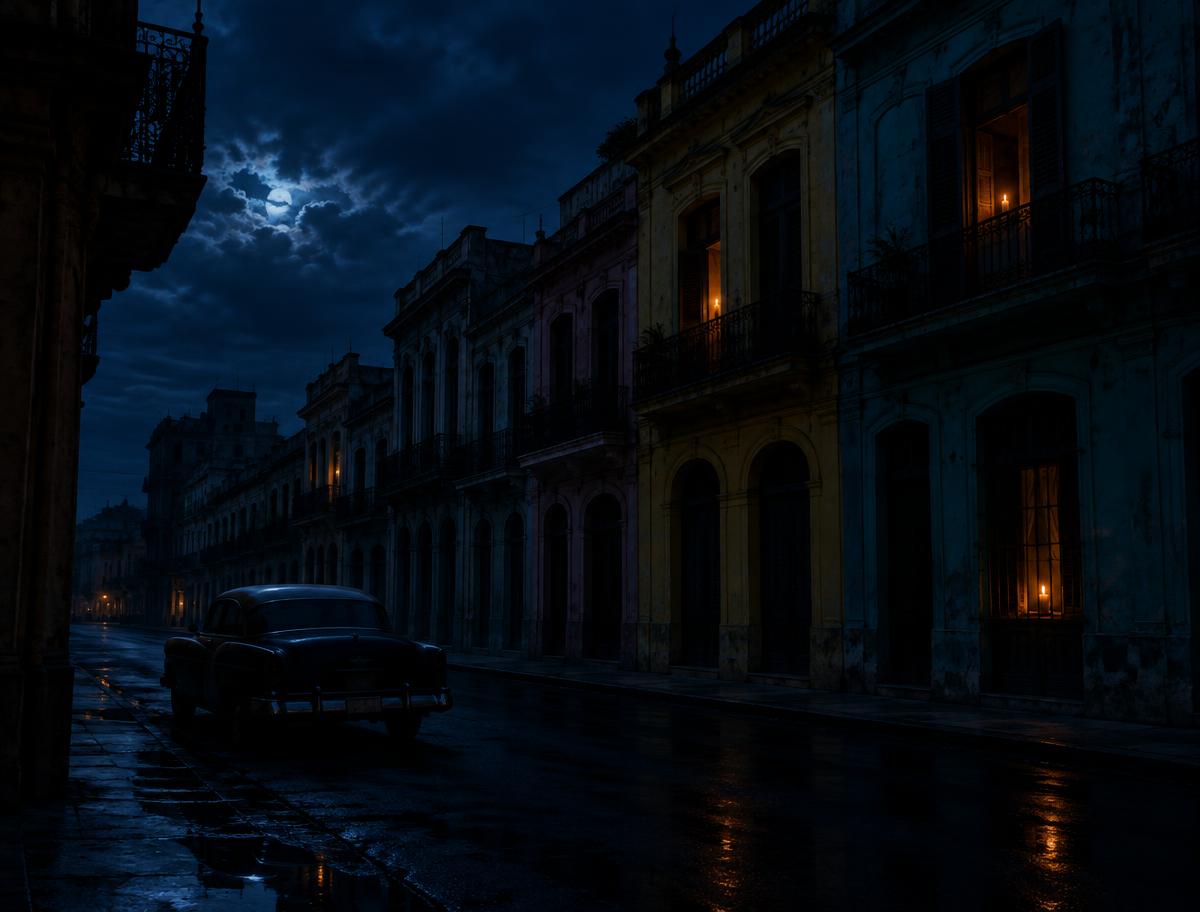
Cuba is grappling with a protracted energy crisis, a shrinking economy and continued diplomatic deadlock with Washington, as the island's largest power plant remains offline and officials warn that United States pressure has pushed the country into one of its most difficult periods in decades.
The Antonio Guiteras thermoelectric plant, Cuba's biggest generating station, has been out of service for repairs and was expected to reconnect to the National Electric System around 3 or 4 October, according to the plant's technical deputy director, Elmer García Romero. He said the critical repair work involved around thirty welds and extensive testing of a high-temperature reheater, with six identified defects requiring the cutting and replacement of pipework before pressure testing could begin.
The plant's prolonged outage has been one of the most visible symptoms of a national grid that Cuban authorities say suffered a complete nationwide collapse in September, plunging the country into a near-total blackout before power was gradually restored. Cuba's ageing, Soviet-era power stations have suffered repeated breakdowns in recent years, compounded by fuel shortages that officials attribute largely to the US embargo and to difficulties securing oil shipments, including from traditional supplier Venezuela.
Daily life under blackout
For many Cubans, the energy crisis has become a near-constant feature of daily life. Foreign Minister Bruno Rodríguez said in September that households in parts of the country were going without electricity for all but two or three hours a day, describing food spoiling without refrigeration, parents fanning babies through the heat, and children struggling to do schoolwork in the dark. Internet access has also been curtailed for many households, he said.
Rodríguez made the comments while presenting Cuba's latest estimate of damage caused by the decades-old US embargo, first imposed after Fidel Castro's 1959 revolution. He said the embargo cost Cuba's economy $8 billion between March 2025 and February 2026, a record figure and about seven percent higher than the previous year, a total he said excluded more recent US measures restricting the island's energy imports, introduced in January, and secondary sanctions imposed in May. Rodríguez described the policy as 'economic asphyxiation' and, using language Havana has used before, called the embargo 'genocidal'. The US government has defended its sanctions as a response to human rights conditions in Cuba and says they are intended to pressure the Communist government rather than harm ordinary citizens; Washington disputes Havana's framing and its damage estimates.
No talks with Washington
Rodríguez said in September that Cuba was not currently in negotiations with the United States and that there was no agenda for future talks, under the Trump administration's continued policy of economic pressure on the island. Cuban officials have periodically signalled openness to dialogue in the past but say any normalisation would require an end to sanctions they regard as illegitimate under international law; Washington has in recent years tied any easing of restrictions to changes in Cuba's political system and human rights record, conditions the Cuban government rejects as interference in its internal affairs.
A changing economy
Despite the hardship, some observers point to subtle shifts taking place within Cuba's state-controlled economy. A report this month described a growing private class increasingly taking on roles once reserved for the state, including importing and distributing diesel fuel, supplying pharmacies and handling food sales — activities that would once have been unthinkable under the island's centrally planned system. The shift has unfolded gradually over the year, driven in part by the state's difficulty meeting basic needs amid the restrictions imposed by Washington.
Public commentary on the changes has at times come from unexpected quarters: Sandro Castro, a grandson of Fidel Castro who runs nightclubs in Havana and has a large social media following, responded to a question about when change might come to Cuba by saying the country was 'already changing', even as residents continue to contend with blackouts and shortages that show little sign of easing. Cuban officials have not detailed a formal programme of economic liberalisation, and the ruling Communist Party maintains that the country's core political and economic system, including state control of major industries, will remain in place.
Political backdrop
Cuba's government, led by President Miguel Díaz-Canel and First Secretary of the Communist Party, has repeatedly blamed the US embargo for the bulk of the country's economic troubles, while critics of the government, including some Cuban economists and opposition figures abroad, argue that decades of centralised economic management and underinvestment have also contributed significantly to the crisis. Cuban authorities maintain that external sanctions, rather than internal policy, are the primary cause of shortages, a characterisation disputed by Washington and by some independent analysts who point to structural inefficiencies in the state-run economy.
What happens next
Engineers hope the reconnection of the Guiteras plant will ease, though not resolve, the immediate pressure on the national grid heading into the last months of the year. Cuban officials say they will continue seeking fuel and investment from allies including Russia, China and Mexico to stabilise energy supply, while Havana shows no sign of altering its position that it will not negotiate with Washington under the current terms of US pressure. Absent a change in US policy or a substantial new source of fuel and investment, analysts expect blackouts and shortages to persist well into 2027.