
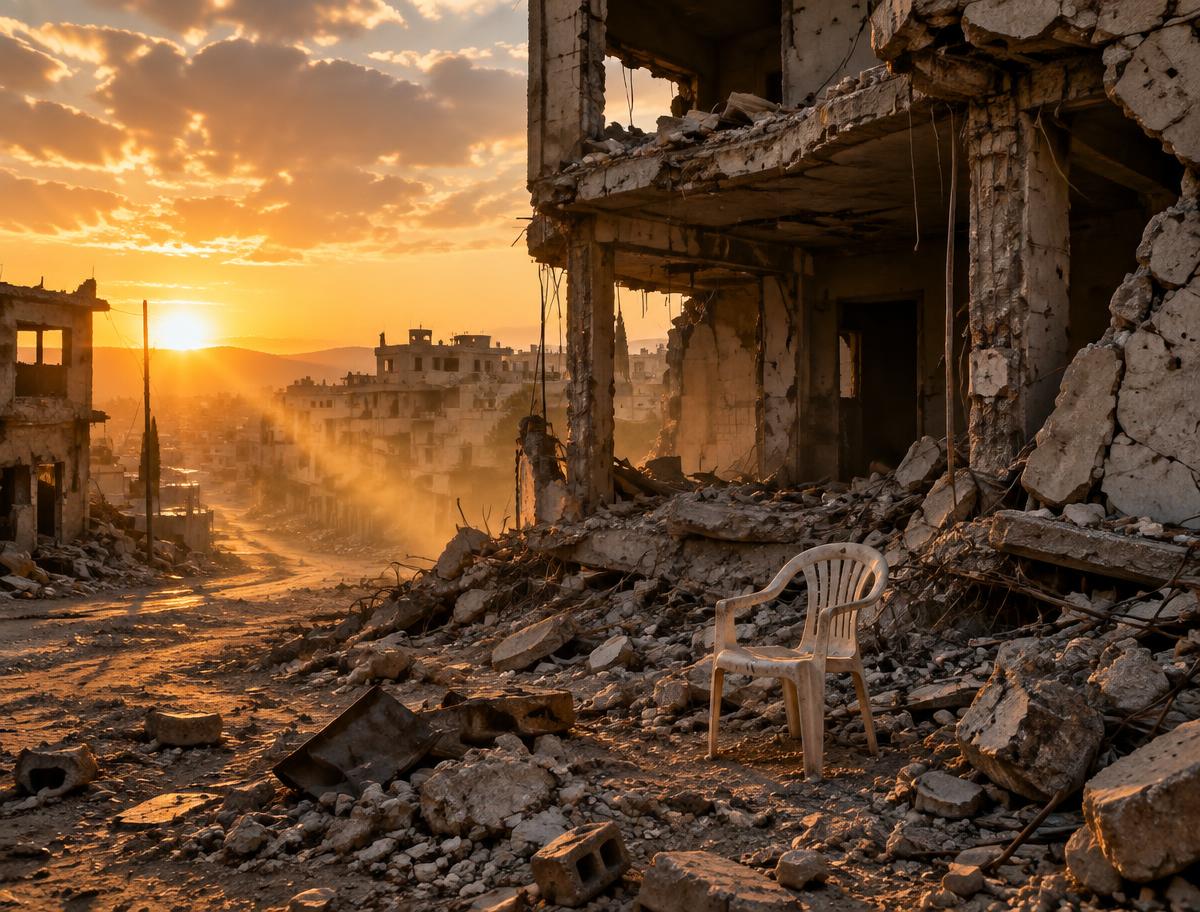
A ceasefire between Israel and Hamas that has held, with significant strain, for almost a year is facing fresh questions after a week of Israeli strikes in Gaza and a surge of violence in the occupied West Bank, including a senior Israeli minister's declaration that the territory 'belongs to Israel'.
The Gaza Health Ministry said an Israeli drone strike killed a Palestinian man and wounded several others this week when it hit a tent sheltering displaced people in al-Mawasi, west of Khan Younis in southern Gaza. Another Palestinian died of wounds from an earlier strike on a gathering in the Jabalia refugee camp in northern Gaza, medical staff said. The ministry reported eight deaths and 26 people wounded over a recent 24-hour period, putting the total killed since the ceasefire took effect in October 2025 at 1,439, with 5,052 wounded and 834 bodies recovered from rubble, according to its figures.
The ministry, which operates under the Hamas-run administration in Gaza, says Israel's wider military campaign since October 2023 has killed at least 74,040 Palestinians and wounded 175,168. Israel disputes the ministry's methodology but has not published a comprehensive rival count of Palestinian fatalities; it says its strikes target Hamas fighters and infrastructure, and in some cases has acknowledged individual strikes while describing the people hit as combatants.
Gaza ceasefire under pressure
The truce, brokered by the United States in October 2025, was intended to end two years of war, open the way for an eventual Israeli withdrawal from Gaza and the disarmament of Hamas, and allow reconstruction and increased humanitarian access. Hamas has repeatedly accused Israel of violating the agreement through continued strikes and by restricting aid, while Israel says it continues to act against Hamas operatives and infrastructure it regards as threats, including tunnel networks and weapons caches, which it says is consistent with the deal's terms.
Israeli forces also carried out a demolition operation targeting buildings east of Gaza City's al-Tuffah neighbourhood this week, part of what residents and local officials describe as a continuing pattern of clearance operations since the ceasefire began. Gaza's health authorities have separately said hospital generators have failed because of shortages of fuel and spare parts, with the oil allowed into the territory covering only a fraction of hospitals' monthly needs. Israel controls the flow of goods into Gaza and says it screens supplies to prevent materials reaching Hamas; humanitarian agencies say restrictions have left critical infrastructure, including hospitals, severely under-resourced.
West Bank tensions
In the occupied West Bank, Israeli settlers shot dead a Palestinian man, named locally as 51-year-old Mashhour Yassin, and wounded another during a raid on the village of Yasuf, north of Ramallah. Palestinian and rights monitors describe a sharp rise in settler violence against Palestinian communities in the West Bank this year, which they say has often occurred with Israeli military forces nearby. Israeli authorities say they investigate violent incidents involving settlers and that perpetrators, when identified, face prosecution, though Palestinian and international human rights groups have long said prosecutions are rare and sentences light.
Israel's National Security Minister, Itamar Ben-Gvir, told a television interview this week that the entirety of the West Bank, including the roughly 60 percent designated Area C under full Israeli control as well as the Palestinian-administered Areas A and B, 'belongs to Israel' and that there was 'no difference' between the zones. The division of the territory into three administrative areas dates to the 1995 Oslo II Accord between Israel and the Palestine Liberation Organization, under which Area A was placed under full Palestinian civil and security control and Area B under joint arrangements.
Ben-Gvir also said he would seek to dismantle the Palestinian Authority and push for the displacement of Palestinians from the West Bank and Gaza if he were appointed defence minister, and claimed, without evidence cited, that 60 percent of Palestinians wished to emigrate. Palestinian officials have rejected the comments as a call for forced displacement that would violate international law. The Israeli government has not formally adopted Ben-Gvir's position as policy, though other ministers in the coalition have previously voiced support for extending Israeli sovereignty over parts of the West Bank.
Competing narratives
Israeli officials maintain that military operations in Gaza and security measures in the West Bank are necessary responses to the threat posed by Hamas and armed groups, pointing to the 7 October 2023 attack on Israel, in which Hamas-led gunmen killed about 1,200 people and took hundreds hostage, as the origin of the current conflict. Palestinian officials and residents say Israeli military actions since then, and continuing settlement expansion and settler violence in the West Bank, amount to collective punishment and an obstacle to any future Palestinian state. Both positions remain central and unreconciled points of dispute between the two sides.
What happens next
Mediators including the United States, Qatar and Egypt are continuing efforts to shore up the Gaza ceasefire and advance the broader postwar plan, which envisages Hamas's disarmament and an international stabilisation mechanism for the territory. Diplomats say the viability of that plan remains in question given the continuing strikes and mutual recriminations. In the West Bank, Palestinian officials have called for international intervention to curb settler violence, while Israeli hardliners continue to press for annexation measures, setting up a renewed domestic political battle within Israel's coalition over the territory's future status.