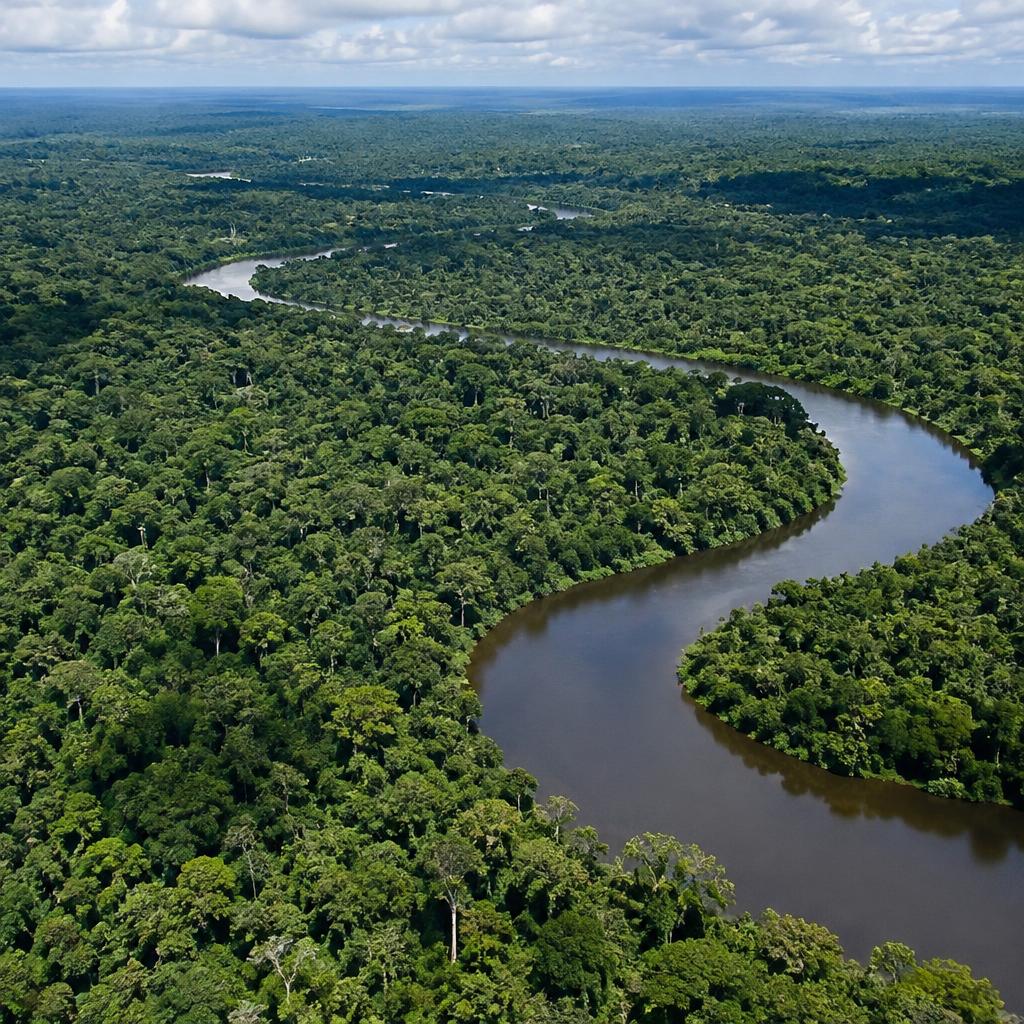
Deforestation in the Brazilian Amazon has recorded its steepest fall on record, official figures show, in a result hailed by the government as proof that enforcement works — and one that will loom large in next year's presidential election.
The data, from Brazil's satellite monitoring system, shows the rate of forest clearance dropping sharply compared with the peaks of recent years, when the Amazon became a global symbol of environmental destruction.
The improvement is being credited to renewed policing of illegal logging and land grabbing, the resumption of conservation funding and international pressure tied to trade and climate commitments.
Why it matters
The Amazon is not merely a Brazilian concern. The rainforest stores vast quantities of carbon, generates much of its own rainfall and harbours a tenth of the world's known species. Its fate is bound up with the global climate.
Scientists have warned for years that continued deforestation, combined with climate change, risks pushing parts of the forest past a tipping point beyond which they would degrade into drier savanna — releasing enormous stores of carbon in the process.
A sustained fall in clearance rates is therefore one of the most significant pieces of environmental news anywhere in the world this year.
The politics of the forest
The figures arrive as Brazil prepares for a presidential election in which the environment will be a central battleground. The incumbent administration has made restoring the Amazon a flagship policy, reversing the relaxed enforcement of the previous government.
Opponents argue that the fall in deforestation owes as much to commodity prices and ranching economics as to government action, and that illegal mining and land grabbing continue in areas beyond the reach of the authorities.
Indigenous leaders, whose territories are among the best-protected parts of the forest, caution that one good year does not end the threats they face from encroachment and violence.
The international dimension
Brazil's progress strengthens its hand in international climate diplomacy, where it has positioned itself as a leader of the developing world and host of major environmental gatherings.
It also matters for trade. European markets have made clear that access will increasingly depend on demonstrable protection of forests, with new rules requiring proof that commodities such as beef and soya are not linked to deforestation.
For the global climate effort, every hectare of Amazon left standing is carbon that stays out of the atmosphere.
The test ahead
The question now is durability. Previous declines in deforestation have been reversed when enforcement budgets were cut or political winds changed.
Environmental groups say the infrastructure of protection — rangers, satellite monitoring, prosecutions — must be entrenched deeply enough to survive changes of government.
For the moment, though, the world's largest rainforest has had its best news in years. In a bleak decade for the environment, that is worth marking.
The human story behind the figures is equally significant. The forest's defenders — indigenous communities, rubber tappers, environmental enforcement officers — work in some of the most dangerous conditions anywhere, and several have been killed for their work in recent years. The improved figures reflect their efforts as much as any ministerial decree. International funding, frozen under the previous administration, has resumed flowing through the Amazon Fund, supporting everything from satellite monitoring to sustainable livelihood projects in forest communities. Researchers caution that degradation — the thinning of forest by selective logging and fire — remains harder to measure than clear-felling and continues even where deforestation falls. But the direction, for once, is right, and the world will be watching whether Brazil can sustain it through an election year and beyond.