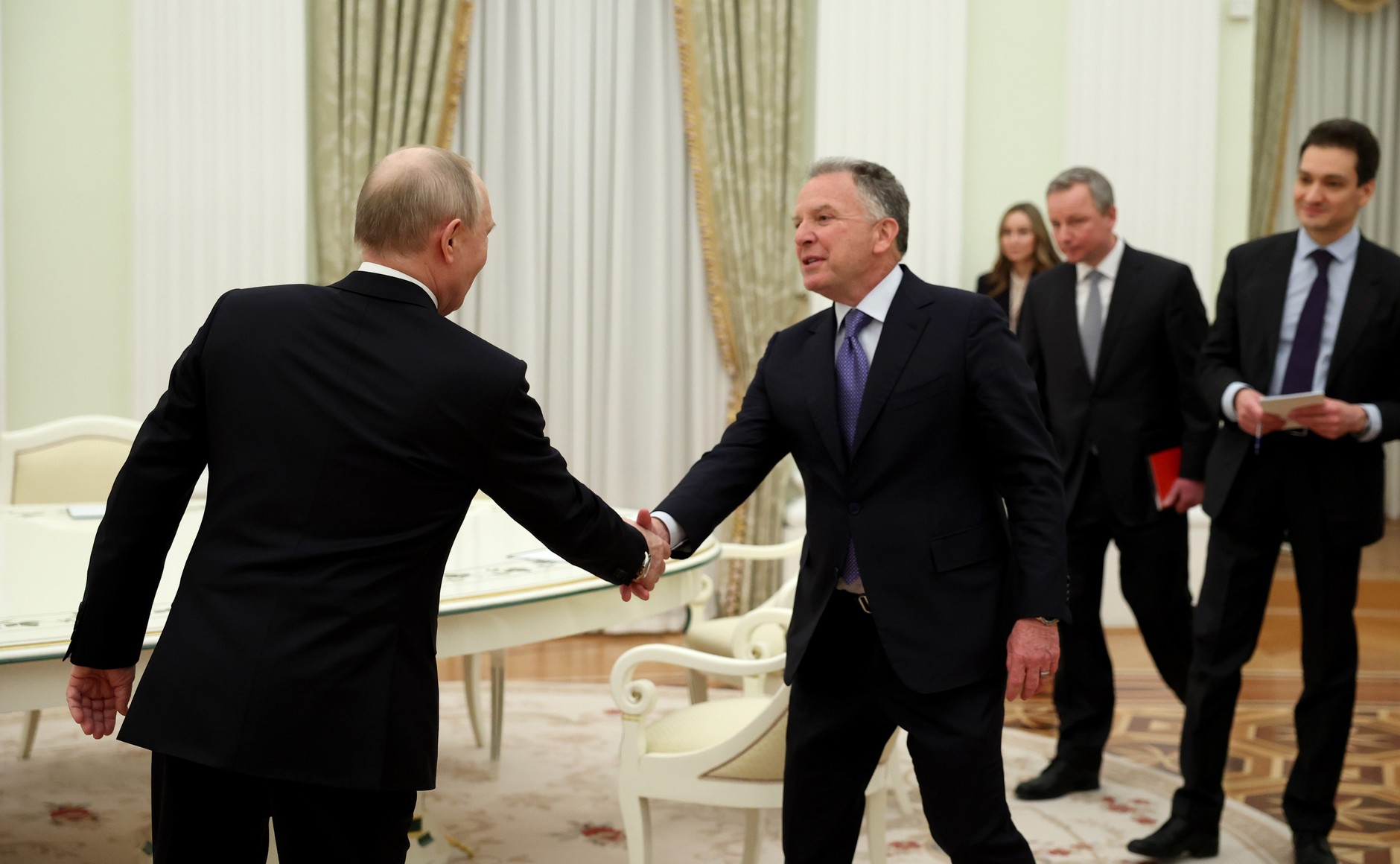
The US special envoy Steve Witkoff has arrived in Russia for talks with President Vladimir Putin on proposals to end the war in Ukraine, a day after meeting Ukraine’s President Volodymyr Zelensky and European leaders in Oslo.
Witkoff was met on the runway in St Petersburg on Wednesday morning by the Russian envoy Kirill Dmitriev. Zelensky and his European allies said it was now up to Moscow to respond to the proposals discussed in the Norwegian capital.
The visit came as Zelensky said that intelligence sharing with the United States on Russian missile attacks “works now”, after weeks in which Kyiv had accused Washington of withholding key information – a claim the US rejected as “scandalous”.
The Oslo talks
Tuesday’s meeting in Oslo brought together Witkoff, Zelensky, the Finnish President Alexander Stubb and the Norwegian Prime Minister Jonas Gahr Støre. Jared Kushner, President Donald Trump’s son-in-law and another key envoy, joined by video link.
Stubb said “genuine progress” had been made but gave no details and warned that patience would be needed. A US official described the talks as “very productive and constructive”, saying there was “strong alignment at the working level” among the US, Ukraine and Europe on “the next steps”. Witkoff did not attend the joint press conference afterwards.
Støre stressed that Europe “needs to be at the table” in any discussions on how to end the war.
‘Now it works’
Zelensky said he was “thankful that intelligence works now”. “Speaking about early warning, which is very important for our people, our children, adults, civilians because we can hear when ballistics is coming – so we are thankful to American side, now it works, it’s great,” he said.
He said he also hoped for a good result on access to SpaceX’s Starlink satellite network, after Ukraine’s military reported speed restrictions in recent days on the platform it uses to carry out drone strikes. Last week a bipartisan group of US senators called for an urgent investigation into the restrictions.
Zelensky said Ukraine was “ready for negotiations”. “Of course, we are not losing this war, but we are losing people because Russia attacks,” he said, adding that “strong” security guarantees and proposals for an energy ceasefire had also been discussed.
Moscow’s position
Putin has yet to comment publicly on the latest developments. Foreign Minister Sergei Lavrov said earlier that the Kremlin would listen to what Witkoff had to offer, while ruling out “any political concessions”.
Russia launched its full-scale invasion of Ukraine in 2022 and controls about 20% of Ukrainian territory. Attacks have continued this week: Ukrainian officials said at least 10 people were killed by Russian drones on Tuesday – four in Kyiv and the surrounding region, four in the eastern Donetsk region and two in Dnipro – and two more died in an overnight attack near Kharkiv. Ukraine has carried out repeated strikes on Russian oil refineries and energy infrastructure.
Strains with Washington
Relations between Kyiv and Washington have soured in recent weeks. Trump has said it is time for Ukraine to have a new president, and most recently “for somebody else to negotiate on behalf of Ukraine”.
Ahead of next month’s US midterm elections, Trump has also blamed Ukraine’s attacks on Russian refineries for rising fuel prices, which have climbed since the start of the US-led war on Iran. Speaking at the White House after the Oslo talks, he said Russia would like to “get it done” and that it was “time for Ukraine to end this war”.
Unconfirmed reports on Tuesday said the transfer of more US-made Patriot interceptor missiles – the only weapon Ukraine has that can reliably shoot down Russian ballistic missiles – had not yet been approved. Secretary of State Marco Rubio, speaking during a visit to India, acknowledged that some interceptors may not yet have arrived but said nothing had been intentionally denied to Kyiv.
European concern
European leaders have voiced unease about recent US statements. Germany’s Chancellor Friedrich Merz spoke on Monday of “mixed pictures and messages” and said he was trying to convince Washington that the war was “something we have to resolve jointly”.
US Vice-President JD Vance said in an interview that Ukraine was “certainly a partner in some ways” but that the two countries had “divergent interests from time to time”, adding that Kyiv “should stop bombing Russian energy”. “We don’t have a formal alliance as far as I know with Ukraine. They’re not in Nato, I don’t think they should be in Nato,” he said.
The outcome of Witkoff’s meeting with Putin is likely to determine whether the Oslo framework gains momentum or whether the gap between the two sides’ positions remains as wide as ever.