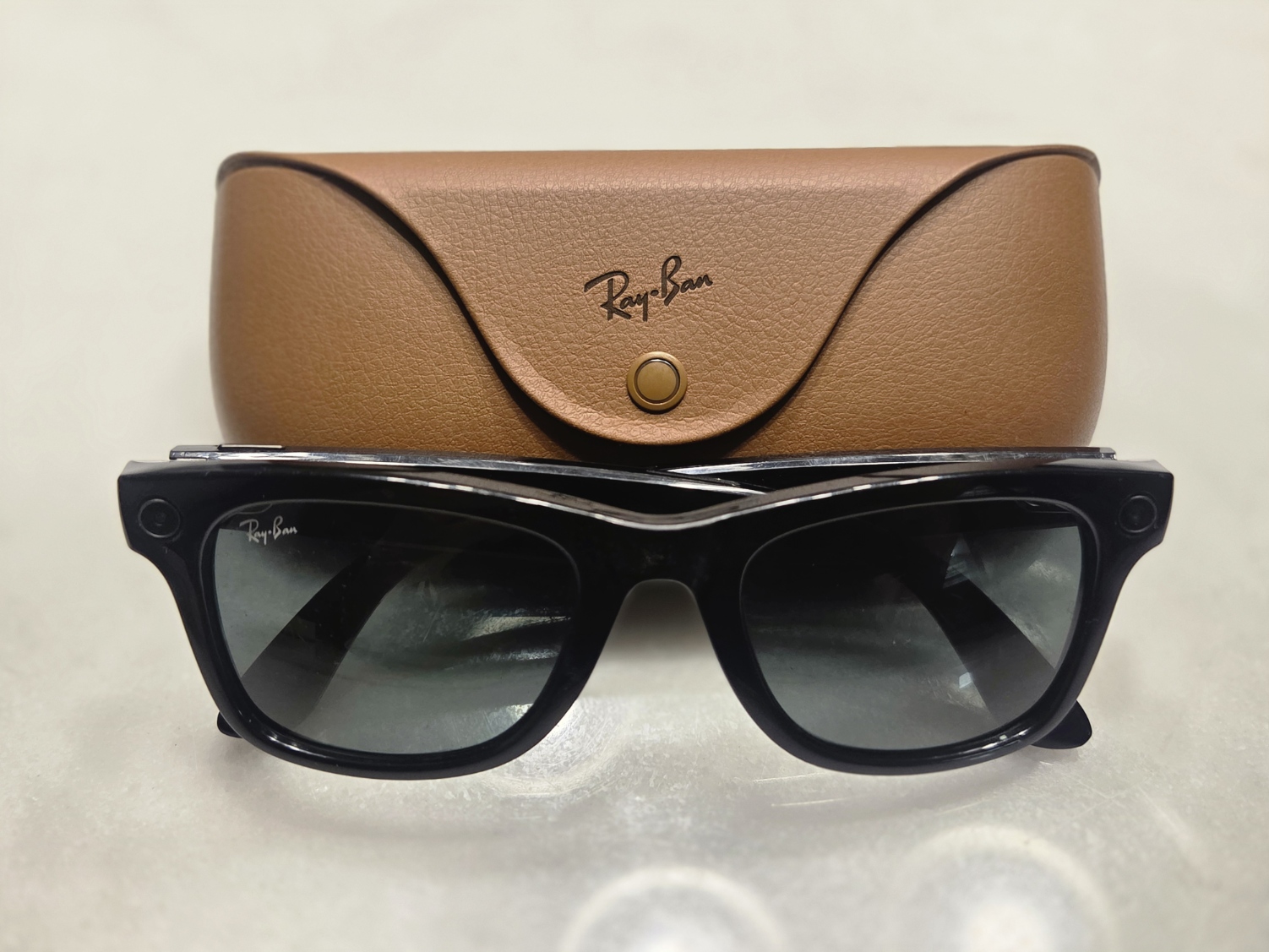
Reform UK’s director of communications in Scotland has confirmed that he regularly wears camera-equipped smart glasses inside the Scottish Parliament, as politicians face growing calls to ban the technology over privacy and security fears.
Tony McGuire told The Herald that he does not use his Meta glasses to record while working at Holyrood and routinely removes or switches them off during sensitive meetings. But he acknowledged that concerns about the devices being worn around confidential conversations and constituents’ casework were valid.
His comments came as Scottish Liberal Democrat leader Alex Cole-Hamilton called for smart glasses to be prohibited across the Holyrood estate.
‘Completely undetected’
“Liberal Democrats have already written to the Speaker calling for him to ban smart glasses from the Westminster estate. The same prohibition should apply to the Scottish Parliament,” Cole-Hamilton said.
“Unlike phones, these devices can record sensitive constituent cases and private briefings completely undetected. Courts across the UK have already banned them. We need to make sure we are doing everything we can to protect privacy and national security.”
Westminster is already reviewing its approach to wearable technology after controversy over Jason O’Connell, a Reform UK member of the Senedd, who was suspected of using smart glasses as a teleprompter during a speech in the Welsh Parliament. There is no suggestion that his glasses were used to record proceedings.
‘Deeply unfair’
McGuire, whose glasses are fitted with his prescription lenses, said he mainly uses them for audio functions such as calls and notifications. Asked whether he records with them at Holyrood, he said: “No.” He said he often switches them off or takes them off during sensitive meetings, including leadership discussions.
He argued that the way smart glasses were being portrayed was “kind of deeply unfair to the vast majority”, and that the focus should be on how individuals use the technology rather than on the device itself.
“I do fully acknowledge the fact that those concerns are valid,” he said. “That could be a concern if somebody in the room is wearing glasses with that capability. I can’t in good faith deny that that is a valid concern when it comes to constituency work.”
He disputed the suggestion that recording would necessarily go unnoticed. Meta says its glasses display a white capture light when photographs or video are being taken, and that covering the light disables the camera.
McGuire said his pair cost around £600 with prescription lenses and that he would comply with any restrictions Parliament introduced. He argued, however, that legitimate uses should form part of the debate.
Accessibility and privacy
Smart glasses can offer hands-free help to blind and partially sighted people, reading text aloud, identifying objects and describing surroundings. For some disabled users, that can make everyday tasks more accessible without relying on a phone or another person.
The row follows growing scrutiny of the devices in Scotland. In August, Police Scotland assessed videos recorded by TikToker Scott Margerison during a road trip around the country, in which he used camera-equipped Meta glasses to film members of the public, shop workers and CalMac ferry staff, apparently without their knowledge. Police said complaints had been received and that footage was being reviewed to establish whether any criminality was involved.
Solicitor advocate Paul Motion has warned that it is “inevitable” more people will seek legal advice after being secretly recorded, and has questioned whether existing Scots law can always provide the remedy victims expect. “If the courts came close to recognising a standalone right to privacy in 2019, then maybe it’s time for the Scottish Parliament to legislate for a standalone right of privacy,” he said. He also stressed that the technology has legitimate uses for people with visual impairments.
What the rules say now
The Scottish Parliament already restricts filming and recording, but its published policy does not specifically mention smart glasses. Recording or photography in the chamber requires the prior permission of the Presiding Officer.
A Scottish Parliament spokesperson said: “The Parliament’s Visitor Behaviour Policy prohibits any videos or recording of Parliamentary proceedings. More generally, SPCB policy makes clear any filming at Holyrood should respect the privacy of other building users.”
A Scottish government spokesperson said any ban at Holyrood would be a matter for Parliament rather than ministers, adding: “We recognise that filming and publishing footage of individuals in any location without their consent can raise privacy and security concerns.”
Any change would fall to the Scottish Parliamentary Corporate Body, which runs the building. The debate is likely to intensify as cheaper camera-equipped glasses become commonplace and other legislatures decide how to respond.