The UK government has approved production from the Jackdaw gas field in the North Sea, ending years of legal uncertainty over one of the most contested energy projects off the Scottish coast.
Ministers said on Wednesday that Jackdaw “will start to supply gas to British homes and businesses from as early as the end of this month, helping heat millions of homes and protecting hundreds of jobs”. The decision was announced as the chancellor, John Healey, travelled to Aberdeen a week before his first Budget.
Energy Secretary Miatta Fahnbulleh said she had approved production “following careful consideration”. She praised the “highly skilled” workforce in the North Sea and said the decision would “support the country’s energy security with homegrown gas this winter and help minimise the UK’s use of imported higher emission fuels as we continue our transition to renewables and nuclear”.
What Jackdaw is
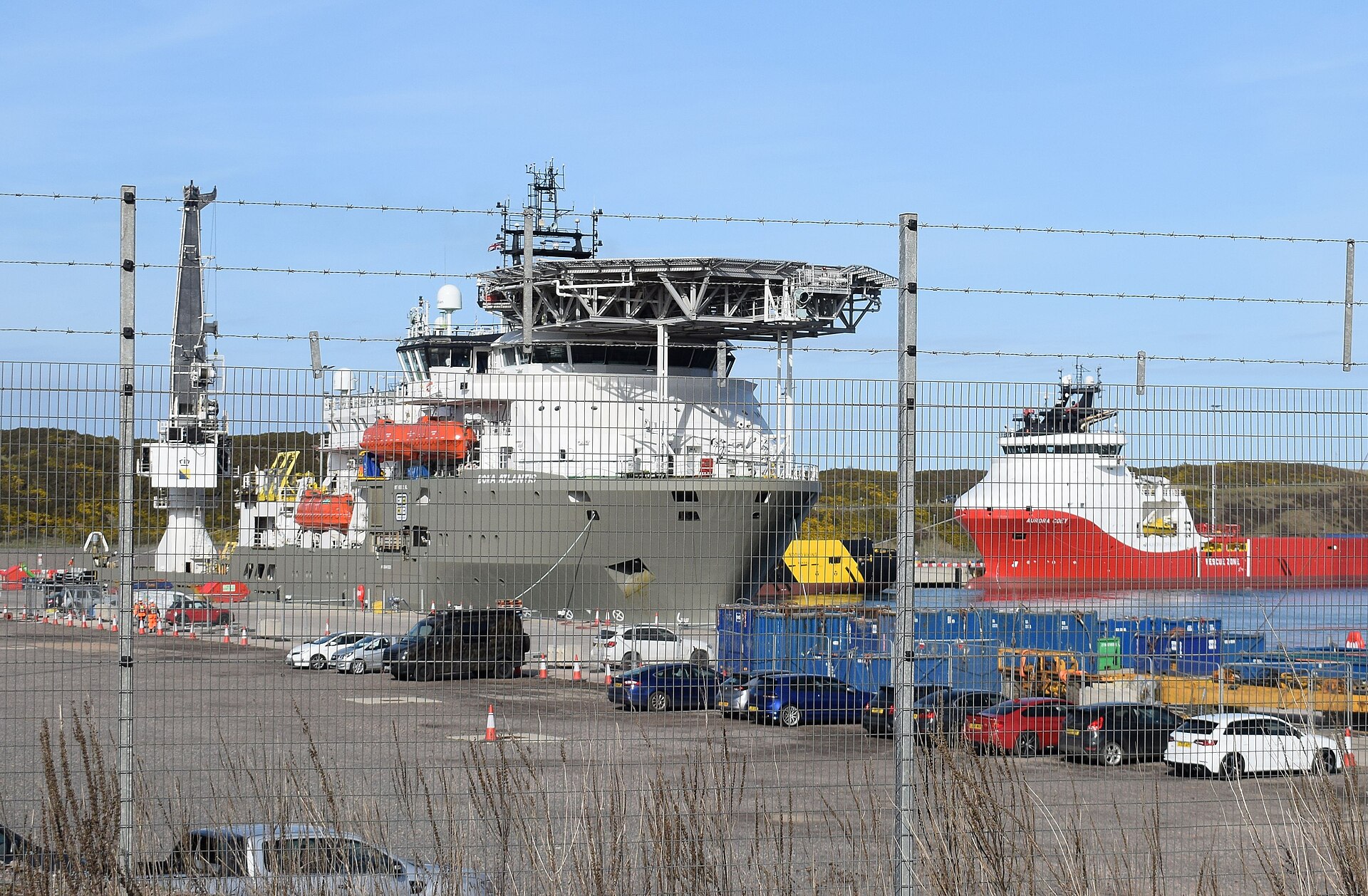
Jackdaw lies about 150 miles east of Aberdeen, close to the boundary between the British and Norwegian sectors of the North Sea. It is operated by Adura, a joint venture between Shell and the Norwegian state energy company Equinor.
The field was discovered in 2005 but was long regarded as expensive and technically difficult to develop. Shell did not commit to building it until 2022, shortly after the then Conservative government granted permission for production.
Adura says the field would provide about 6% of UK gas production, enough to power 1.4 million homes. Once imports are taken into account, that is equivalent to about 2% of national demand. In September the company said construction was “99% complete” and that the field could deliver gas this winter if consent was granted.
Years in the courts
The original approval was challenged by Greenpeace and other environmental campaigners. Last year a judge ruled that the development had been unlawfully approved, putting its future in doubt and forcing a fresh assessment that took account of the emissions produced when the gas is eventually burned.
New climate assessments were produced and put out to public consultation before Wednesday’s decision. Campaigners estimate that Jackdaw could be responsible for up to 35.8 million tonnes of carbon emissions over 11 years of production.
Neil McCulloch, chief executive of Adura, told BBC Radio 4’s Today programme that the company could now push gas into the National Grid “well before winter”. He thanked the civil servants who had worked through the process during years of legal challenges.
Asked about criticism that British gas fields produce more pollution than Norwegian ones, he described Jackdaw as a “very good” field. “This is British gas,” he said. “What it does bring is jobs, it brings economic value to the UK and it supports the supply chain as they transition into a future which will undoubtedly have more renewables within it.”
No cut to bills this winter
Fahnbulleh told BBC Radio Scotland that gas from Jackdaw “will be in our homes and businesses this month” but that it “won’t lower energy bills this winter”. She argued that the case for production rested on energy security, and on the lower overall emissions of using domestic gas rather than imports.
The government said the decision was consistent with Labour’s 2024 manifesto commitment not to issue new oil and gas licences while honouring existing ones. “Even on the path to net zero, the UK will still require oil and gas as part of our energy needs for decades to come,” its statement said, adding that recent events in the Middle East had “triggered global energy shocks and pushed up bills for families across the country”.
“The decision is compatible with our legally binding climate commitments, and we remain resolute in ending new licences for oil and gas and achieving net zero by 2050,” Fahnbulleh said.
An Energy Wealth Fund
Healey is using his visit to Aberdeen to launch what the government calls an Energy Wealth Fund, which will use tax revenues from North Sea oil and gas to invest in renewable and low-carbon energy projects.
“I want Britain’s energy wealth to spark a new wave of clean power,” the chancellor wrote on X. “Our decision to approve Jackdaw alongside the new Energy Wealth Fund means we invest in green transition and benefit from our existing natural resources.”
Prime Minister Andy Burnham has recently spoken of the need for a “flexible” approach to energy and is believed to favour further drilling where licences already exist. The Liberal Democrats have said they would be content with approval, leaving the Green Party as the most prominent political opponent of the decision.
Scotland’s climate targets
The decision will be watched closely in Scotland, where the field is located and where the Scottish government has pledged to reach net zero by 2045, five years earlier than the UK as a whole. After repeatedly missing annual and interim goals, SNP ministers abandoned those targets in 2024 in favour of five-yearly carbon budgets.
Environmental groups argue that extracting more fossil fuels will hamper efforts to cut emissions. Supporters in the north-east say the field protects skilled jobs at a time when the offshore industry is shrinking. Attention will now turn to Rosebank, the larger oil field west of Shetland, on which ministers have said a decision is also due.