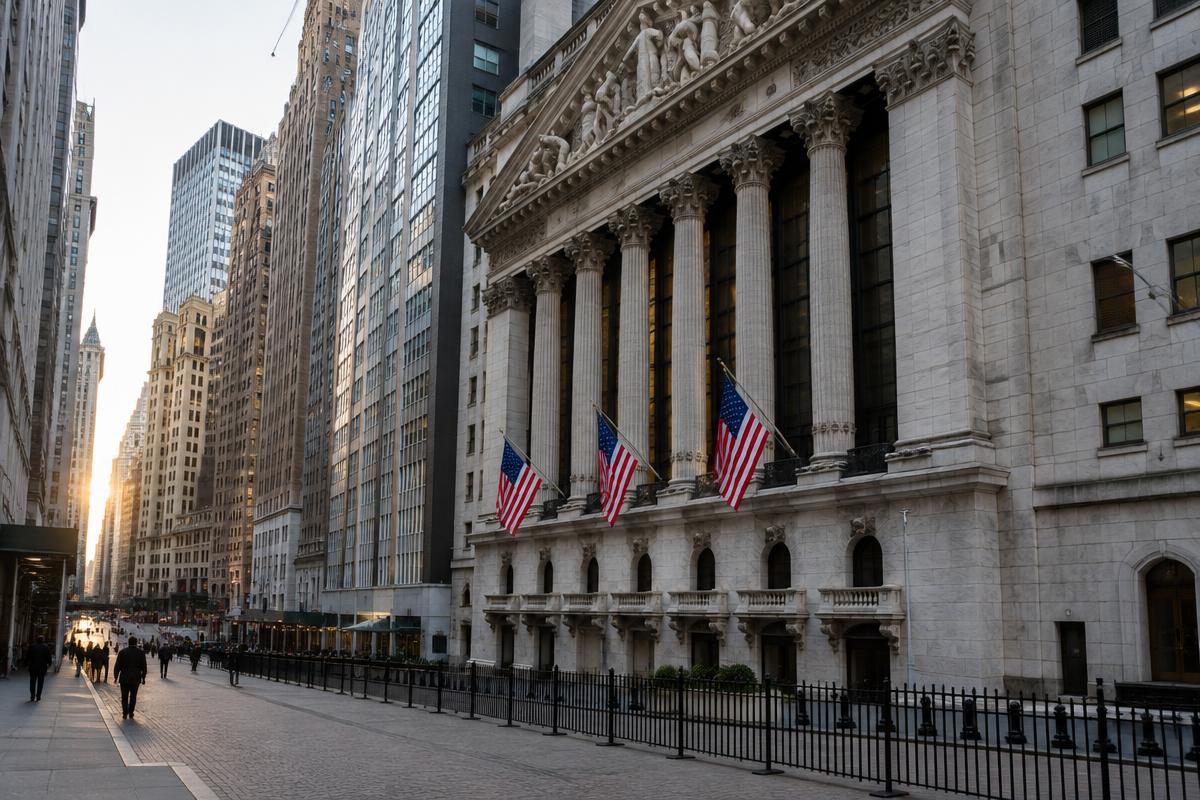
US stocks ended their worst week since late June after a broad technology sell-off pulled Wall Street lower, as investors questioned the durability of the artificial intelligence investment boom.
The S&P 500 fell 1.1% on Friday and the technology-heavy Nasdaq Composite dropped 2.1%. The Dow Jones Industrial Average held up better, declining 0.3%.
The losses came alongside higher oil prices and uncertainty over future US interest rates. Brent crude rose 3.7% to settle at $109.86 a barrel, while traders increased their expectations of a Federal Reserve rate rise in December.
For the week, the S&P 500 lost roughly 2%, erasing its gains from the previous week when it reached a record high. The Nasdaq registered its first weekly decline in five weeks and its worst since June.
Chipmakers bear the brunt
Technology stocks accounted for much of Friday’s weakness. All but seven of the 75 companies in the S&P 500’s technology sector closed lower, even though the decline across the wider index was less uniform.
Advanced Micro Devices fell 6%, Intel dropped 5.8%, Micron Technology lost 5.6% and Broadcom declined 4.5%. Other large technology companies also slipped: Meta fell 3.7% and Google’s parent company Alphabet lost 2.5%.
The falls reflected concerns about the scale and financing of investment in artificial intelligence. Companies have used debt markets to help fund heavy spending on technology, while bond yields worldwide have recently risen to their highest levels in years.
Higher borrowing costs can make that spending harder to sustain. Investors are weighing whether businesses at the centre of the AI buildout can continue financing expansion at the pace that helped underpin enthusiasm for their shares.
The closing figures showed the extent of the decline. The S&P 500 lost 84.62 points to finish at 7,659.44. The Nasdaq fell 572.99 points to 26,140.03, while the Dow dropped 175.28 points to 52,002.41.
Inflation clouds the rate outlook
US Treasury yields were relatively steady during Friday’s session. The yield on the 10-year Treasury edged down to 5.09% from 5.10% late on Thursday, after exceeding 5.30% earlier in the month.
That earlier rise had taken the yield to its highest level since 2002 amid concerns about inflation and signs of strength in the US economy. Reports during the week showed that both consumer and wholesale inflation rose more than economists had expected.
Those readings added to speculation that the Federal Reserve could raise its key interest rate again before the end of the year. In September, the central bank increased the rate by a quarter of a percentage point to about 3.9%, its first increase in three years.
Traders expected the rate to remain unchanged at this month’s meeting. However, CME Group data put the probability of a December increase at 74.3%, compared with 50.2% a month earlier. Those figures represent market expectations, not a decision already made by the Fed.
Federal Reserve chairman Kevin Warsh offered no fresh signals about potential policy moves while attending a meeting of financial leaders in Bangkok on Friday.
Oil rises as energy shares resist the slide
Energy companies performed better than many other sectors. Exxon gained 2.5% and Chevron rose 2.6%, as oil prices remained elevated amid uncertainty over the war involving the United States and Iran.
Brent’s $109.86 settlement compared with around $72 a barrel in late February before the war began. ING commodities strategists Warren Patterson and Ewa Manthey said uncertainty in the Middle East and concerns over flows through the Strait of Hormuz were keeping a significant risk premium in oil prices.
The picture was not uniformly negative. European and Asian markets closed higher, while Alcoa and The Travelers Companies gained after quarterly results exceeded Wall Street forecasts. Expectations of strong profit growth have helped support US stocks despite inflation and other concerns.
Friday’s session nevertheless left a clear contrast: energy shares benefited from firmer crude prices, while technology companies faced questions about financing the investment that has driven their growth. The next earnings reports and interest-rate signals will be closely watched for evidence of whether those pressures are easing.