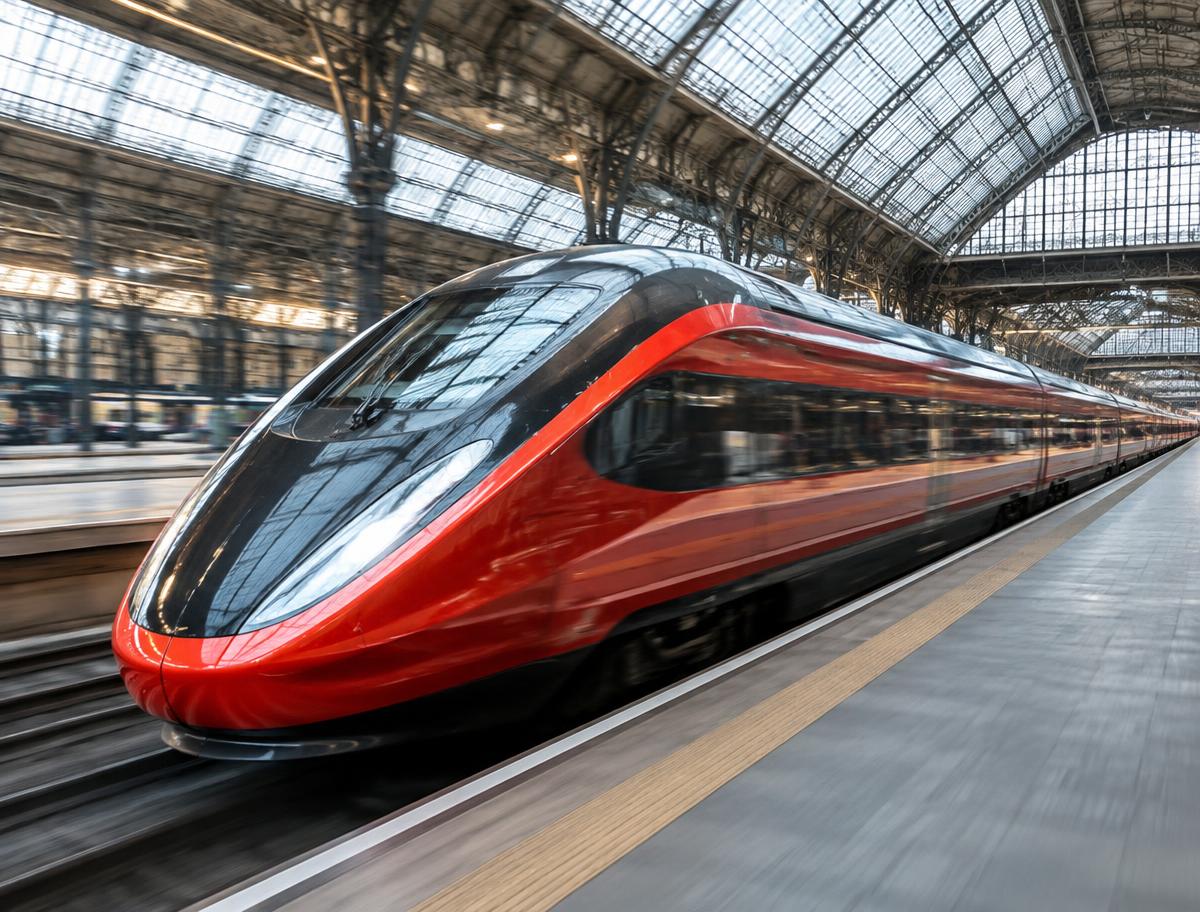
Virgin has unveiled a mock-up of the train it hopes will break Eurostar's monopoly on Channel Tunnel passenger services, promising flashy interiors, upmarket food and "something genuinely new".
The group plans to launch services from London to mainland Europe in 2030. It would be the first time Eurostar has faced head-to-head competition since the tunnel opened in 1994.
Virgin has ordered 12 high-speed trains from the manufacturer Alstom. They will match Eurostar's top speed of 190mph (300km/h), but Virgin is betting it can beat its rival on design and customer experience.
Airline lounges on rails
Details are being kept under wraps, but Virgin said the trains would draw on its airline, cruise and hotel businesses.
Its Virgin Atlantic airport lounges, known as Clubhouses, will inspire "pre-departure and onboard social spaces" offering "more flexibility to work, relax or socialise in style". Food will draw on its cruise line menus, and the design on its Virgin Hotels brand. There may even be a bar.
Virgin also hopes to link its rail and airline networks, potentially bringing passengers from France to connect with Virgin Atlantic flights, and will fold the service into its loyalty scheme.
7.5 million extra seats
Virgin Trains expects to run 20 daily return services between London, Paris, Brussels and Amsterdam, adding almost 7.5 million seats a year to the cross-Channel network and creating up to 1,000 jobs.
"Virgin has a proud history in UK rail," said Josh Bayliss, chief executive of Virgin Group. "We're confident that more journeys between the UK and Europe will be made by train. We're adding capacity for millions more international rail journeys each year, growing the market as a whole. We're looking forward to seeing our distinctive red and black trains travelling across Europe."
The return of Virgin Trains
Virgin ran the West Coast Main Line franchise for more than two decades until 2019. Its last attempt to reinvent British train travel is perhaps best remembered for a talking toilet seat introduced on intercity services in 2013.
Breaking into the Channel Tunnel market is a far tougher challenge. Several would-be rivals have announced plans over the years, but none has made it to launch.
The biggest obstacle has been access to depots. Eurostar's maintenance base at Temple Mills in east London has limited spare capacity, and without somewhere to service trains, a rival cannot run. The rail regulator has examined the issue, and Virgin's plans depend on securing depot space.
Border controls are another challenge. Passengers must clear UK and French or Schengen checks before boarding at St Pancras, which limits how many trains the station can handle.
What passengers could gain
For travellers, competition could mean lower fares and more choice. Eurostar has faced criticism over high prices on busy routes, and the airline industry shows how new entrants can push down costs.
Rival operators are also planning services, suggesting that after three decades of a single operator, the tunnel could soon become a genuinely competitive market.
Rail is also benefiting from growing demand for lower-carbon travel. A train journey between London and Paris produces a fraction of the emissions of a flight, and governments on both sides of the Channel have expressed support for growing international rail.
Eurostar carried a record number of passengers last year, and its trains on peak routes are often full, strengthening the argument that there is room for a second operator.
Industry analysts say the success of any newcomer will depend on fares, reliability and whether it can secure enough train paths through the tunnel at the times passengers most want to travel.
Eurostar has said it welcomes competition and is investing in new trains of its own. The real contest, though, will begin only when Virgin's first red-and-black train pulls out of St Pancras.