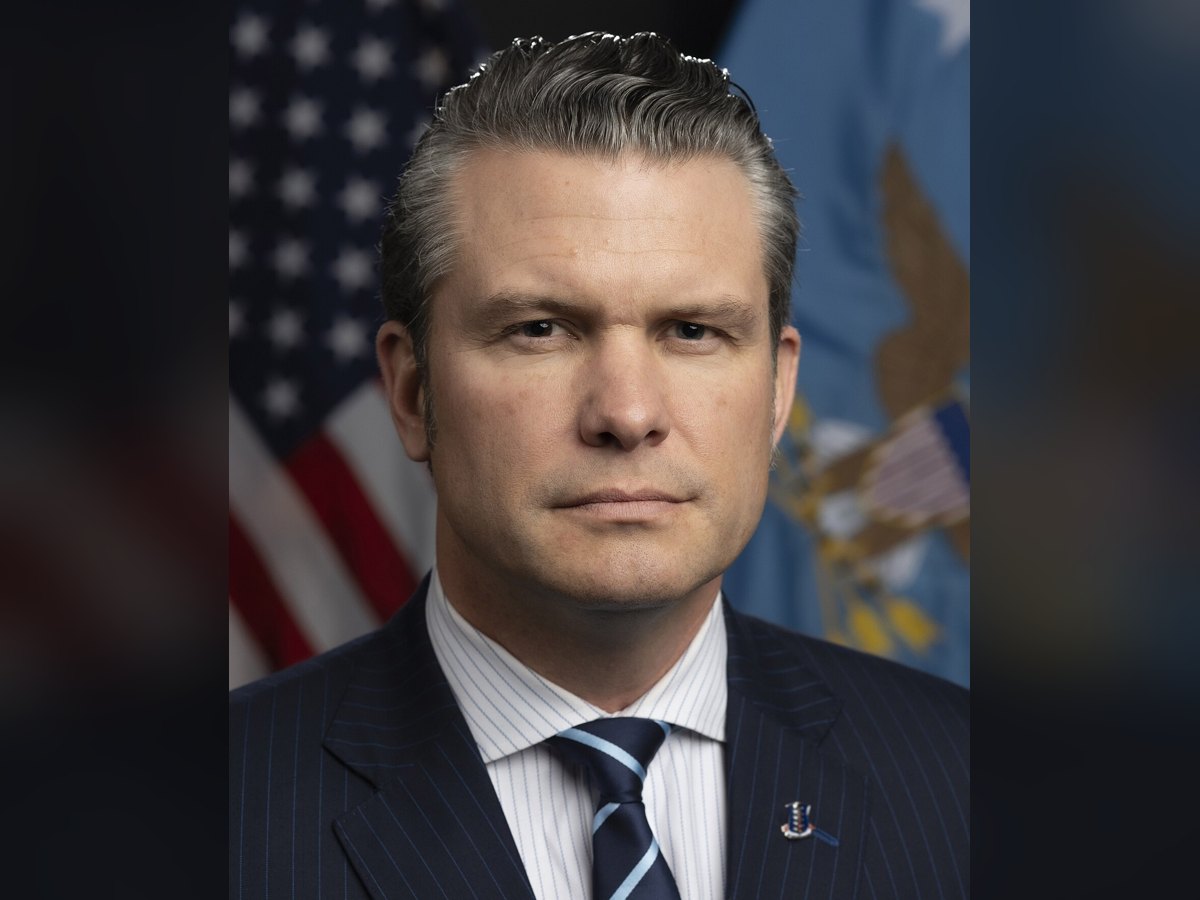
The United States plans to livestream the firing-squad execution of Nidal Hasan, the former army major who shot dead 13 unarmed soldiers at Fort Hood in Texas in 2009, Defence Secretary Pete Hegseth has said.
A Defence Department official confirmed to the BBC that the execution would be streamed. It is believed it would be the first public execution in the US in almost a century.
"People need to understand that there's serious consequences for these types of things," Mr Hegseth said.
The Pentagon announced earlier this week that Hasan would be executed in the first military execution in more than 60 years. Mr Hegseth said it would take place on 3 December.
Fierce reaction
The UN human rights office told AFP that livestreaming the execution would be "tantamount to a public execution and would breach the absolute prohibition of torture".
Democratic Senator Chris Murphy told CNN the idea was "disgusting" and compared it to executions staged by the Islamic State group.
John Mills, a lawyer who works with death row inmates, described the decision as "unprecedented in the modern era" and said it stood "on uncertain legal terrain". Psychiatrists quoted by the Guardian warned that watching the stream could cause post-traumatic stress in some viewers.
Mr Hegseth, speaking to the conservative channel Real America's Voice, said Hasan was "gonna get a firing squad of soldiers — as it should be". Asked whether Hasan had made any final requests or contacted President Donald Trump, he replied: "Don't care. We'll see him on December 3rd."
A survivor's view
Alonzo Lunsford, a former army sergeant who was shot seven times in the attack, told the BBC's Today programme he supported execution by firing squad as a method "befitting" what Hasan did.
But he questioned whether the public at large should be able to watch, citing concerns about the message it could send to young people. He said victims, survivors and their families should have the chance to see it "uncensored".
Mr Lunsford said he planned to attend in person. Before the shots are fired, he wants Hasan to look him in the eyes. "I want him to know he failed," he said. "I'm still here."
The Fort Hood attack
Hasan, a US Army psychiatrist from Virginia, opened fire in a crowded medical building at Fort Hood in November 2009. He admitted killing 13 unarmed soldiers and wounding many more. A military jury sentenced him to death in 2013.
The case has passed through years of military appeals. Military executions require presidential approval.
America and the death penalty
The last US military execution took place in 1961, when an army private was hanged for raping an 11-year-old girl in Austria. The last military execution by firing squad was in January 1945, when the deserter Eddie Slovik was shot in the final months of the Second World War.
President Trump overturned Joe Biden's moratorium on federal executions on returning to the White House. A Pew Research survey in July found 66% of Americans support the death penalty for murder, up six points in five years.
According to Amnesty International, the countries carrying out the most executions last year were China, Iran, Saudi Arabia, Yemen and the United States.
Supporters of the decision argue that transparency shows the seriousness of the crime and gives victims a measure of justice. Opponents say broadcasting a killing turns punishment into spectacle and degrades the state that carries it out.
Human rights groups are expected to argue that a livestream would breach US and international standards on the humane treatment of prisoners. Supporters of the plan say the public has a right to see justice carried out in its name.
The Pentagon has said more details about the livestream will follow. Legal challenges appear likely before 3 December.