
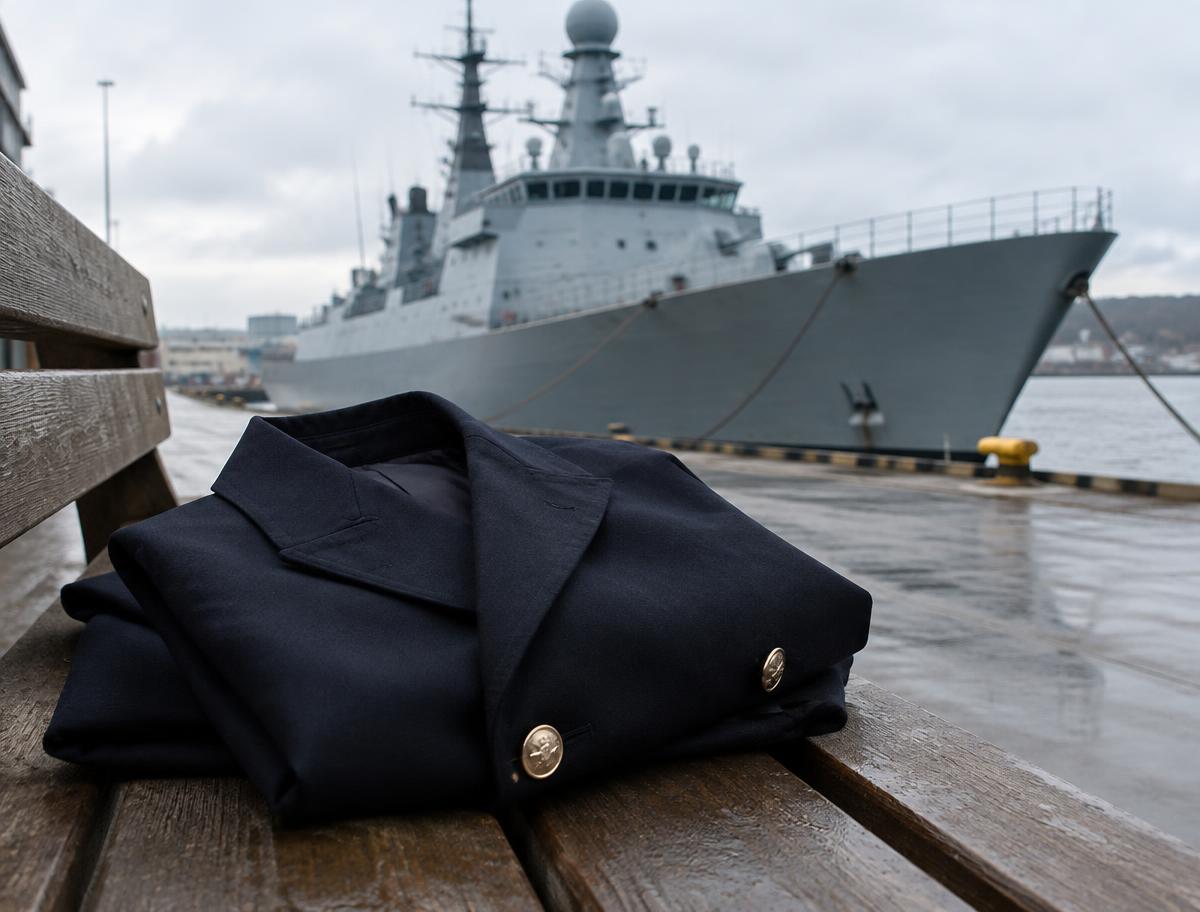
A serving member of the Royal Navy has been charged with spying for an unnamed foreign power and is due to appear at Westminster Magistrates’ Court on Thursday.
Teddy Young, 24, from Bedfordshire, faces two offences under the National Security Act 2023. The allegations concern the handling of protected information and preparation for its disclosure during a period between 26 November 2024 and 21 May 2025.
Young was arrested by counter-terrorism police at his home in Bedfordshire on Tuesday and has been remanded in custody. Police have not identified the foreign country allegedly involved. The charges are allegations, and he is presumed innocent unless proven guilty.
Commander Helen Flanagan, head of Counter Terrorism Policing London, described the allegations as ‘very serious charges against a serving member of the armed forces’. She said investigators had worked closely with operational colleagues at the Ministry of Defence to mitigate potential risks associated with the case.
A Royal Navy spokesperson confirmed that a service member had been charged, saying: ‘As legal proceedings are ongoing, it would be inappropriate to comment further at this stage.’
What the charges allege
One charge, brought under section 18 of the National Security Act, alleges conduct in preparation for committing an offence of disclosing protected information. The other, under section 1, concerns obtaining, copying, recording or retaining protected information with the intention that the conduct would benefit a foreign power.
The second allegation also concerns whether Young knew, or ought reasonably to have known in light of other matters known to him, that the conduct was prejudicial to the safety or interests of the United Kingdom. Both charges relate to the same six-month period, rather than to conduct alleged to have taken place this week.
The public reports do not identify the information concerned or specify Young’s rank, naval unit or duties. They do not establish that information reached a foreign government. The wording of the charges should not be taken as a finding that any alleged conduct occurred.
Forces News reported that Young had previously been arrested in Hampshire last year. His arrest at his Bedfordshire address this week preceded the court appearance announced on Thursday. No plea or outcome of that appearance had been reported in the accounts available on Thursday morning.
Security measures during the investigation
Flanagan said: ‘We have worked extremely closely with relevant operational colleagues within the Ministry of Defence as our investigation has progressed to ensure appropriate measures could be taken to mitigate any potential risks linked to this matter.’
That statement confirms cooperation between police and defence officials during the investigation. It does not set out what measures were taken, what material investigators examined, or whether any particular naval operation was affected. Those details have not been disclosed in the reports announcing the charges.
Police explicitly ruled out a connection with the separate investigation into suspicious activity near RAF Fairford in Gloucestershire. That inquiry has resulted in several arrests, including the detention of a seventh man on Tuesday. The cases are being investigated separately, and the Fairford allegations do not identify the foreign power alleged to be involved in Young’s case.
The law behind the prosecution
The National Security Act defines protected information as information, documents or other articles whose access is restricted for the purpose of protecting the United Kingdom’s safety or interests. Its definition also covers material where it is reasonable to expect access to be restricted for that purpose.
Section 1 covers several forms of handling such material, including obtaining and retaining it, as well as disclosure or providing access. That distinction matters because an allegation of obtaining protected information is not, by itself, an allegation that it has already been passed to another person.
Section 18 separately addresses preparatory conduct undertaken with the intention of committing specified offences. These include the obtaining or disclosure of protected information. It allows a charge concerning preparation to be brought separately from a charge concerning the handling of the material itself.
The Act’s foreign power condition can be met where a person intends conduct to benefit a foreign power. In that part of the legislation, it is not necessary to identify a particular foreign power. The fact that police have not publicly named a country therefore does not resolve any question about the evidence prosecutors will present.
For now, the announced next step is Young’s appearance before magistrates. The Royal Navy has declined further comment while proceedings are active, and the court will determine how the prosecution proceeds.