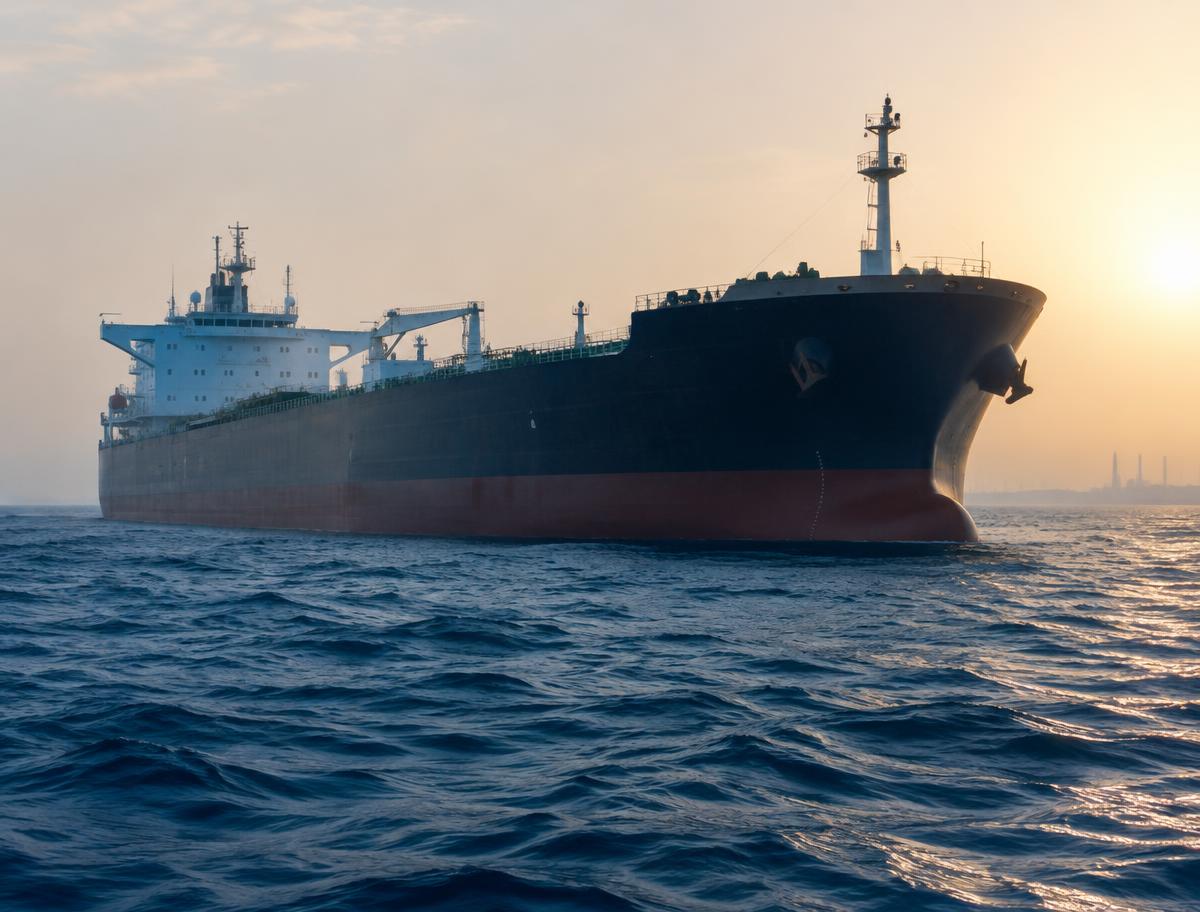
A tanker has been hit by multiple projectiles off the north coast of Qatar, with casualties reported, as attacks on Gulf shipping intensify and Iran threatens to close a route through the Strait of Hormuz.
The United Kingdom Maritime Trade Operations agency, UKMTO, said the vessel was struck on Wednesday about 94 kilometres north of Madinat ash Shamal. It did not identify the ship’s origin or say how many people had been killed or injured. Authorities were investigating.
The attack took place in the wider Gulf, well west of Hormuz, rather than in the narrow waterway where many recent incidents have been concentrated. The incident raises fresh concerns for crews and shipping operators navigating a region central to international energy supplies.
Responsibility for this particular attack has not been established in the reports announcing it. Iran’s threats against shipping routes form part of the wider context, but do not by themselves identify who fired the projectiles that struck the tanker off Qatar.
Attack beyond the strait
Al Jazeera reported that the position falls within Qatar’s exclusive economic zone and that Qatar had not commented on the incident. Citing the specialist publication Maritime Executive, it said this was the first reported attack on a tanker in the western half of the Gulf in weeks.
That location matters because the shipping risks are not confined to the entrance and exit of Hormuz. Commercial vessels travelling between Gulf ports also have to assess threats along their journeys before reaching the strait, or after passing through it.
UKMTO’s initial report left several important details unresolved, including the number of casualties and the identity of the vessel. Without those details, the scale of the human impact and any disruption to its voyage cannot yet be stated with precision.
The agency said on Tuesday that nine attacks on tankers had been recorded in Hormuz this month, half the total recorded in September across the waterway and the Gulf combined. The Guardian separately reported at least 12 attacks on oil and gas tankers around the strait in the week to 5 October, citing three security sources.
Iran threatens a southern passage
Iran said on Wednesday that routes it regarded as illegal would be closed, referring to a southern passage near Oman’s coast. Mohammadreza Naqdi, an adviser to the Revolutionary Guards’ commander, described routes used by small boats transferring oil to tankers as smuggling pathways.
Naqdi told Iran’s Fars news agency that the strait was closed and that Iranian armed forces had full control over it. That is Iran’s stated position, not proof that all commercial traffic has stopped. Reported shipping and export figures show that some movement continues.
The threats come during the war that began with US-Israeli attacks on Iran on 28 February. Iran has restricted shipping through Hormuz in retaliation, while the United States has maintained a blockade of Iranian ports. Diplomatic efforts to resolve the conflict remain stalled.
The wider confrontation involves competing claims about control of the waterway and the protection of merchant ships. Those claims need to be distinguished from the confirmed facts of individual incidents, particularly while investigations into casualties and responsibility remain incomplete.
Oil prices and the export picture
Oil prices climbed above $100 a barrel as attacks on tankers increased, the Guardian reported. Before the war, Hormuz typically handled about 125 large commercial vessels a day, and shipments through it accounted for roughly a fifth of global crude oil and liquefied natural gas supplies.
Yet attacks have not translated into a simple, uninterrupted collapse in regional oil exports. Al Jazeera cited provisional Kpler data showing the seven-day moving average of Middle East crude exports reaching 18.3 million barrels a day on 30 September, compared with about 18 million in the year before the war.
Those figures describe crude exports, not the absence of danger for individual crews or vessels. Higher cargo volumes can coexist with serious attacks, restricted routes and uncertainty about whether a particular voyage can be completed safely.
For now, the immediate priority in the Qatar incident is establishing the tanker’s condition and the extent of the casualties. The attack adds another unresolved maritime emergency to a conflict in which commercial crews continue to face risks far beyond the military confrontation itself.