
Britain is keeping a diplomatic presence in occupied East Jerusalem despite the withdrawal of most of its diplomats, after a dispute with Israel over UK sanctions on settlements in the occupied West Bank.
Israeli Foreign Minister Gideon Saar said the British consulate was ending its operations on Thursday and that 20 diplomats, including the consul general, would leave. He said seven diplomats could remain in the British-owned building with a ‘very limited scope of activity’.
Foreign Secretary Ed Miliband said the building would not close and would operate as the UK Mission, Jerusalem. Britain described the withdrawal of staff and families as temporary and necessary for their safety, rather than the abandonment of its diplomatic work with Palestinians.
The outcome preserves a British presence but leaves the two governments offering different accounts of what has been agreed. Israel presents the change as the closure it threatened last month; the UK says an independent, operational mission will remain.
Why the dispute escalated
Israel announced on 8 September that it would act against the consulate following British sanctions on Israeli settlements in the West Bank. The settlements are illegal under international law. Thursday marked the deadline of the 30-day period Israel had set for the closure.
The consulate, established in 1838, handles British relations with Palestinians in Jerusalem, the West Bank and Gaza. It is separate from the British embassy in Tel Aviv, which is the main diplomatic channel for UK relations with Israel.
That distinction is central to the disagreement. Britain maintains that East Jerusalem is occupied territory and that Israel has no legal right to close the consulate. Israel, meanwhile, has sought to restrict the operation in response to policies it opposes.
Talks continued ahead of the deadline in an effort to prevent the entire mission from being shut. The arrangement announced on Thursday allows a smaller team to stay, but does not remove the underlying disagreement over Britain’s position on settlements or its relationship with Palestinians.
Two accounts of the same arrangement
Saar said the consulate’s sign had been removed and that its operations were closing. He acknowledged that the building belonged to the British government and said Israel had authorised seven diplomats to work there under a restricted arrangement.
Miliband said discussions had not produced the necessary assurances for the security and protection of British staff and premises. Britain had therefore temporarily withdrawn a number of staff and their families. He said the mission would continue to ‘work with the Palestinian people’.
The Foreign Office said the remaining diplomats would be independent and operational, continuing to provide vital services. That description contrasts with Israel’s insistence on a limited scope of activity and leaves questions about how the smaller mission will function in practice.
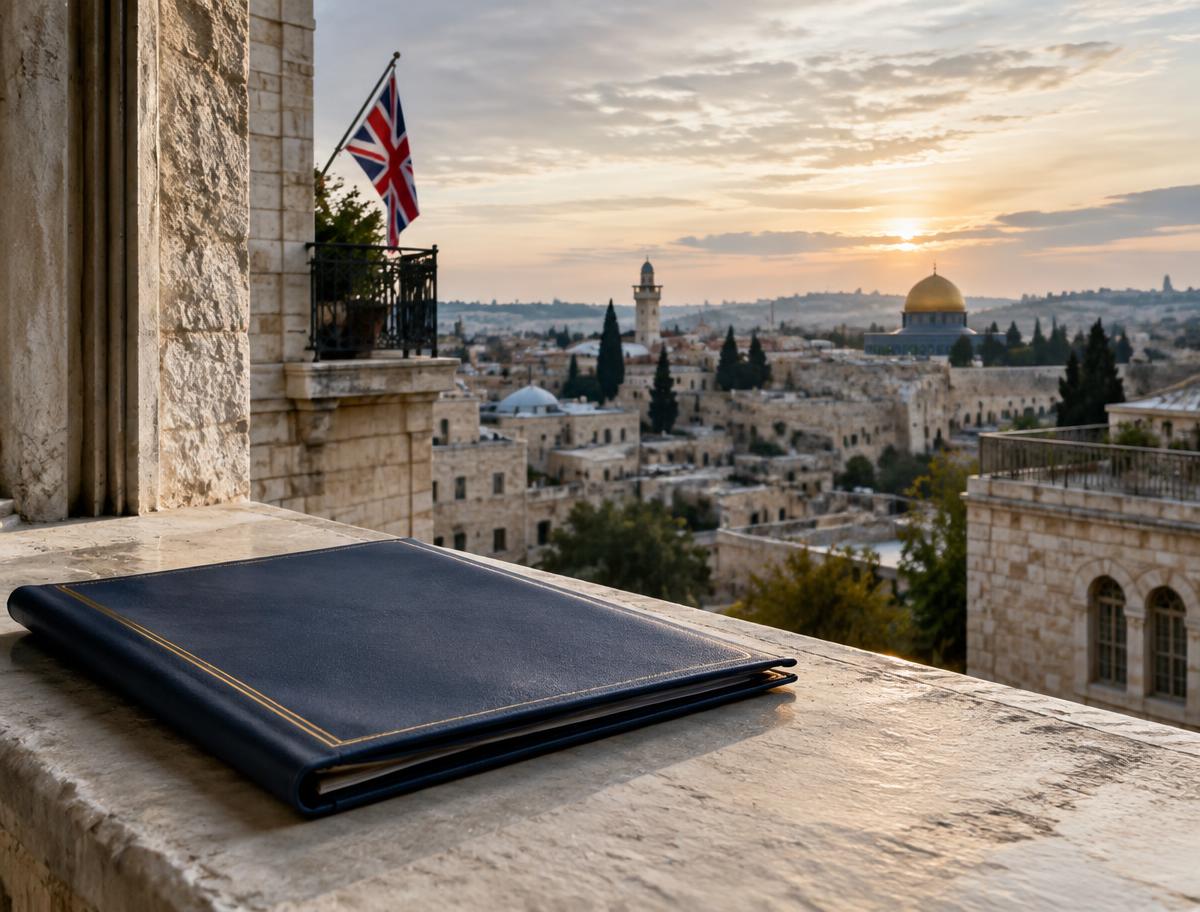
The British flag was still visible outside the building on Thursday morning, and staff were seen entering. The physical presence therefore continued even as the Israeli government announced the end of the consulate’s operations under its previous name.
A presence retained, not a dispute resolved
Foreign Office minister Stephen Doughty told BBC Radio 4’s Today programme that the building remained open and staff could continue important work engaging with the Palestinian Authority. He said conversations with Israel were continuing.
Asked whether the outcome was a political fudge, Doughty pointed to the continuing presence rather than the change of name. He also said Britain’s policies towards the Israeli government, with which it fundamentally disagreed, would continue.
Miliband reserved the right to take reciprocal action but said Britain would not do so while discussions were continuing and remained credible. Israeli media had reported the possibility of Britain expelling Israeli diplomats from London, but such action had not been announced as part of Thursday’s outcome.
The smaller mission gives Britain a basis from which to continue engagement and potentially rebuild its operation. It also means fewer diplomats are available than before, even though the UK insists essential work will continue. Neither government’s announcement establishes a return to the previous staffing arrangements.
For Palestinians, the immediate issue is whether the retained team can sustain the diplomatic contact and services previously handled by the consulate. For London and Israel, the arrangement avoids an immediate complete rupture at the building while leaving the wider political and legal dispute unresolved.