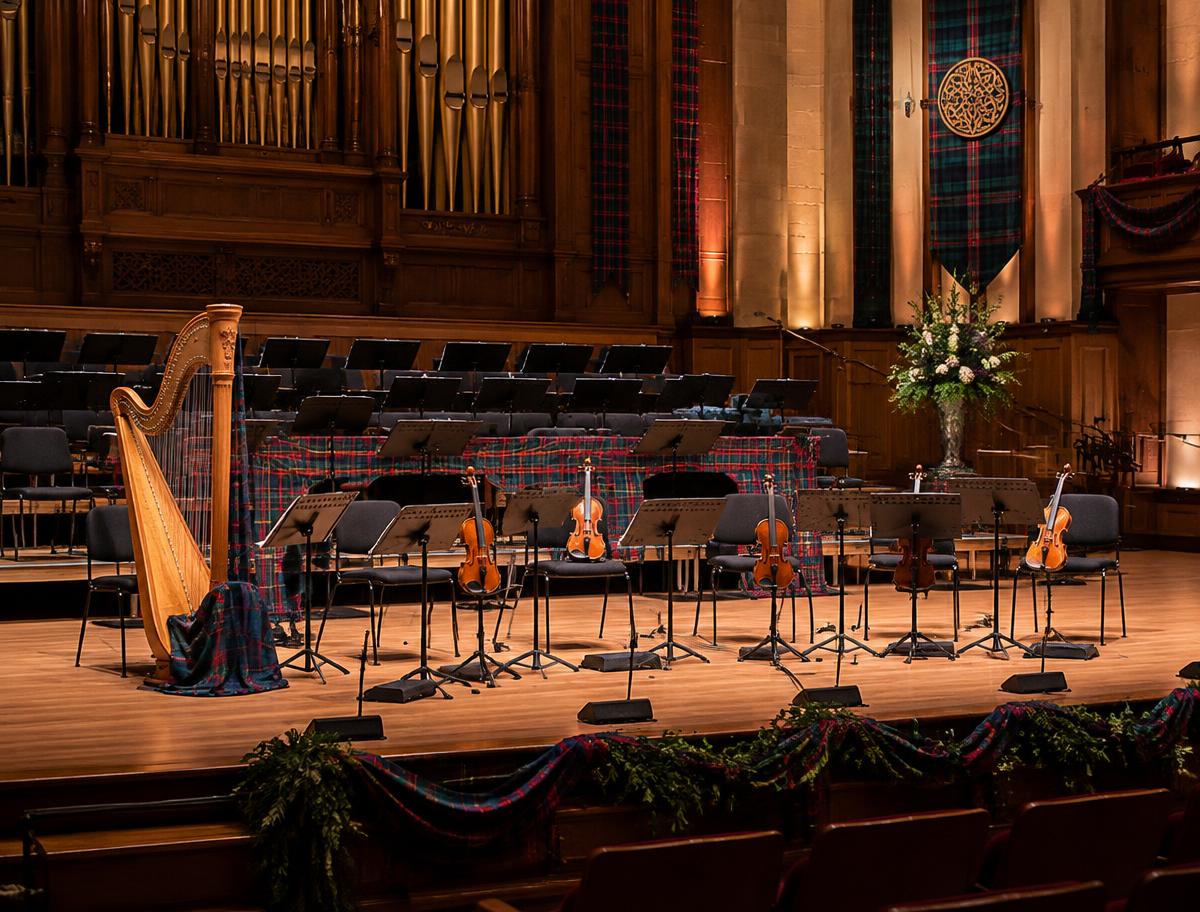
Glasgow has been transformed into the self-styled "City of the Gaels" as the Royal National Mòd, the world's largest celebration of Scottish Gaelic language, music and culture, got under way for a nine-day run across the city.
Around 10,000 competitors, performers and visitors are expected to take part in the festival, known in Gaelic as Baile Mòr nan Gàidheal, which features almost 300 concerts, competitions, art exhibitions, sessions, film screenings, processions, literature events and sporting spectacles.
The festival, which runs until Saturday 17 October, is being staged across 16 venues in Glasgow, including the Barrowland Ballroom, the Glasgow Royal Concert Hall, the National Piping Centre, City of Glasgow College and Edward House.
A Victorian tradition returns
The Mòd was founded in the Victorian era and has been held in a different Scottish town or city each year since, drawing competitors in music, song, drama and literature from across the Gaelic-speaking world.
Glasgow first hosted the event in 1895 and has staged it 12 times since, most recently in 2019. Organisers say this year's return comes at a moment of real momentum for the Gaelic language in the city, which has one of the fastest growing populations of Gaelic learners in Scotland.
This year's festival has attracted record entries, with more than 2,000 competitors, aged between four and 80, set to take part across the week's events. Organisers say the scale of participation reflects a broadening appeal for the Mòd beyond its traditional base of fluent Gaelic speakers, drawing in new learners and those encountering Gaelic culture for the first time.
Marking 40 years of Gaelic medium education
The festival opened on Friday evening with a concert at the Glasgow Royal Concert Hall celebrating 40 years of Gaelic medium education in the city. The event, titled Ar Cànan 's ar Ceòl - meaning Our Language and Our Music - paid tribute to generations of campaigners, educators and families who have helped the language flourish in Glasgow's schools.
The concert was hosted by television presenter Phil MacHugh, alongside his cousin and fellow presenter Catrìona MacNeil. Both were among the first pupils to attend the Sir John Maxwell Gaelic medium education unit when it opened in Glasgow in 1985, and both went on to build careers in broadcasting while maintaining close ties to the language.
MacHugh, who also co-hosts the programme Scottish Fling alongside actor Martin Compston, said taking part in the opening concert carried personal significance.
"My connection to Gaelic runs deep," he said. "I was proudly educated through Gaelic Medium Education at Sir John Maxwell and Hillpark Gaelic Unit going through the system from the age of four to 17. That education opened so many doors for my future and gave me memories, friendships and opportunities beyond anything I could have imagined."
The concert traced the journey of Gaelic medium education in Glasgow from its origins at the single unit in 1985 to the present day, when the city now has five dedicated Gaelic schools. It combined live music, archive film and a specially commissioned score performed by an orchestra made up of past and present pupils of Gaelic medium education, alongside guest performers including the folk-rock group Mànran.
Why the Mòd matters
Supporters of the Gaelic language see the Mòd as one of its most important showcases, offering both a competitive platform for singers, musicians and performers and a wider public celebration intended to draw in audiences who might otherwise have little exposure to the language.
The festival's return to a major city such as Glasgow is also seen as significant for efforts to grow interest in Gaelic beyond its traditional heartlands in the Highlands and Islands, with organisers pointing to the rising number of Gaelic learners in urban areas as evidence that the language's reach is expanding.
Glasgow's Gaelic schools have grown steadily in the four decades since the Sir John Maxwell unit opened, a period that has coincided with broader policy efforts in Scotland to support and expand Gaelic medium education, including statutory duties on local authorities to assess demand for Gaelic-medium schooling.
A week of competition and celebration
Over the coming days, competitors will take part in a wide range of disciplines, from solo singing and choral competitions to instrumental music, drama and literary events, with adjudicators awarding medals and trophies across age groups and categories.
The festival's scale means it also delivers a significant economic boost to its host city, with thousands of visitors expected to fill hotels, restaurants and shops in Glasgow over the course of the nine days.
Civic leaders in Glasgow have welcomed the Mòd's return, framing it as an opportunity to showcase the city's cultural life to a wider audience while reinforcing its credentials as a supporter of Gaelic language and heritage.
Looking ahead
As the week progresses, attention will turn to the results of the main competitions, which traditionally culminate in high-profile events voted on by audiences and adjudicators alike, crowning the festival's leading performers.
For many involved, though, the significance of the Mòd lies as much in its atmosphere as in its competitive outcomes - a rare large-scale gathering where Gaelic speakers, learners and the simply curious can mix freely across generations.
Organisers say the hope is that this year's record entries, and the prominence of events such as the 40th anniversary concert, will help cement a lasting legacy for Gaelic in Glasgow long after the festival moves on to its next host city in 2027.