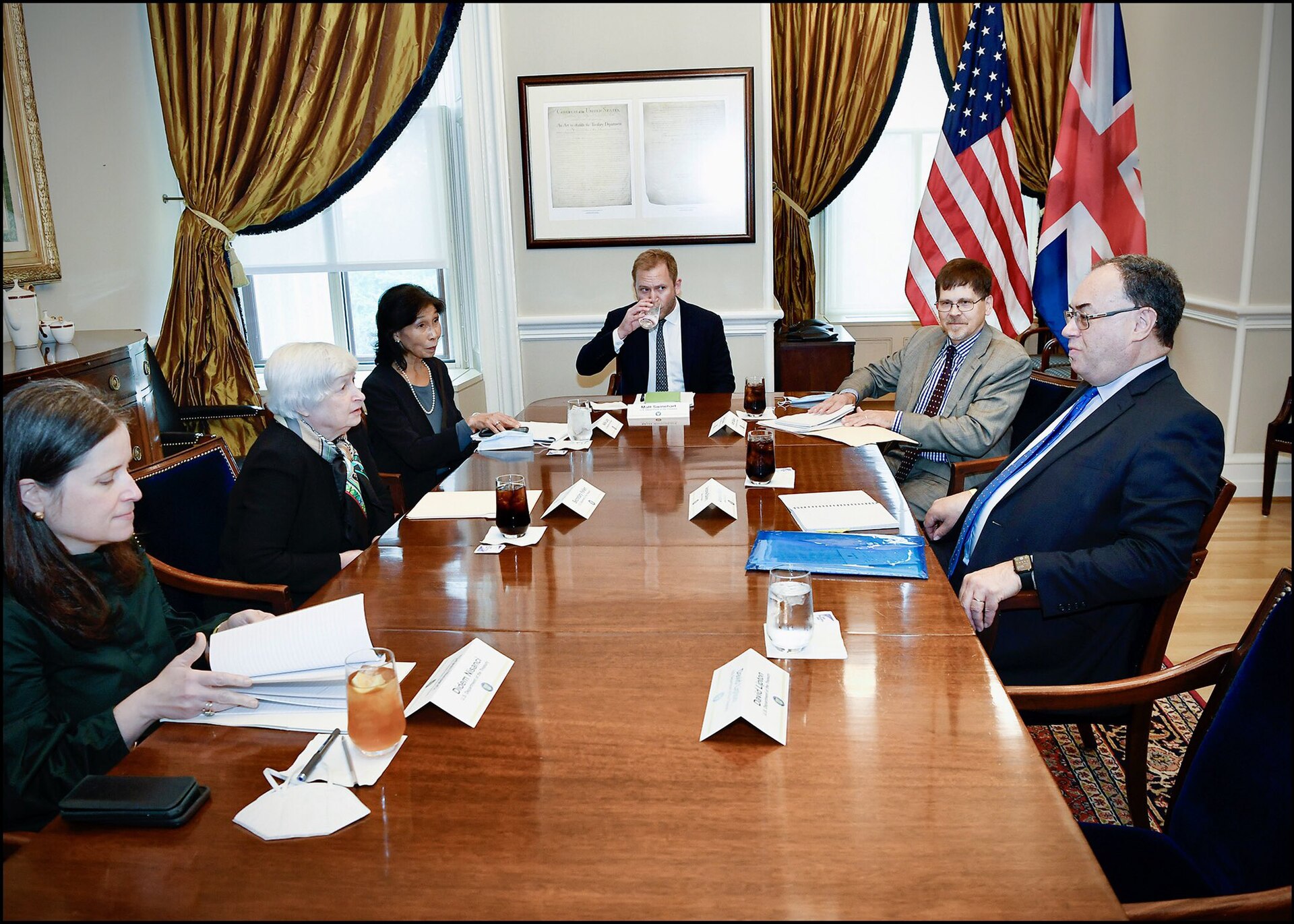
Bank of England governor Andrew Bailey has joined a walkout by European financial leaders at an International Monetary Fund meeting in Bangkok, protesting against the participation of Russia’s finance minister.
Bailey left the session when Anton Siluanov began addressing delegates in Russian. Counterparts from France, Germany and several Scandinavian and Baltic countries also walked out, according to reporting by the Guardian and Reuters.
The Bank of England confirmed that its governor took part. German Bundesbank president Joachim Nagel said nearly half of the delegates joined the departure, although that estimate should not be read as a published list of every country involved.
The protest exposed differences over how international financial institutions should engage with Russia while its war against Ukraine continues. European participants opposed normalising relations, while the United States supported Russia’s presence at the talks.
A split over participation
A European diplomat quoted by Reuters described the war as existential for Europe and said relations with Russia could not be normalised. The walkout gave public expression to that position without ending the meeting itself.
Germany had already warned against efforts to bring Russia back into international forums. Siluanov also attended a meeting of G20 finance ministers and central bankers this year, making the Bangkok confrontation part of a wider disagreement over diplomatic engagement rather than an isolated seating dispute.
US Treasury undersecretary Erin Browne told Reuters that Washington supported Russia’s participation despite European concerns. That position is distinct from the decision by Bailey and other European officials to leave while Siluanov spoke.
The reports did not describe a formal vote to remove Russia from the IMF or a decision to change its membership. Nor did the walkout itself impose a new economic sanction. It was a protest over participation and the political meaning attached to continued engagement.
For the UK, the confirmed action was Bailey’s departure from the session. The Bank’s confirmation does not establish that every British official at the summit left, or that the government announced a separate policy measure as a result of the protest.
Meeting continues despite protest
Saudi finance minister Mohammed al-Jadaan, who chaired the IMF’s steering committee, acknowledged the walkout but emphasised the agreement achieved at the meeting. He said all members had agreed to the chair’s statement and presented that common position as the central outcome.
His response illustrates the tension facing international economic gatherings: governments can share concerns about financial stability while disagreeing sharply over the legitimacy of another participant. The European protest and the agreed statement therefore describe different aspects of the same meeting.
The discussions took place against continuing disruption from Russia’s war against Ukraine and conflict affecting the Strait of Hormuz. The meeting heard that the global economy had shown resilience despite those pressures, but that its ability to absorb further shocks had weakened.
Al-Jadaan’s statement said the global economy had weathered the latest shocks better than expected. It also warned that buffers had been eroded and that resilience could not be taken for granted, rather than offering an unqualified assurance that risks had passed.
Trade, energy and debt risks remain
The chair highlighted public debt and high bond-market rates as reasons to avoid complacency. Those concerns sit alongside the diplomatic dispute: borrowing costs and fiscal pressures affect governments regardless of whether they agree over Russia’s attendance.
Al-Jadaan also warned that escalating conflicts and trade tensions could disrupt important trade routes and worsen commodity-price pressures. Refined energy products were specifically mentioned, along with risks to energy and food security.
Those warnings do not amount to a forecast of a particular rise in British household bills or food prices. They identify channels through which further international disruption could affect economies, without establishing the size or timing of any impact on individual consumers.
Bailey’s participation made the walkout a significant British development at the summit, but it was not an interest-rate announcement. No new Bank of England rate decision or domestic monetary-policy change was reported as part of the protest.
The immediate outcome was a visible division over Russia alongside continued agreement on a statement about global economic risks. The meeting proceeded, but the departure of European delegates demonstrated that cooperation on financial stability had not resolved the argument over Russia’s place at the table.