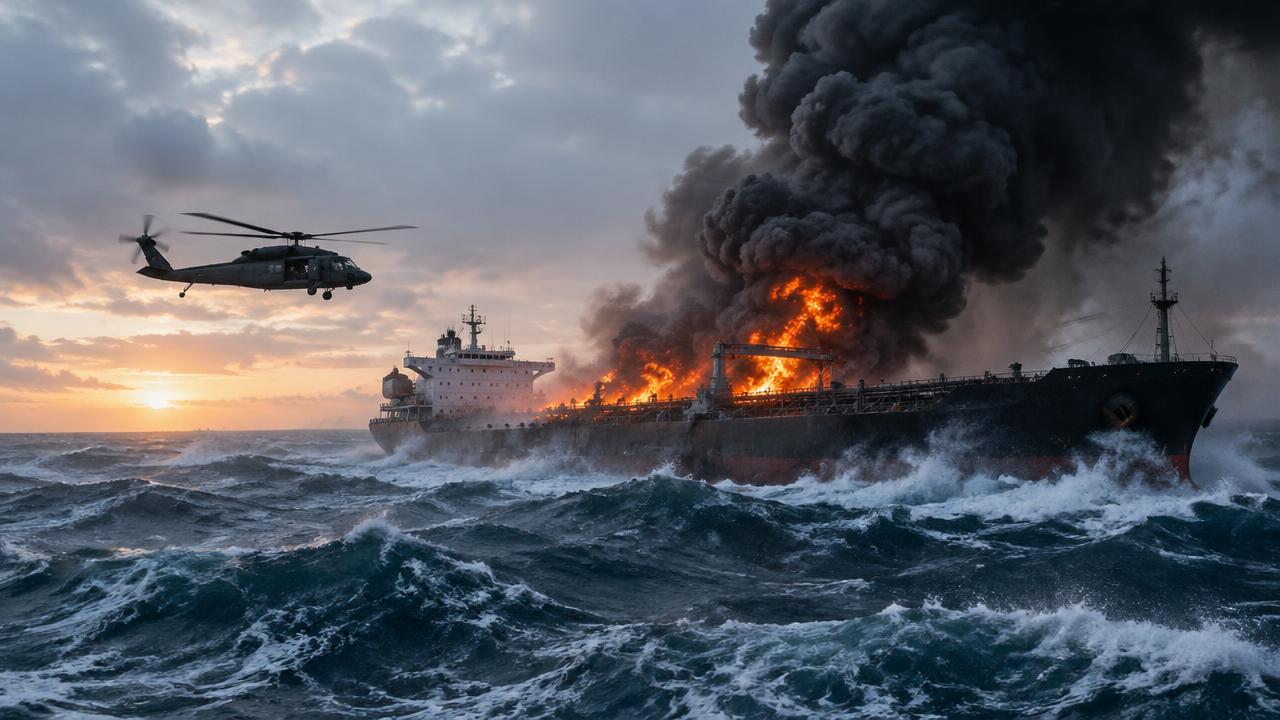
Eight of the 12 crew of an oil tanker are missing after a drone attack set the vessel ablaze off the coast of Romania, a Nato member, in the latest escalation of the war at sea in the Black Sea.
The San Marino-flagged Wine Trader was about 13 nautical miles (24km) east of the mouth of the River Danube at Sulina when it reported explosions and a fire at about 07:00 local time (05:00 GMT) on Thursday. Romanian President Nicușor Dan later confirmed the ship had been struck by drones.
The tanker had been sailing from Tunisia to Romania. Romanian media quoted crews on nearby ships as saying it was hit by two drones.
Rescue in very high waves
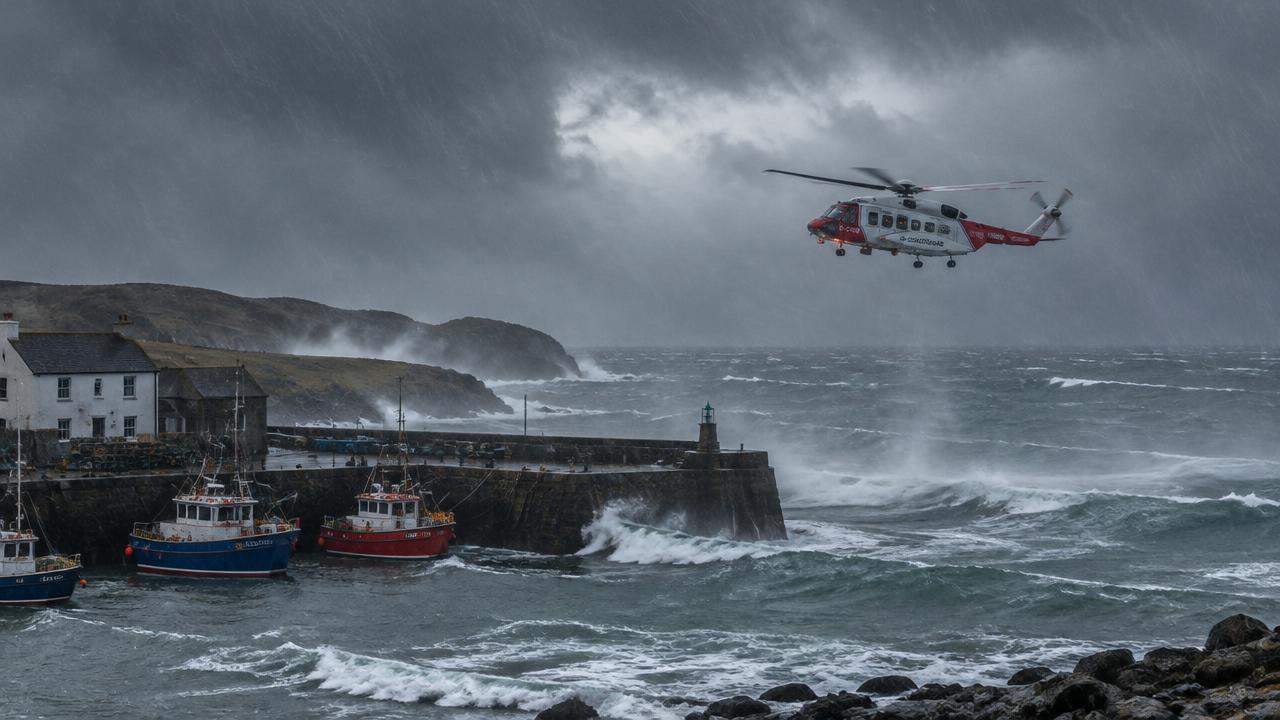
Romanian authorities say a search and rescue operation is continuing in rough seas, with two Black Hawk helicopters and two rescue boats deployed. The interior ministry released video of one helicopter hovering over the burning ship.
Officials said the priority was to reach the four crew members confirmed to be alive, while keeping rescue teams safe in very high waves.
Who is responsible?
Romania has not formally said who launched the drones. A swarm of Russian drones was detected overnight not far from the scene, near Ukraine's Snake Island.
Moscow said on Thursday that two cargo ships carrying military cargo bound for Ukraine's port of Odesa had been hit during the crossing. It did not name the vessels.
Russia says it is targeting ships delivering weapons and dual-use goods to Ukrainian ports. Kyiv and its European allies say merchant ships carrying grain and other civilian cargo are being attacked.
Ukraine has directly blamed Russia for earlier strikes on civilian vessels in the western Black Sea, a vital route for Ukrainian exports and imports. Russia, for its part, accuses Ukraine of attacking Russian merchant shipping; last week Ukraine hit an oil tanker in the Russian Black Sea port of Sochi.
A dangerous week at sea
The attack follows a string of incidents along the western coast of the Black Sea. On Tuesday, two merchant ships were struck by drones further south, off Bulgaria, and one sank, leaving 11 crew missing. Bulgaria said it suspected Russia was behind that attack and summoned Moscow's envoy.
Last week another two ships were hit off the Bulgarian coast.
European Commission President Ursula von der Leyen said on Tuesday that the Black Sea was becoming "another front of escalation of the Russian war in Ukraine", adding: "This is unacceptable."
Turkey, which controls access to the Black Sea through the Bosphorus, has urged both Russia and Ukraine to stop attacks on shipping. Moscow has repeatedly rejected US and European calls for a naval ceasefire, blaming Ukraine for strikes on Russian vessels.
Nato's Article 4 on the table
President Dan said Romania wanted to establish all the facts, but added: "There will be a response from the Romanian state."
He is due to meet Nato Secretary General Mark Rutte in Brussels alongside Bulgarian Prime Minister Rumen Radev to discuss the growing security threat in the region. The two leaders are expected to consider whether to invoke Article 4 of the Nato treaty.
Article 4 allows any member to request formal consultations with allies when it believes its territorial integrity, political independence or security is under threat. It does not commit the alliance to military action – that falls under Article 5, the collective defence clause.
Mr Dan said talks would focus on operational needs, including extra equipment to protect shipping.
Why it matters
Both Russia and Ukraine are among the world's biggest grain exporters, and the Black Sea carries a large share of that trade, along with oil and other goods. Attacks on shipping push up insurance costs, deter shipowners and can feed through to food and fuel prices far beyond the region.
For Romania and Bulgaria, the strikes bring a war that has run since Russia's full-scale invasion of Ukraine in 2022 ever closer to their own shores. Moscow currently controls about a fifth of Ukrainian territory.
For now, the most urgent question is the fate of eight seafarers lost somewhere in a cold and violent sea.