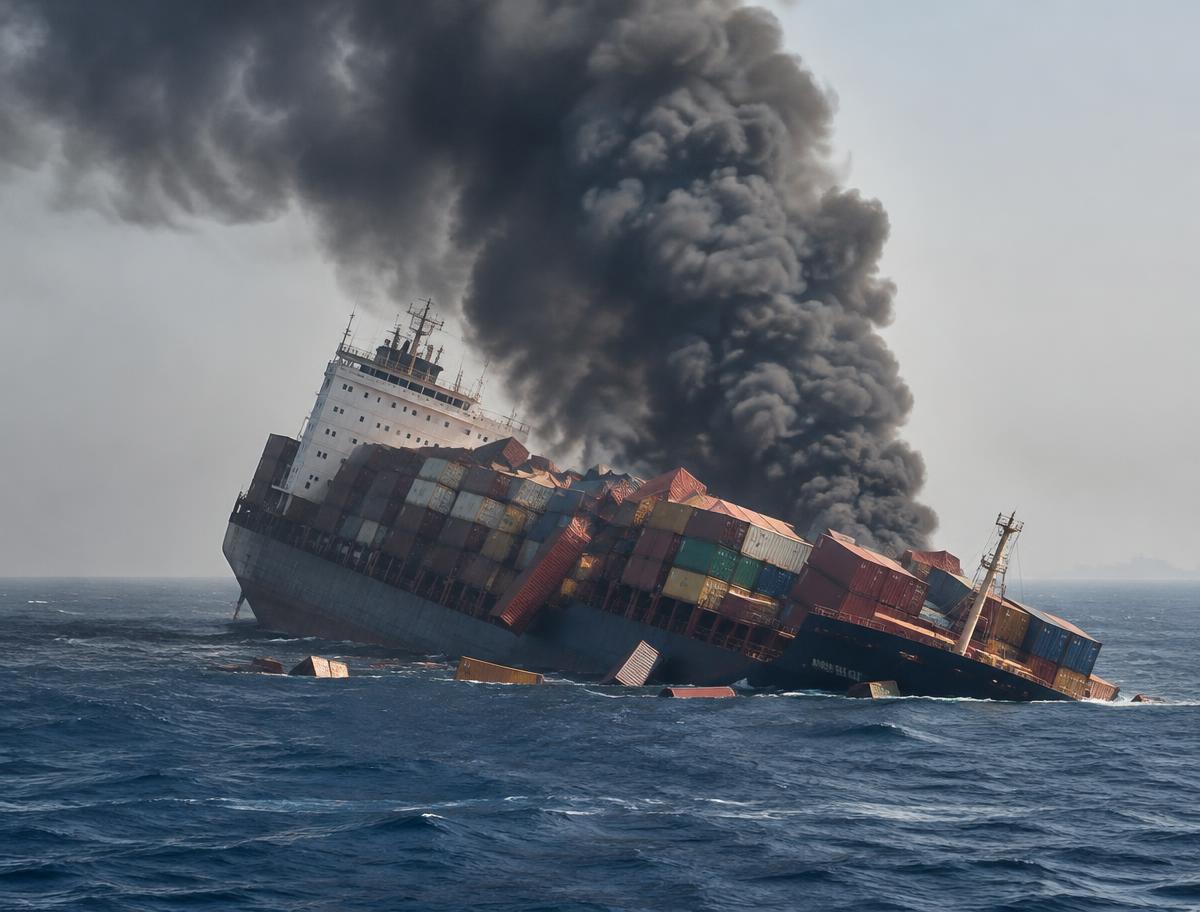
Two container ships have sunk near the Strait of Hormuz after being struck, amid the sharpest rise in attacks on commercial shipping since the start of the US-Israel war with Iran.
The Singapore-flagged GFS Pride went down on Wednesday after being hit the previous day. Hours later the Antigua and Barbuda-flagged Cape Dao sank close to the strait, having been struck by a projectile on 23 September, according to International Maritime Organization data.
UK Maritime Trade Operations (UKMTO), which monitors shipping in the region, reported at least five incidents – including drone strikes on tankers and other merchant vessels – in the 48 hours to Wednesday. Six vessels were attacked on Sunday alone.
"There is a tempo increase in strikes, which looks deliberate," one maritime security source said.
Competing accounts
Iran gave a different version of events. State television quoted Iran's Islamic Revolutionary Guard Corps (IRGC) as saying a cargo ship – apparently the GFS Pride – had sunk after hitting a naval mine while travelling on an "illegal and dangerous route" through the strait without authorisation.
Footage broadcast in Iran showed the vessel tilted in the water and pouring thick smoke. The broadcast said it had been carrying 2,500 containers.
UKMTO, however, said both ships appeared to have been hit by unidentified projectiles, raising questions about Tehran's account. Daily Alba has not been able to independently establish what struck either vessel.
Iran has repeatedly warned ships not to transit the strait without its approval. The US military has been guiding vessels along a route closer to the coast of Oman.
A pattern of strikes
An analysis by the Financial Times found that 24 ships were hit in the two weeks to 11 October, including three tankers carrying refined fuel and two carrying crude oil.
The rising rate of attacks appears to have caused a sharp fall in oil shipments through the strait, one of the world's most important energy corridors.
Two Iranian officials told Reuters that Iran had recently changed both the type and pace of its attacks on vessels it regards as breaking its restrictions. "The aim is to frustrate efforts by the United States and its allies to bring down global oil prices," one said. The officials said the strategy had been agreed at the highest levels of Iran's leadership.
The midterm factor
The escalation comes three weeks before the US midterm elections on 3 November, which will decide control of Congress.
US fuel prices have risen by almost 70% since the war with Iran began, and Republicans are bracing for a backlash from voters. The Trump administration has sought to shift blame for higher prices onto Ukraine's attacks on Russian oil refineries.
Washington says its operations are aimed at protecting freedom of navigation and preventing Iran from holding the global economy hostage. Tehran says it is defending its territorial waters against an aggressor and that ships ignoring its rules do so at their own risk.
What it means beyond the Gulf
For shipping companies, the sinkings are a stark escalation: damaged vessels can often be towed to port, but losing entire ships – and their cargo – sends insurance costs soaring and makes crews more reluctant to sail.
For consumers far from the Gulf, including in Scotland and the rest of the UK, the consequences arrive through fuel prices, energy bills and the cost of imported goods.
There were no immediate reports on the fate of the crews of either vessel. Maritime authorities are expected to give further details as investigations continue.
With both sides blaming each other and the US vote approaching, few in the shipping industry expect the waters around Hormuz to become safer soon.