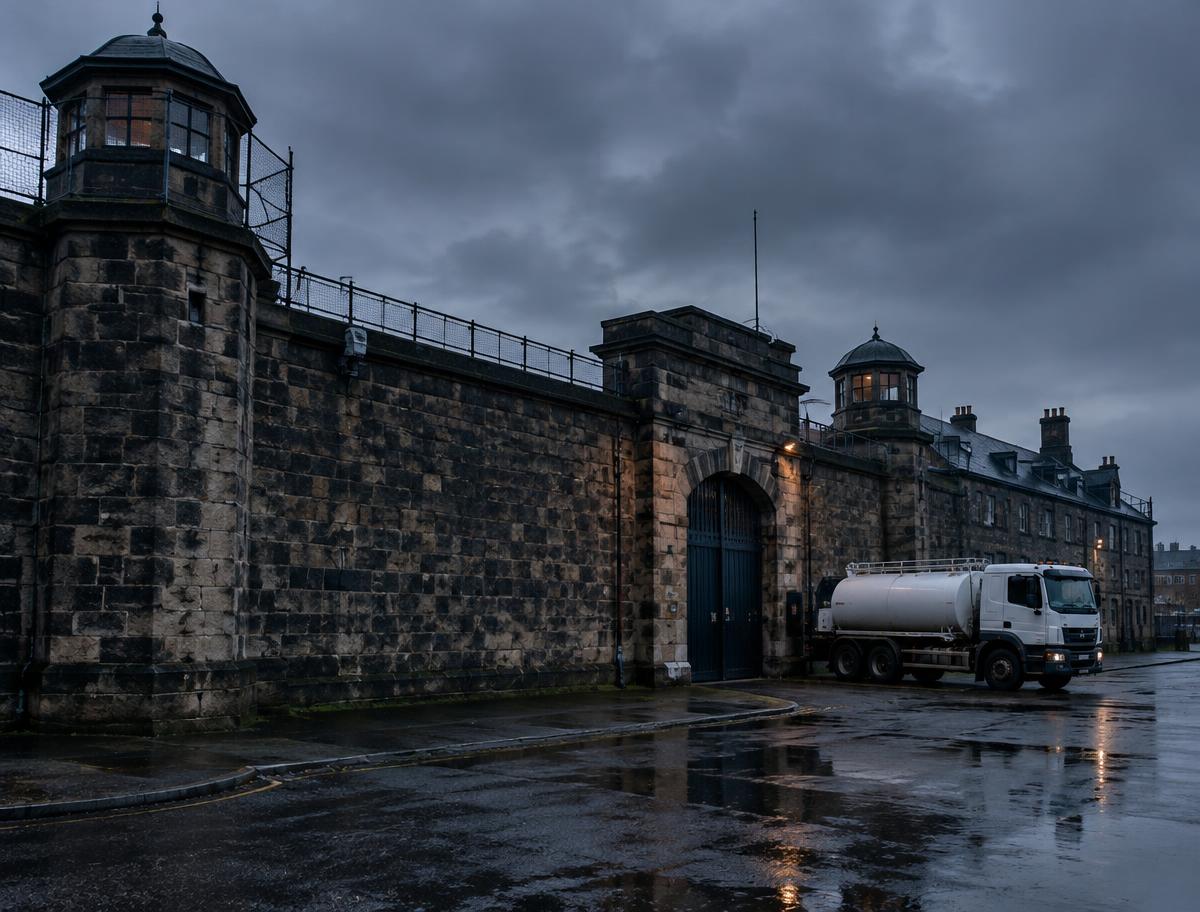
Parts of HMP Barlinnie in Glasgow are still affected by water supply problems almost a week after they began, with water tankers being used to refill the prison's tanks and families reporting that some inmates have been unable to flush the toilets in their cells.
The Scottish Prison Service (SPS) has confirmed that most areas of Scotland's largest jail have now suffered disruption to the supply since the trouble started last Thursday.
A Barlinnie spokesperson said "most areas in the prison have been affected in one way or another" – including facilities used by staff and visitors as well as the halls where prisoners live.
'Restored' – but not resolved
On Sunday the SPS said the water supply had been restored. It has since admitted that disruption is continuing.
Friends and relatives of prisoners have described days without hot water and, at times, without any running water at all. Some say the problems have also affected the heating in parts of the building as temperatures fall in Glasgow.
Concerns raised by families include prisoners being unable to get warm water to wash and being unable to flush toilets in their cells – a particular worry in a jail where many inmates share cramped accommodation. The SPS insists those specific issues have been resolved.
An SPS spokesperson said: "As our estates team have worked through the issues of the last few days, further repair work has been identified. While water supply has been restored, and heating and hot water are available, there continues to be some disruption. We are grateful to those in our care for their cooperation and understanding."
The service said investigative and remedial work remained under way and that it could not yet estimate how much water had been lost over the past week. Questions have also been raised about the effect of a large volume of water leaking into the ground beneath the Victorian building.
A prison past its limits
The water failure is the latest blow to a jail that has become a byword for the strain on Scotland's prison estate.
Barlinnie is 143 years old. Inspectors last year described parts of it as being in a "wretchedly poor state" and found it operating at about 30% over capacity, housing almost 1,400 prisoners in a building designed for 987.
Overcrowding means that any failure in basic services – water, heating, sanitation – is felt by far more people than the building was ever designed to hold. It also places extra pressure on prison officers, who must manage frustrated inmates while engineers work around them.
Campaigners for prison reform have long warned that conditions at Barlinnie risk breaching basic standards of decency. A week in which some cells could not reliably flush a toilet is likely to sharpen those arguments.
Ministers 'monitoring'
The Scottish government said ministers were monitoring the situation closely.
A spokesperson said: "We are aware of the continuing water pressure issues at HMP Barlinnie and note that hot water and heating has now been restored, although some disruption persists. The Scottish Prison Service is working hard to ensure services get back to normal as quickly as possible, recognises the inconvenience and frustration this has caused for those who live and work in the prison and is grateful for their patience and understanding."
Opposition politicians are expected to press ministers on how long the disruption is likely to last, what contingency plans exist for prisoners' health and hygiene, and whether the ageing pipework can be kept running until Barlinnie closes.
Waiting for the replacement
The Scottish government has committed to replacing Barlinnie with a new jail in Glasgow. Construction is under way and the new prison is due to be completed in 2028, at a cost of nearly £1bn.
That timetable means the current building must keep operating for at least two more winters. For families who have spent the past week fielding anxious calls from relatives inside, the question is whether a prison built in the 1880s can keep its most basic systems working until then.
The SPS has not said when it expects the repairs to be completed. Until it does, the tankers at the gate are likely to remain.