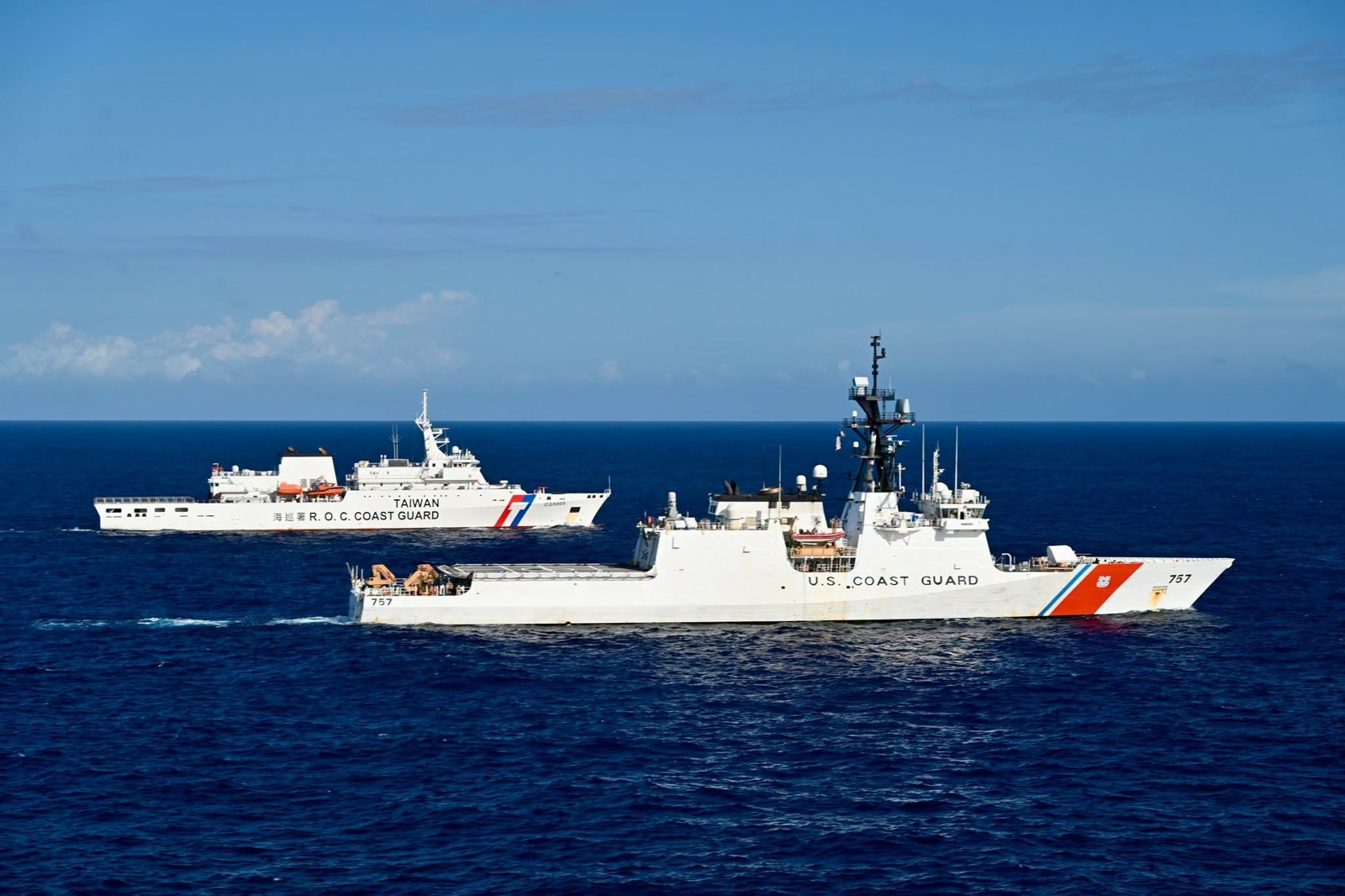
Taiwan's coastguard says it confronted and drove away 16 Chinese coastguard, research and fishing vessels during simultaneous operations around Taiwan and the Pratas islands. In a statement on Sunday, it described an unusually large coordinated presence and accused Beijing of trying to create an impression of jurisdiction in waters whose status is disputed.
Al Jazeera and The Hindu reported the central figure through AFP coverage of the Taiwanese statement. The account included four fishing boats alongside coastguard and research vessels. Some vessels reportedly entered waters that Taiwan designates as restricted. These descriptions come from Taipei's authorities; the available reports did not provide an independently verified account of every encounter from both sides.
Taiwan characterised the activity as maritime harassment and hybrid warfare. Those terms convey how its coastguard assessed the operations, rather than a neutral finding about the intent of each vessel. The coastguard said it had taken immediate action to counter the activity and accused China of attempting to alter the status quo.
Encounters around Pratas
Pratas, also known as Dongsha, lies southwest of Taiwan and is administered by Taipei. Beijing claims both Taiwan and Pratas, including jurisdiction over surrounding waters. Taipei rejects those claims. The dispute therefore includes not only where ships sail but which authority has the right to enforce restrictions, issue warnings and carry out patrols.
A more detailed account of Taiwan's coastguard statement, carried by Taiwan Defence, described Chinese coastguard vessels 3301 and 3303 moving around Pratas in opposite directions. Taiwanese patrol ships Qijin and Taichung shadowed them. According to that account, the Chinese vessels had been driven outside Taiwan's restricted waters by about noon. That timing is attributed to Taiwan, not independently confirmed by the reporting.
The same account described activity off Taiwan's eastern, southern and southwestern coasts. It named an attempted entry by the research vessel Exploration 3 off Hualien and another encounter involving Beidiao 996 southwest of Eluanbi. Taiwan said monitoring, patrol deployments and repeated radio warnings were used to make vessels leave. The reports did not establish that every encounter involved the same response.
The presence of research and fishing craft is significant to Taiwan's description of the incident. These are not all warships, and their reported numbers should not be presented as a count of Chinese naval combat vessels. Al Jazeera noted that warships operating around Taiwan are tracked separately from coastguard, research and other ships in the official data it cited.
Growing non-military vessel presence
Taiwanese official figures cited by Al Jazeera put the number of Chinese coastguard, research and other vessels around Taiwan's main island in July at 244. The comparable figure for the same month a year earlier was 58. These are Taiwan's recorded totals, which indicate a marked increase in the categories it monitors but do not independently establish the purpose of each voyage.
The outlet also reported 152 vessels detected during the first 21 days of August, mostly coastguard craft alongside fishing and research boats. That partial-month figure is not directly equivalent to the full July total. It nevertheless supplies context for Taipei's concern about frequent non-naval operations alongside the Chinese warship activity already familiar around the island.
On October 1, Taiwan's coastguard used water cannon against a Chinese recreational fishing vessel near Pratas, according to the earlier reporting cited by Al Jazeera. That was a separate encounter. The Sunday reports did not say water cannon had been used against all 16 vessels or identify an identical sequence of action in the latest operations.
Claims require careful distinction
Beijing has long asserted that Taiwan is part of its territory and has not ruled out force to bring it under its control. Taiwan rejects Beijing's authority over the island. Those opposing positions provide the background to the coastguard confrontation but do not remove the need to attribute specific operational claims and distinguish them from established geography and the vessels' reported identities.
Sunday's account presents a coordinated series of encounters, rather than confirmation of a battle or an invasion. The reporting did not establish fatalities, injuries or damage arising from the operations. It also did not provide a detailed Chinese response to Taiwan's account. Those limits should remain visible as officials and independent observers assess the incident.
For Taipei, the concern is that repeated patrols and other maritime activity could normalise a Chinese enforcement presence around places it administers. Its coastguard says Sunday's action prevented that. The new development is the reported 16-vessel operation and Taiwan's response; the broader dispute over jurisdiction remains unresolved, and the precise circumstances are still chiefly documented through Taiwanese official statements.