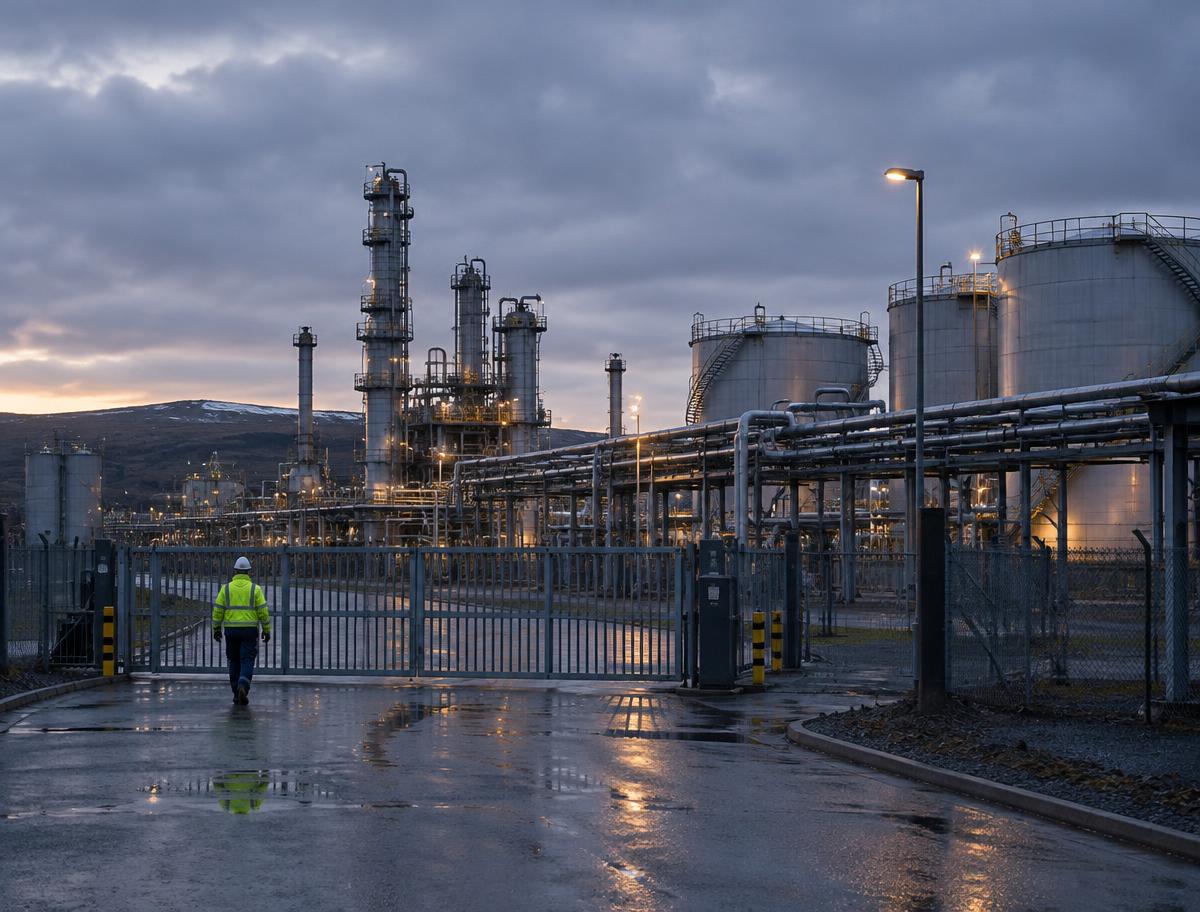
The Scottish government has promised to explore every option to save 377 jobs after the chemicals manufacturer Syngenta announced plans to close its plant in Grangemouth, just a year after the company received public money to expand there.
Economy Secretary Stephen Flynn told MSPs at Holyrood that the decision was deeply concerning and a profound disappointment. Syngenta was awarded a £2 million grant by Scottish Enterprise to grow its operations at the site only 12 months ago.
The announcement is a fresh blow to a town whose economy has been shaken repeatedly in recent years, and it sharpens an already bitter argument between the Scottish and UK governments over who should be doing more to protect industrial jobs in the Forth Valley.
Pledge to keep the site running
In his statement to the Scottish Parliament, Mr Flynn said ministers would do all they could to secure a future for the site. He said the government would work with the company, other businesses and key stakeholders to explore every option for continued operations over the coming months.
That leaves open the possibility of a buyer or an alternative use for the plant, although no such arrangement has been announced. For now, the 377 workers face months of uncertainty as the closure process moves forward.
The award of a grant so recently is likely to draw scrutiny. Public support for business expansion is usually tied to commitments on jobs and investment, and opposition politicians are expected to ask what conditions were attached to the Scottish Enterprise funding and whether any of it can be recovered.
The £200m question
Mr Flynn turned his fire on Westminster. He said the UK Labour government had consistently professed support for Grangemouth, yet not one penny of the £200 million commitment from the National Wealth Fund had been deployed.
That support was needed now, he argued, to invest in the industrial cluster and make sure it was fit for the future. The money was pledged to help Grangemouth adapt as heavy industry in the area changes, but the Scottish government says it has not yet reached the ground.
The UK government has previously said it is committed to Grangemouth's future and to creating new opportunities for workers in the area. The row over the timing of the National Wealth Fund money has become a recurring point of tension between the two administrations.
Union demands action
The trade union Unite, which represents workers at the plant, said it had pressed the Scottish government for decisive action. Industrial officer Scott Foley said the union would leave no stone unturned in the effort to secure the most positive outcome for its members and their families.
Brian Leishman, the Labour MP for Alloa and Grangemouth, said Mr Flynn was right to highlight the need for the UK government to make good on the £200 million. But he also challenged the SNP, saying it needed to think about what it could do other than point the finger.
Mr Leishman said the SNP had been in power for nearly 20 years and there was still no industrial strategy. He called on the UK government to come out in public and set out how it would save the jobs.
A town under strain
Grangemouth has long been one of Scotland's most important industrial centres, home to a large petrochemical complex and a cluster of chemical manufacturers on the banks of the Forth.
The area has already endured the end of crude oil refining at the Grangemouth refinery, Scotland's only such facility, which converted to a fuel import terminal with the loss of hundreds of jobs. Each new closure deepens fears about the long-term future of skilled industrial employment in the town.
Local councillors and community groups have warned that the loss of well-paid jobs ripples through the wider economy, affecting suppliers, contractors, shops and services that depend on the industrial workforce.
What happens next
Syngenta, a global agricultural science company that produces crop protection chemicals and seeds, has not set out a detailed public timetable for the closure. Formal consultation with workers is expected to follow.
The immediate test for both governments will be whether they can turn statements of concern into practical help: a buyer for the plant, retraining for staff, or investment that brings new work to the site.
For the 377 workers and their families, the political argument matters less than the answer to a simple question: whether there will still be jobs at the plant next year. That answer may depend on how quickly ministers in Edinburgh and London can find common ground.