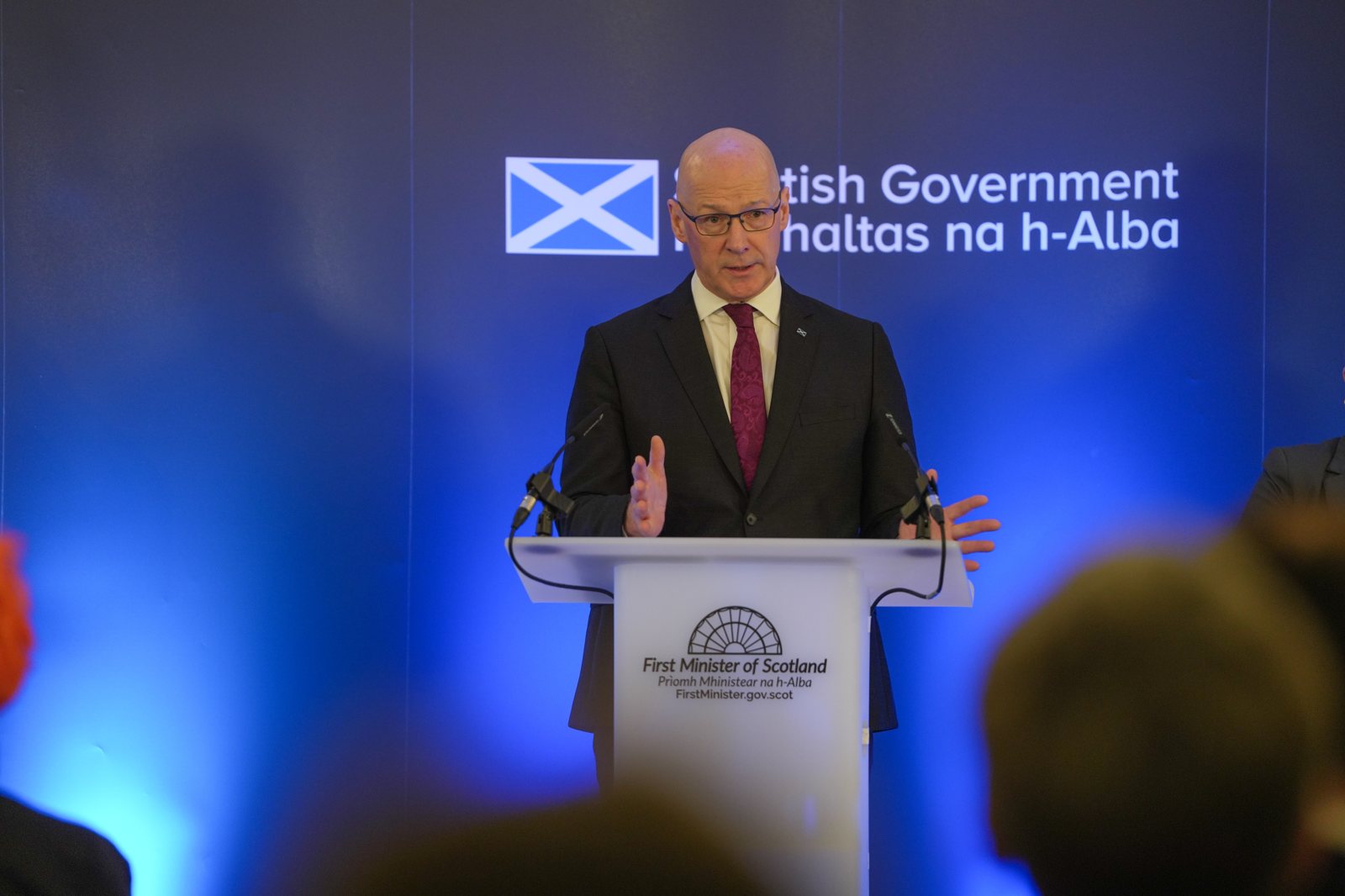
First Minister John Swinney has said he does not have confidence that the UK is safe from potential Russian threats.
The SNP leader told BBC Scotland News that the UK government, which is responsible for defence, did not have a sufficient "presence" in vulnerable areas off Scotland's coast.
He said he was "very worried" by warnings this week from the head of MI5, Sir Ken McCallum, who named Russia as "aggressor number one".
North of Shetland
Swinney said he was concerned about a "lack of coastal and offshore protection" and identified the waters north of Shetland as an area of significant Russian activity.
"I don't think we've got nearly the presence in those areas that we require today," he said. "There's an obligation on the United Kingdom government to make sure that the country is safe. And I don't think the defence posture of the United Kingdom enables me to have that confidence."
The seas around Scotland are of growing strategic importance. They carry undersea data cables and energy pipelines, and lie on the routes used by Russian submarines and surface ships moving between the Arctic and the Atlantic. Security officials across Europe have warned of the risk of sabotage against such infrastructure.
The MoD responds
A Ministry of Defence spokesperson said: "The first duty of government is to keep its citizens safe, and this government is investing £298bn over the next four years to ensure we can tackle rising threats.
"The Navy is helping to patrol Nato's northern flank, with this year's carrier strike group deploying to the Arctic and the high north. To tackle these threats, we're also investing in new frigates for the Navy and high-tech uncrewed vessels as part of our Hybrid Navy, backed by £1.5bn in funding."
Prime Minister Andy Burnham told the UN General Assembly last month that his government would build up the UK's "hard power and deterrence". But he added: "We will not play Russia's game of trading escalatory rhetoric. Unlike Russia, we do not seek confrontation."
Independence and defence
Scotland is home to the UK's nuclear submarine fleet at Faslane, west of Glasgow. The SNP wants the weapons removed but supports an independent Scotland joining Nato.
Swinney rejected the argument that independence would weaken Scotland's security, saying it would instead give the country "more choices". He said he had "always been a believer in defence co-operation between Scotland and other countries", citing Canada's decision to join the EU's Safe defence programme.
Unionist parties argue the opposite: that Scotland's security depends on the full weight of UK armed forces and intelligence agencies, and that removing Trident would create serious complications for Nato membership.
Conference week
Swinney's comments came as SNP members gathered in Aberdeen for the party's annual conference, which runs from Thursday to his keynote speech on Saturday afternoon.
Burnham is also due in Scotland this weekend, expected to visit the central belt to discuss plans to devolve power to local communities. Swinney has invited him to the SNP conference; the prime minister has "not yet" accepted.
The first minister welcomed Burnham's ambition to secure better EU trade terms for Scottish salmon, shellfish and seed potatoes, and noted the prime minister had not ruled out a future referendum on rejoining the EU. "If we can reopen an issue that's been decided by a referendum, then we can also reopen Scottish independence," he said.
Why it matters
Defence is reserved to Westminster, but Swinney's intervention puts Scotland's exposed northern waters at the centre of the political debate. With MI5 warning publicly about Russian hostility, the question of who watches the seas off Shetland – and whether enough ships and aircraft are there to do it – is unlikely to go away.