Donald Trump has declared that Ukraine’s access to SpaceX’s military satellite network is running at full speed again, but European and Ukrainian officials say nothing has changed, deepening a bitter row over who ordered the restrictions in the first place.
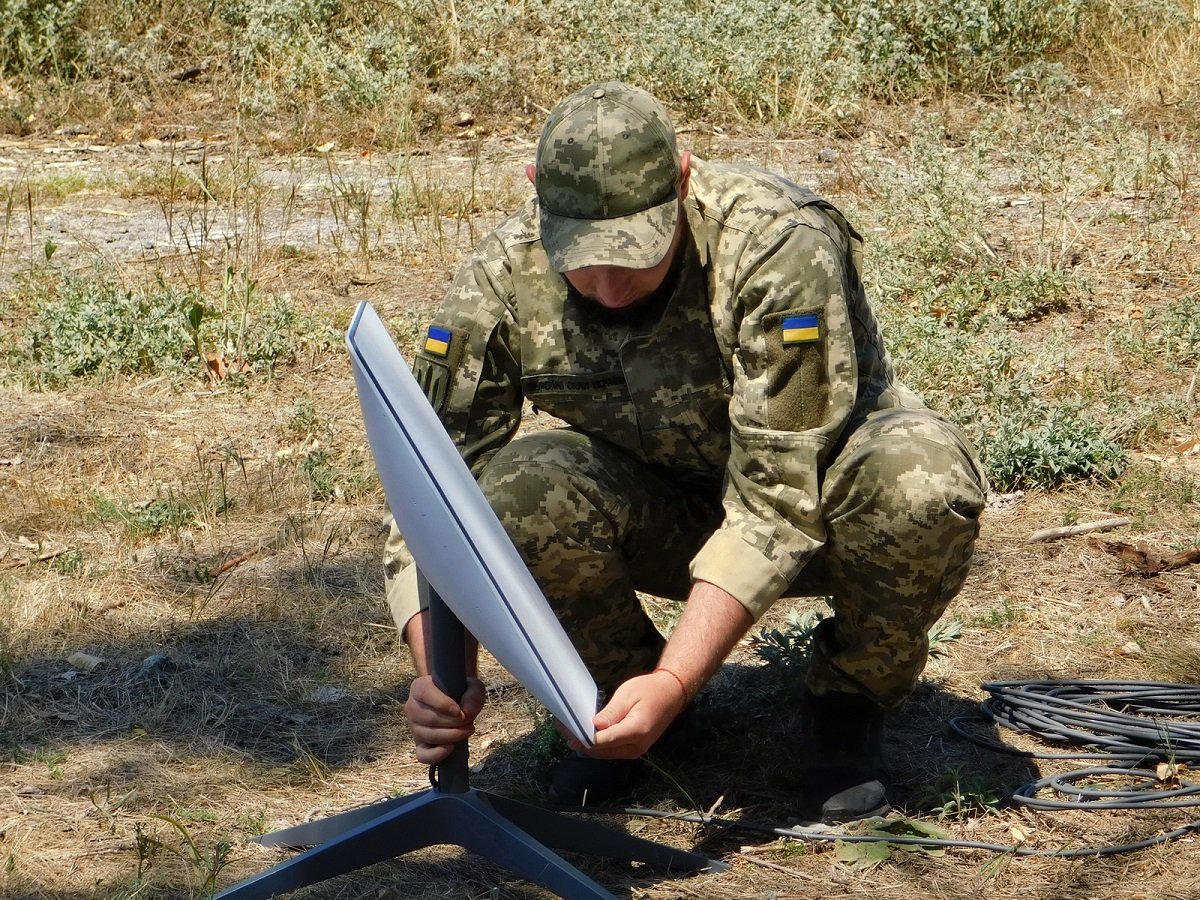
The dispute centres on Starshield, the military-grade version of Elon Musk’s Starlink satellite internet service. Ukrainian officials say limits placed on the system this month have made many of the long-range drones Kyiv uses to strike behind Russian lines inoperable, and have hampered the air defences that intercept Russian missiles and drones.
On Thursday the US president told reporters the system was “back”. A senior European official told the Associated Press that nothing had changed in how Starshield was operating in Ukraine. Before Mr Trump spoke, President Volodymyr Zelensky said full speed had still not been restored, and that he hoped to discuss the issue with US Secretary of State Marco Rubio in the coming days.
Who throttled the link?
For more than a week, the question of who is responsible has gone unanswered, with each side pointing elsewhere.
Mr Trump initially denied any role. “I don’t know if it was anybody, but it wasn’t me, and I don’t think it was Elon,” he told reporters last Friday. Mr Rubio backed him, saying: “What I can tell you with certainty is the president of the United States nor anyone in our system ever requested that any changes to that system be made.”
But Mr Rubio also appeared to cast suspicion on Mr Musk. “The president has nothing to do with the decisions that are made by Starlink and Starshield and by Mr Musk. That’s a private company. The president doesn’t run that company and can’t direct that company to do anything,” he said.
Mr Musk, the world’s richest man and one of the Republican party’s biggest donors, has denied responsibility. Writing on X, he said the systems were “owned and controlled by the US government” and that “any limits on speed or usage are decided by the US military and ultimately POTUS”.
On Tuesday the Wall Street Journal reported that Mr Musk himself had ordered Starshield to be slowed, although its sources disagreed over whether he had done so in concert with the president. On Thursday the paper reported that Mr Trump had asked Mr Musk to restore the service.
Asked whether he had spoken to Mr Musk, the president declined to comment, but suggested the decision lay with the SpaceX chief. “I guess the bottom line, he put it back,” he said.
Vance and Cornyn weigh in
Vice-President JD Vance defended Mr Musk on Thursday, saying the billionaire “doesn’t want to get in the middle of what is a war between two state actors without the United States government effectively directing him on what to do”.
“So I don’t think this is about Elon,” Mr Vance said. “I think it’s fundamentally what is America’s policy in Ukraine and Russia going to be.”
John Cornyn, the Republican senator for Texas, who is in his final weeks in office, told US media he did not believe Mr Musk would have acted “without at least the acquiescence of the White House”.
‘People will die’
Mr Zelensky first blamed the restrictions on “SpaceX and the United States”, warning last week that they would “bring a lot of human losses … of course, people will die”.
He said there were no similar limits on Starshield terminals in European Union countries, only in Ukraine. “In other words, this is a planned operation,” he said. At the weekend he said SpaceX had carried out the change at Washington’s request: “It was a message from the American government to limit the speed ... And technically, SpaceX did it.”
Civilian casualties in Ukraine have risen sharply in recent weeks as Russia has stepped up strikes on power stations and cities. Moscow says its strikes target military and energy infrastructure used for the war effort, and accuses Kyiv of attacking Russian refineries and civilian areas.
A low point in US–Ukraine relations
The Starlink row comes as relations between Washington and Kyiv sink to their lowest point since Russia’s full-scale invasion nearly five years ago, even as US envoy Steve Witkoff pursues talks in Moscow on ending the war.
Mr Trump has accused Ukraine of driving up diesel prices for Americans by attacking Russian oil refineries. Analysis by the BBC found that the US–Israeli war with Iran and the resulting limits on Gulf oil exports have probably had a far greater effect on global diesel supplies.
Mr Musk has publicly supported calls for Mr Zelensky to be replaced and has been sharply critical of the Ukrainian leader, while Russia has long objected to the use of Western satellite services by Ukraine’s armed forces.
Starlink terminals have been central to Ukraine’s military communications since the early weeks of the invasion in 2022, linking front-line units, drone operators and commanders where mobile networks have been destroyed. European governments have been searching for alternatives, but none can yet match the scale of SpaceX’s network of thousands of low-orbit satellites.
Until the speed limits are lifted, or someone takes responsibility for them, Ukrainian commanders say they are fighting with one hand tied.