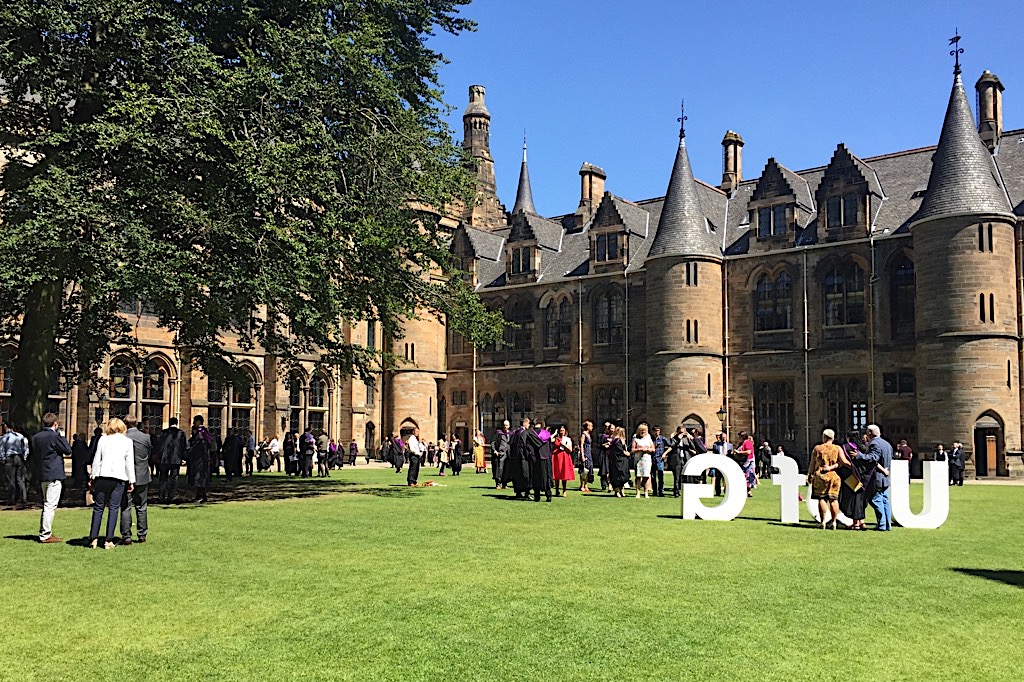
Walk into any Scottish campus this autumn and you will be told the same comforting story: young people chasing knowledge, adults retraining for a better future, a free-tuition nation investing in its talent. It is a lovely story. For a growing number of people, it is also not the real one.
The real story is written in the lending figures. In the financial year 2025-26, the money paid out in undergraduate loans to Scottish students rose by 10.5% to £853.6 million, according to the Student Loans Company. Over roughly the same period, official figures show the number of Scottish-domiciled students at university actually fell, by 2.7% in 2024-25, while total university enrolments dropped 3.1%. Colleges have shrunk even faster: Audit Scotland found course enrolments down by 21.4% in two years.
Fewer people are studying, yet far more money is being borrowed. That is not a sign of a nation hungry for learning. It is a sign that, for many of those who do sign up, the course has become something else: an income.
The four-year salary nobody calls a salary
Do the sums and the attraction is obvious. A Scottish undergraduate in 2026-27 can borrow between £8,400 and £10,400 a year for living costs, and students from the poorest households can add a Young Students' Bursary of up to £2,000 that never has to be paid back. Tuition is free. None of that money is taxed. None of it carries National Insurance.
Then there is the part-time job. A student working 15 hours a week at the National Living Wage earns well under the £12,570 personal allowance, so that pay arrives tax-free too. Put the two together and a student can end up with more than £20,000 a year in their pocket, untaxed, for around half the hours of a full-time worker.
Compare that with the person on the till, the care worker or the warehouse operative doing a full 37.5-hour week at the same minimum rate. After income tax and National Insurance, they take home roughly £21,000. They have a manager, a rota, no say over their shifts, and no long summer break. The student has comparable money and something the worker will never have: time.
And most of it may never be paid back
The loan is called a debt, but it does not behave like one. Under Scotland's Plan 4 rules, graduates repay 9% only of what they earn above £33,795 a year. Earn less and they pay nothing. Whatever is left is written off after 30 years.
The Student Loans Company's own figures show how that plays out. In 2025-26, the average Scottish borrower entering repayment owed £21,000, up 16.3% in a year. Yet of all borrowers liable to repay who were in the UK tax system, only 39.8% made a repayment. For the rest, the 'loan' functioned for that year exactly like a grant.
So it is little wonder that some adults, worn down by stress and wages that barely move, are quietly making a calculation that would have sounded absurd a generation ago: leave the job, enrol on a course, and live for four years on money that is untaxed and may never be fully repaid.
Where benefits come in — and where they don't
There is a popular belief that students can simply stack Universal Credit on top of their loan. The rules are tighter than that. Most full-time students cannot claim Universal Credit at all. The exceptions are significant, though: students responsible for a child, and some disabled students who have been assessed as having limited capability for work and receive a disability benefit, can qualify. When they do, the living-cost part of the student loan is counted as income, but the first £110 a month is ignored.
In Scotland, the disability benefit most adults now receive is Adult Disability Payment, which has replaced PIP for new claims, while older claimants may still be on the Disability Living Allowance. Because these payments are not means-tested, studying does not stop them. For a disabled adult or a lone parent trapped in low-paid work, a full-time course backed by these payments can be more secure, and far less exhausting, than a job.
Nobody should blame them for that. The scandal is not that people do the maths. It is that the maths comes out this way.
Why working hard no longer adds up
Yesterday's Budget raised minimum wages by 3.9% from April, and ministers will present that as reward for work. But the people it helps are the very people facing frozen tax thresholds, energy bills the Resolution Foundation expects to top the 2022 crisis peak, and rents that swallow a huge share of a pay packet. Every extra pound earned above the personal allowance in Scotland is taxed. Every pound of student support is not.
When an honest week of work leaves a person poorer, more tired and less free than a student, the system is sending a message. Many people are hearing it. Why sacrifice your health to pay high taxes and make an employer richer, when the state will fund four years of breathing space instead?
The degree that never ends
The same logic now runs beyond the undergraduate degree. With graduate jobs scarce and entry-level roles disappearing, more students are simply staying on. A Scottish student starting a master's degree in 2026-27 can borrow up to £7,000 for tuition and a further £6,900 for living costs. For many, a master's is not an ambition. It is a waiting room, and a paid one, until the jobs market improves. Some go on to a doctorate for the same reason.
There are students who study with passion and leave with skills Scotland badly needs. They are not the problem. But a funding system that pays more for staying out of work than for going into it will, in the end, get exactly what it pays for.
The questions ministers will not answer
The Scottish Government celebrates free tuition and record access from deprived areas, and both are real achievements. Yet it publishes no figures on how many people leave paid employment to enrol, how many use courses mainly for living-cost support, or how many postgraduates continue because they cannot find work.
Until someone asks those questions, the comforting story will continue. The real one — a country where studying pays better than working, and where the honest worker is the one left behind — will go on being told only in private.