Outlander star Sam Heughan has thrown his weight behind the campaign against plans for one of the world's biggest data centres on the site of a former nuclear power station in the south of Scotland.
The actor, who grew up in Galloway, questioned how much financial benefit the development at Chapelcross, near Annan, would really bring to Scotland, warning that the number of permanent jobs left once construction ended would be "very few".
Developer CX Tech Ltd insists the scheme is "a once-in-a-generation opportunity" for Dumfries and Galloway, promising more than 500 full-time jobs.
'The benefits will go back to them'
Speaking on the Channel 5 programme Storm & Alexis, Heughan said he had only recently learned of the plans, one of a large number of data centre proposals across Scotland.
"There's a lot to find out here and many causes for concern, I think," he said. "The only people who are building these large-scale, hyper-scale data centres are US tech giants. The financing will go back to them, the benefits will go back to them."
He also raised fears about the landscape and wildlife. "They're being built on, not just on brown land, but also agricultural land, protected grassland," he said. "There's an impact to the environment, there's impact to the animals that live near there."
"There needs to be just more legislation and more consideration. We shouldn't blindly go into this and keep investing in it. I think a pause or moratorium is the right way to start this."
Heughan said that after 12 years on Outlander he had seen a "huge rise" in tourism and in awareness of Scotland's landscape and historic buildings. "So should we even be investing in these large industrial sites that are essentially going to become wasteland?" he asked.
The developer's case
CX Tech says the project represents an investment of more than £15bn and would be among the largest data centres in the world in terms of power capacity.
Chief executive Graeme Anderson said Chapelcross had the potential to bring together renewable energy, digital infrastructure and high-value jobs, creating "a new economic future" for a site that had played an important role in Scotland's energy story for generations.
The company hopes work could begin next year and take around eight years to complete. It says the scheme could support up to 750 jobs during construction and about 540 once operational.
A site with a nuclear past
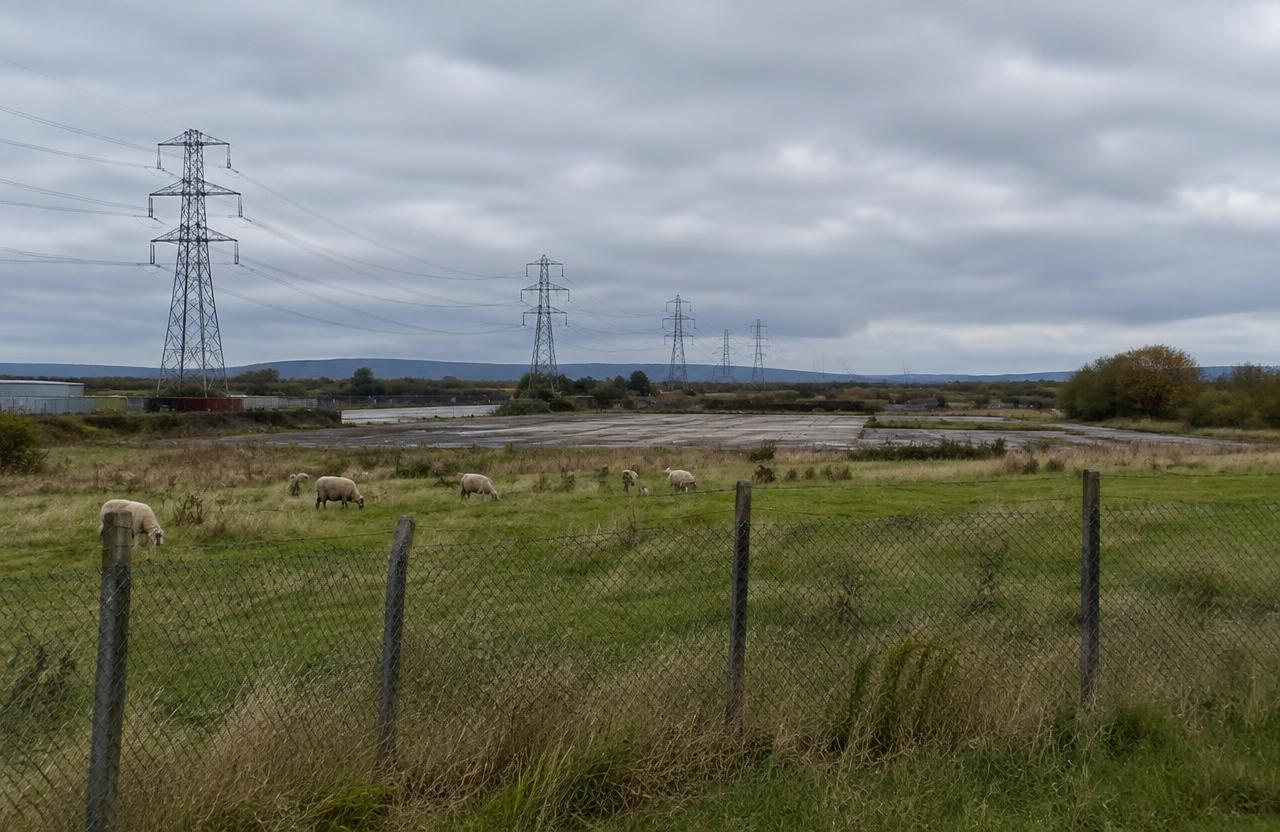
Chapelcross began generating electricity in 1959 and produced power until 2004. Its four landmark cooling towers were demolished a few years later, and the removal of nuclear fuel from its reactors was completed in 2013.
Since then, efforts have been made to find a new economic use for the land, which sits close to existing grid connections – one of the main attractions for energy-hungry data centres.
Weight of objections
The planning application was lodged last month and has already attracted considerable opposition, with critics raising concerns about its visual impact and its effect on local energy supplies and prices.
Dumfries and Galloway Council said that, because of the "significant volume" of representations received, it would not publish them online individually in the usual way, to reduce pressure on its planning service. It will instead publish the numbers for and against, with a summary of the arguments made.
National guidance by Christmas
Data centres, which power cloud computing and artificial intelligence, use vast amounts of electricity and, in many cases, water for cooling. Scotland's cool climate and renewable power have made it an increasingly attractive location.
The Scottish Greens have called for applications to be paused until new national guidelines are in place. The Scottish government has rejected that call, but ministers said they would publish guidance by Christmas and did not expect any planning decisions to be made before then.
That means the future of Chapelcross – and of a growing wave of similar projects – may depend on rules that have yet to be written.