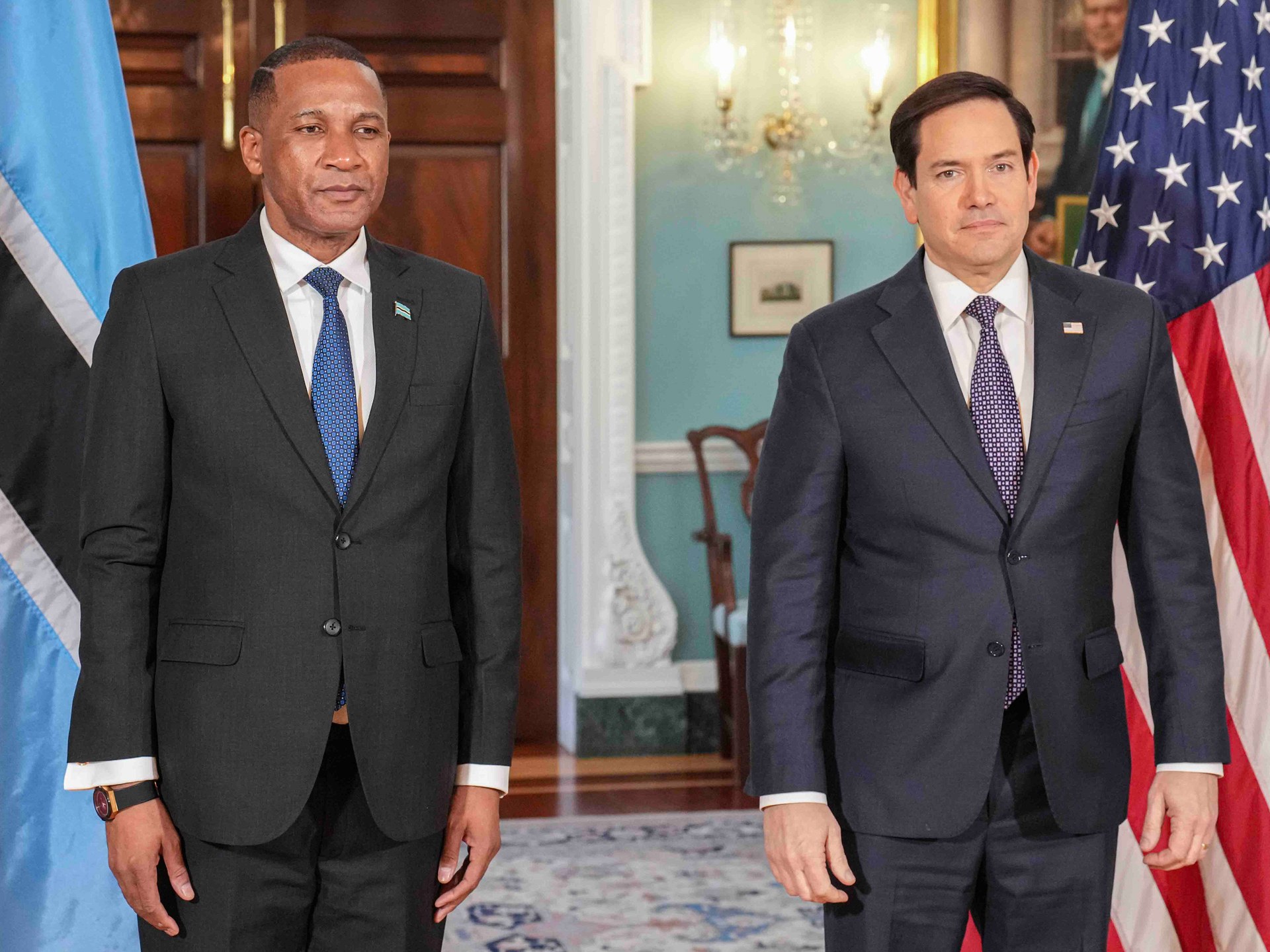
US Secretary of State Marco Rubio has described Donald Trump’s waiver of sweeping sanctions and tariffs on Russia as a 60-day pause to assess the consequences for the global economy, offering a new explanation for a decision criticised by members of the president’s own party.
Rubio said the administration wanted to examine how the restrictions would affect both the United States and other countries. He pointed to high energy prices and the war involving Iran as reasons to study the combination of measures before proceeding.
His comments, reported in the Guardian’s Sunday Ukraine briefing, concern the justification and intended duration of the pause. They do not establish that every restriction on Russia has been removed or that the administration has announced what will happen when the 60-day period ends.
Energy prices cited in explanation
Rubio said the president wanted time to analyse what sanctions and tariffs would mean for the world economy and the US economy. The proposed restrictions involved a number of countries, not only Russia, he said, making their wider effects part of Washington’s assessment.
The decision came days before the measures were due to take effect. Congress had overwhelmingly passed the legislation, and criticism on Saturday included Republicans who argued that economic pressure on Moscow should be maintained because of Russia’s invasion of Ukraine.
Senator Rick Scott said Russia was clearly the aggressor and that the United States should do everything it could to apply economic pressure. Senator Thom Tillis called the waiver irresponsible and described it as a capitulation to the Russian leader. Those are lawmakers’ assessments of the decision, not an agreed account of its intended outcome.
Rubio’s explanation places the pause within an economic calculation, while the criticism centres on its strategic consequences. The available reporting did not provide the administration’s detailed modelling, a list of policy alternatives under review or a binding timetable for a final decision beyond the stated 60-day period.
Kyiv fears further easing
Ukrainian President Volodymyr Zelensky said on Saturday that he expected the Trump administration to lift further sanctions against Russia. He described the agreement involving Russian diesel as a first step and argued that easing restrictions would encourage Vladimir Putin rather than deter him.
Zelensky’s forecast is the Ukrainian leader’s assessment, not confirmation of an additional announced waiver. His remarks underline a widening disagreement between Kyiv and Washington over whether commercial engagement with Moscow can support diplomacy or weaken pressure on Russia during the war.
He also called for Europe to establish its own negotiations with Moscow as the United States sought improved ties and business arrangements with the Kremlin. The briefing did not report a newly agreed European negotiating structure or a date for such talks.
Ukraine’s lead negotiator, Rustem Umerov, met US presidential envoy Jared Kushner on Friday, Zelensky said. Washington was working to arrange a three-way meeting involving Zelensky, Trump and Putin, potentially in the Middle East, Europe or the United States. The range of possible locations indicates that no venue had been settled in the account available.
Technology and battlefield disputes continue
Rubio separately denied that anyone at the White House ordered a slowdown in Ukraine’s access to satellite connectivity to prevent its use on drones travelling faster than 100mph. The comments referred to Starshield, the military version of Elon Musk’s Starlink network, and should not be treated as an independently completed technical investigation.
The diplomatic dispute is unfolding alongside continuing attacks. Moscow mayor Sergei Sobyanin said Russian air defences destroyed 195 Ukrainian drones headed towards the capital on Saturday. Russia’s aviation authority reported flight suspensions at Domodedovo and Vnukovo airports. Those are Russian official accounts, not independently verified totals.
Romania also said it shot down two Russian drones over the Black Sea on Saturday, amid concern about incidents spilling over from the war. Such military developments remain separate from the sanctions decision, even as they form the security setting in which it is debated. The next policy test is whether Washington’s review produces renewed restrictions, further exemptions or another change in approach.