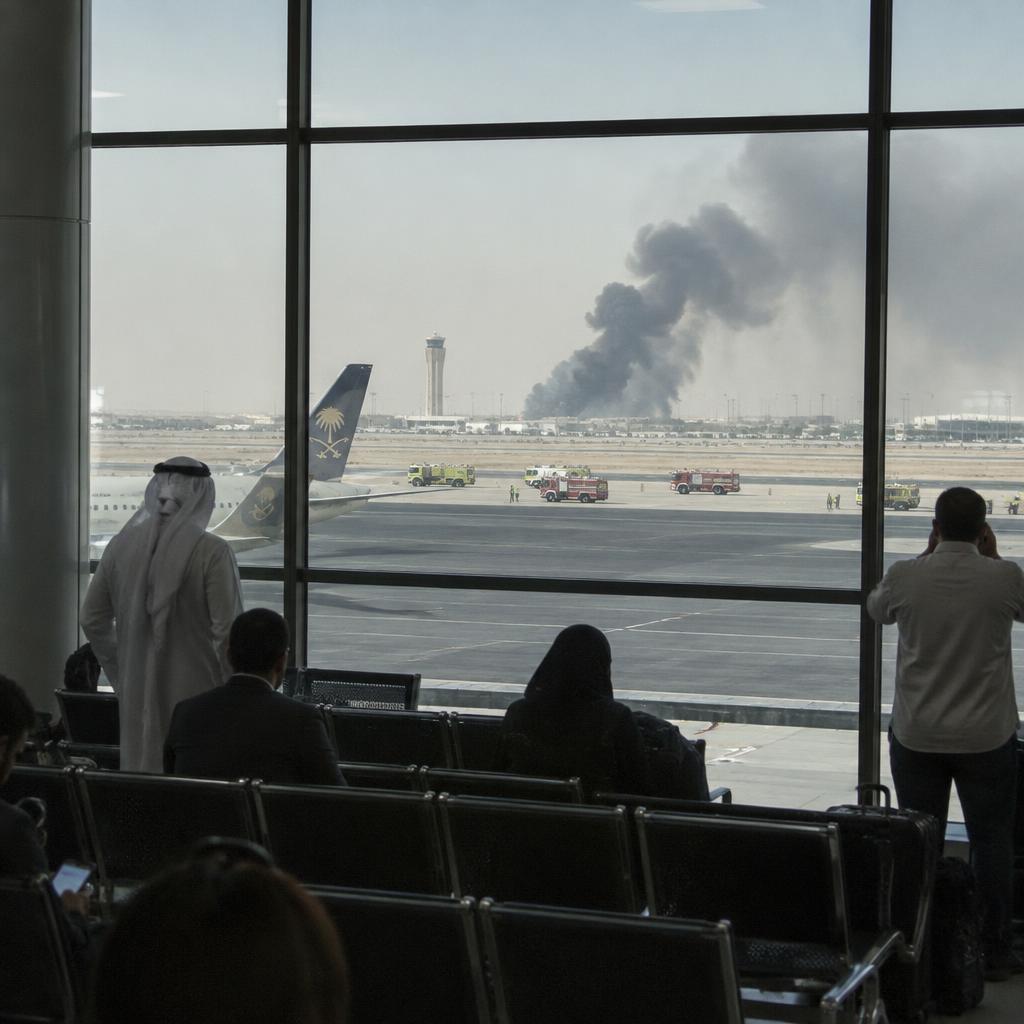
Missiles have struck Aden airport, the main gateway to southern Yemen, while the Saudi-led coalition said it intercepted a separate missile heading for the Red Sea port of Yanbu — a twin escalation that marks one of the most serious flare-ups in the country's renewed hostilities.
The attack on Aden, which serves as the seat of Yemen's internationally recognised government, caused damage to the airport perimeter and disrupted flights. Casualty figures were still being confirmed. The coalition said the missile aimed at Yanbu, a key Saudi oil and industrial hub on the Red Sea coast, was destroyed before reaching its target.
Houthi forces have been blamed for the strikes, which come amid a wider unravelling of the fragile calm that had held in Yemen since the truce of recent years, and against the backdrop of the broader regional conflict involving Iran and its allies.
A country pulled back to war
Yemen's civil war, which began in 2014, has created what the United Nations has called one of the world's worst humanitarian crises. Hundreds of thousands have died from fighting, famine and disease, and millions remain dependent on aid.
A truce that took effect in 2022 brought a measure of relief, and back-channel talks between Saudi Arabia and the Houthis raised hopes of a durable settlement. But the regional upheaval triggered by the conflict involving Iran has pulled Yemen back towards open hostilities, with the Houthis launching attacks on Red Sea shipping and, now, resuming strikes on land targets.
The choice of targets is significant. Aden airport is the lifeline of the internationally recognised government and the main entry point for humanitarian supplies to the south. Yanbu is a critical node in Saudi Arabia's oil infrastructure — and a reminder that the Houthis retain the capability to threaten the kingdom's most valuable assets.
The regional dimension
The strikes cannot be separated from the wider confrontation involving Iran. The Houthis are Tehran's most capable remaining regional proxy, and their missile and drone arsenal has been built with Iranian assistance. Attacks on Saudi targets and Red Sea shipping serve both the Houthis' domestic purposes and Iran's strategy of raising the cost of the conflict for its adversaries.
Saudi Arabia, which has spent years trying to extract itself from the Yemen quagmire, now faces an unwelcome choice: respond forcefully and risk being dragged back in, or absorb the attacks and watch its deterrence erode.
The United States and its allies, already stretched by operations to protect Red Sea shipping, have condemned the strikes and reiterated their commitment to freedom of navigation — while privately acknowledging that there is no easy military solution to the Houthi problem.
Civilians in the middle
For Yemen's exhausted population, the escalation threatens the modest gains of the truce years. Aid agencies warn that renewed fighting around Aden could choke off the flow of food and medicine to millions, and that any sustained campaign against Saudi infrastructure will invite retaliation on Yemeni cities.
"Every time there is a window of hope, it closes," said one aid worker in Sanaa. "The people who pay are always the same people."
Diplomats say the priority now is to prevent the strikes from triggering a full return to war — but with the regional conflict showing no sign of resolution, few are confident the window can be kept open for long.
The international response has been swift in words if not in action. The United Nations envoy for Yemen called for maximum restraint and urged both sides to return to the negotiating track, while Gulf states held emergency consultations. Oil markets registered the escalation immediately, with prices edging higher on fears for Red Sea shipping and Saudi infrastructure. Analysts note that Yemen's wars have a long history of starting with limited exchanges and spiralling — and that the country's fragmentation means no single actor, in Sanaa, Aden or Riyadh, fully controls what happens next.