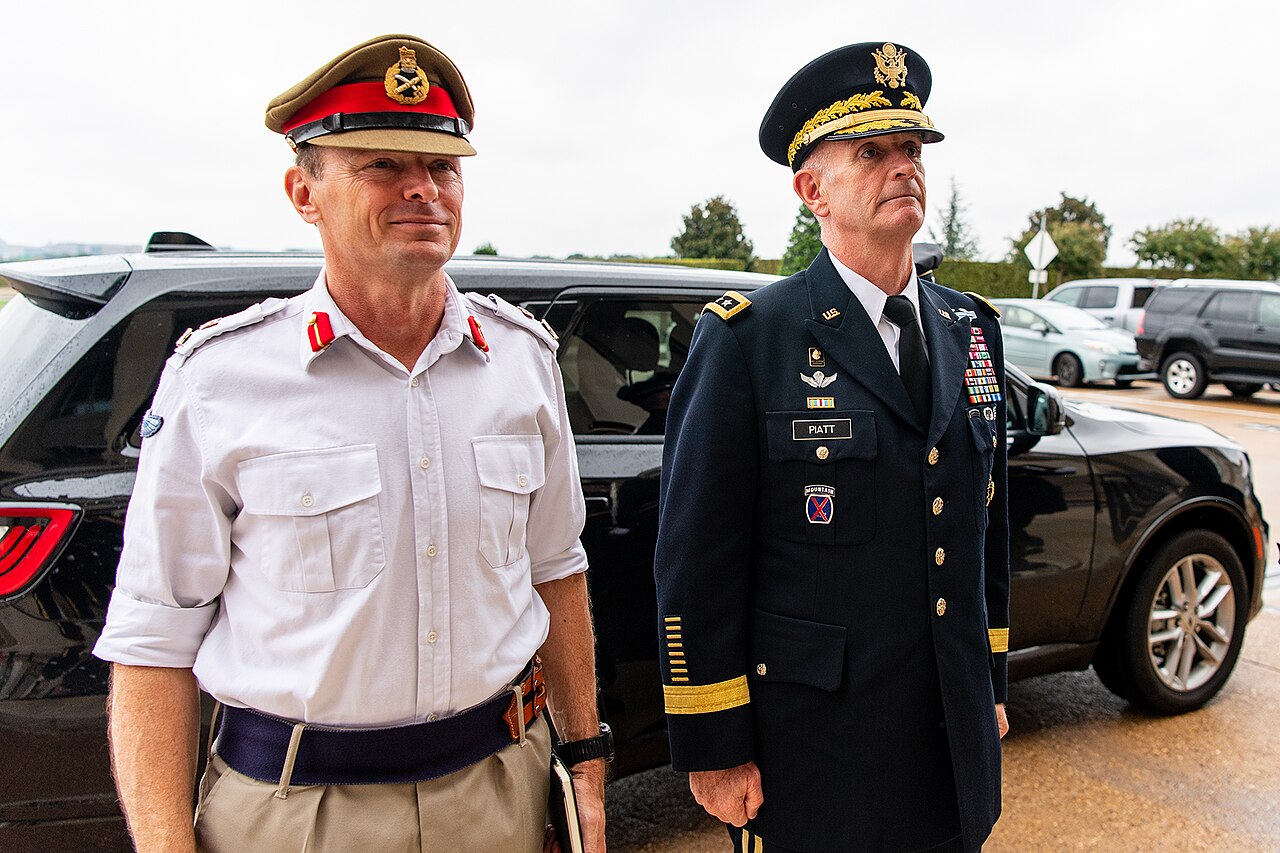
The head of the British Army has said politicians must begin a "frank conversation" with the public about preparing the country for the possibility of war, warning that the threat from Russia can no longer be treated as a distant problem for the military alone.
General Sir Roly Walker, the Chief of the General Staff, said the era in which defence could be left to a small professional force while the rest of society carried on as normal was over. Preparing for a potential conflict, he argued, would require effort and sacrifice well beyond the armed forces — from industry and the civil service to communities and households.
His intervention is the latest and most direct in a series of warnings from senior military figures that Britain's defences have been hollowed out by decades of underinvestment, and that the war in Ukraine has demonstrated how quickly a major conflict can consume munitions, equipment and people.
A whole-of-society effort
The general's argument rests on a simple proposition: that deterrence only works if an adversary believes a country can sustain a fight. That means not just ships, aircraft and soldiers, but munitions factories that can surge production, supply chains that can withstand disruption, and a population that understands what might be asked of it.
Senior officers have privately expressed frustration that warnings about the state of the Army — which is now at its smallest size in centuries — have repeatedly failed to translate into sustained increases in defence spending or industrial capacity.
The government has committed to raising defence expenditure, but military chiefs and independent analysts have questioned whether the pace of increase matches the pace of the threat, particularly as Russia has placed its economy on a war footing and continued to absorb heavy losses in Ukraine without reducing its military output.
The political problem
The general's call for a frank conversation cuts to a dilemma ministers have long avoided. Telling voters that war is a realistic prospect — and that preparing for it means higher spending, possibly conscription planning and disruption to civilian life — carries obvious political risks. Yet saying nothing, the military argues, leaves the country dangerously unprepared and emboldens potential aggressors.
Polling consistently shows that public concern about defence has risen since Russia's full-scale invasion of Ukraine, but support for higher defence spending tends to soften when voters are presented with the trade-offs against health, education and other domestic priorities.
The warning also lands against a backdrop of heightened tension across Europe. Drone incursions have been reported over military sites in several countries, Baltic states have pressed NATO for a stronger forward presence, and the conflict involving Iran has stretched Western stockpiles of air defence munitions.
What preparation would mean
Defence planners describe national preparedness as a spectrum. At one end sit the basics: resilient power grids, protected fuel and food supply chains, and a civil defence structure capable of responding to attack or sabotage. At the other sit harder questions — how quickly the country could expand the armed forces, how industry would be mobilised, and how the public would be informed and organised.
European allies have already moved further down this road. Sweden and Finland have distributed preparedness guidance to every household, Poland is spending more than 4% of its economy on defence, and Germany has begun debating the future of military service.
Whether Britain follows will depend, the general suggested, on whether politicians are willing to say plainly what the moment demands. "The conversation has to start," he said — and it cannot only be had in Whitehall.
Ministers have so far responded cautiously, welcoming the general's contribution while insisting that the government's defence plans are already ambitious. Behind the scenes, however, officials acknowledge that the conversation he wants is coming one way or another. The strategic defence review due to report in the coming months is expected to recommend not just new equipment but a fundamental rethinking of how the country organises itself for a more dangerous era — and every option on the table carries a price tag the Treasury cannot ignore. For a public that has grown accustomed to thinking of war as something that happens elsewhere, the general's message was deliberately uncomfortable: geography and technology no longer guarantee that it stays that way, and the time to prepare is before the crisis, not during it.