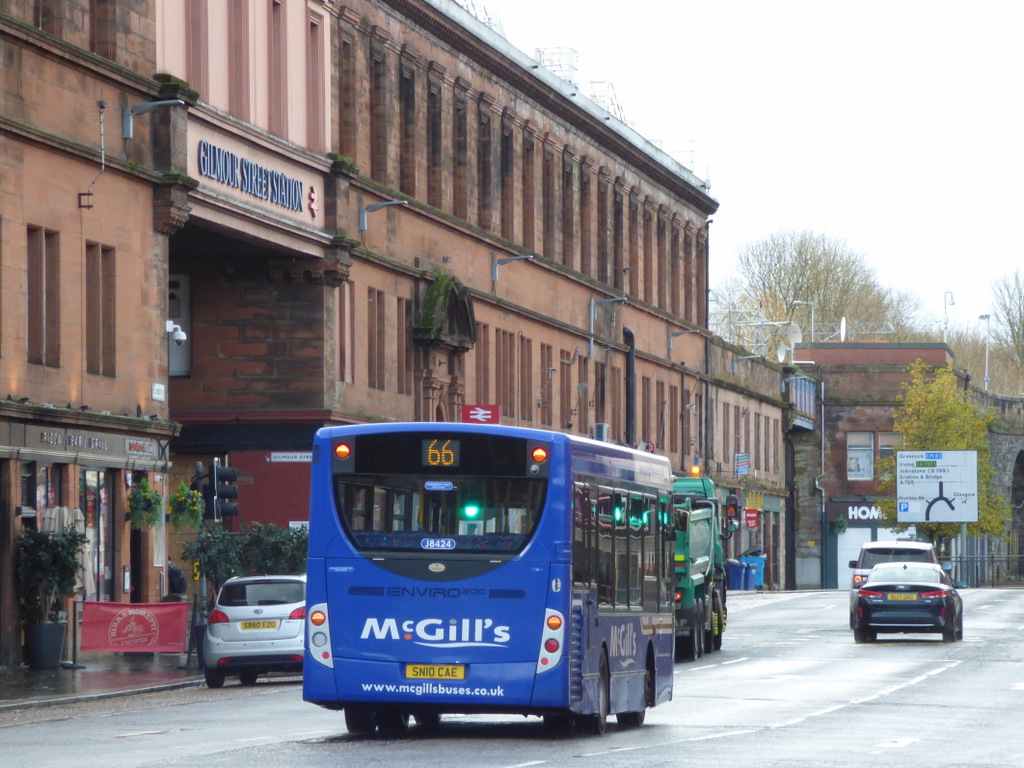
McGill's has threatened a legal battle over John Swinney's plans to bring Scotland's buses under public control, opening a confrontation between a major operator and the Scottish Government over the future of routes, fares and commercial contracts. Deputy First Minister Jenny Gilruth defended the proposals on Sunday, saying passengers needed protection after a succession of route closures.
The dispute follows Swinney's announcement at the SNP conference in Aberdeen on Saturday that buses would come under public control by 2031 through franchising and regulation. A bill is expected at Holyrood next year. The proposal would give regional transport partnerships greater influence over routes and fares without requiring the government to own the bus companies themselves.
That distinction is central to the row. Public control of a network can change who decides which services operate and what contracts operators must win, while vehicles and companies remain privately owned. McGill's argues that the shift threatens the business its owners have built. Ministers say the existing arrangements leave communities exposed when operators remove routes.
Operator warns of court challenge
Sandy Easdale, who owns McGill's with his brother James, used highly charged language to attack the first minister, comparing him with former dictators Idi Amin and Robert Mugabe. Those comparisons were Easdale's political criticism, not a description of what the government's proposed legislation would legally do. The plan has not yet been enacted.
McGill's chairman Ralph Roberts told BBC Scotland's Sunday Show that the owners were incensed. He accused Swinney of trying to confiscate their business and complained of a lack of dialogue. Roberts said the company had invested in local services and had put alternative ways of giving authorities greater control to the government, but believed those suggestions had not been taken forward.
He warned that McGill's was prepared to pursue legal routes and go to every court in the land if necessary. Roberts also argued that competing for contracts could put the operator out of business if it failed to secure them. That was his account of the commercial risk, rather than a confirmed outcome of a system whose detailed legislation is still to come.
Roberts claimed the proposals could cost taxpayers hundreds of millions of pounds each year. The BBC report did not independently establish that figure or provide an agreed costing supporting it. The claim should therefore be distinguished from the government's timetable and from any future financial assessment attached to the bill.
Government defends passenger protection
Gilruth said the government's purpose was to protect people, pointing to routes that had been removed across Scotland. She described the private model as a legacy of Margaret Thatcher's period in office and argued for an approach that allowed stronger public intervention. She also promised to work with operators rather than treating consultation as finished.
The deputy first minister cited Edinburgh as an example of how public involvement could benefit passengers through the availability of routes. She also pointed to existing government investment in bus travel, including free journeys for people under 22 and over 60. Those programmes already involve cooperation with companies such as McGill's, she said.
Gilruth additionally noted that the Easdale brothers had been significant Labour donors. That remark added a party-political dimension to a dispute which will ultimately turn on legislation, contracts and service delivery. It does not settle the operator's objections or establish whether the proposed model would deliver the savings and reliability ministers want.
Fares and routes at stake
Swinney's conference announcement also included extending the £2 bus-fare cap to Aberdeen and Aberdeenshire from April 2027. The current cap covers Glasgow and west Scotland, alongside the Highlands and Islands. The government plans to extend it across the country by the end of the parliamentary term in 2031. Fare support and wider control of services are related policies, but are not the same measure.
For passengers, the stakes are whether a bus remains available for work, education, appointments and shopping, as well as its price. For operators, the questions concern investment, contract security and who carries financial risk. Sunday's clash exposed the distance between those arguments. It did not announce an immediate change to the ownership of McGill's, nor a new network taking effect overnight.
The next substantive stage will be the bill promised for next year and the consultation and scrutiny surrounding it. Until the arrangements are set out, claims about confiscation, closure and annual costs remain contested. McGill's has now signalled that it may challenge the reforms in court, while the government maintains that greater public control is needed to safeguard services.