A copy of an alleged confession by the Libyan man accused of building the bomb that destroyed Pan Am Flight 103 over Lockerbie can be used as evidence at his trial, a US judge has ruled.
Judge Dabney Friedrich rejected a defence motion at the federal court in Washington DC on Thursday. Lawyers for Abu Agila Mas’ud Kheir Al-Marimi had argued that the statement should be excluded because it is not the original document.
Prosecutors told the court that efforts to obtain the original statement in Libya had failed, and that the document was “beyond reach” of the judicial process. The judge’s ruling means the alleged confession can now form part of the prosecution case when the trial begins.
The man in the dock
Mas’ud, 74, has been in US custody since December 2022, when he was removed from Libya to face charges in America. He denies two counts of destruction of an aircraft resulting in death, and faces a maximum penalty of life in prison if convicted.
He has claimed that three masked men forced him to memorise information about the destruction of Pan Am 103 and another attack while he was being held in a Libyan detention facility. He says he then repeated what he had learned to a Libyan official under duress, after the men threatened his family.
Mas’ud has also claimed he was illegally taken from Libya to the United States after what his lawyers described as “a cloak and dagger operation conducted in the dead of night”. He appeared in court on Thursday in a green prison jumpsuit, listening through an interpreter.
The night Lockerbie changed Britain
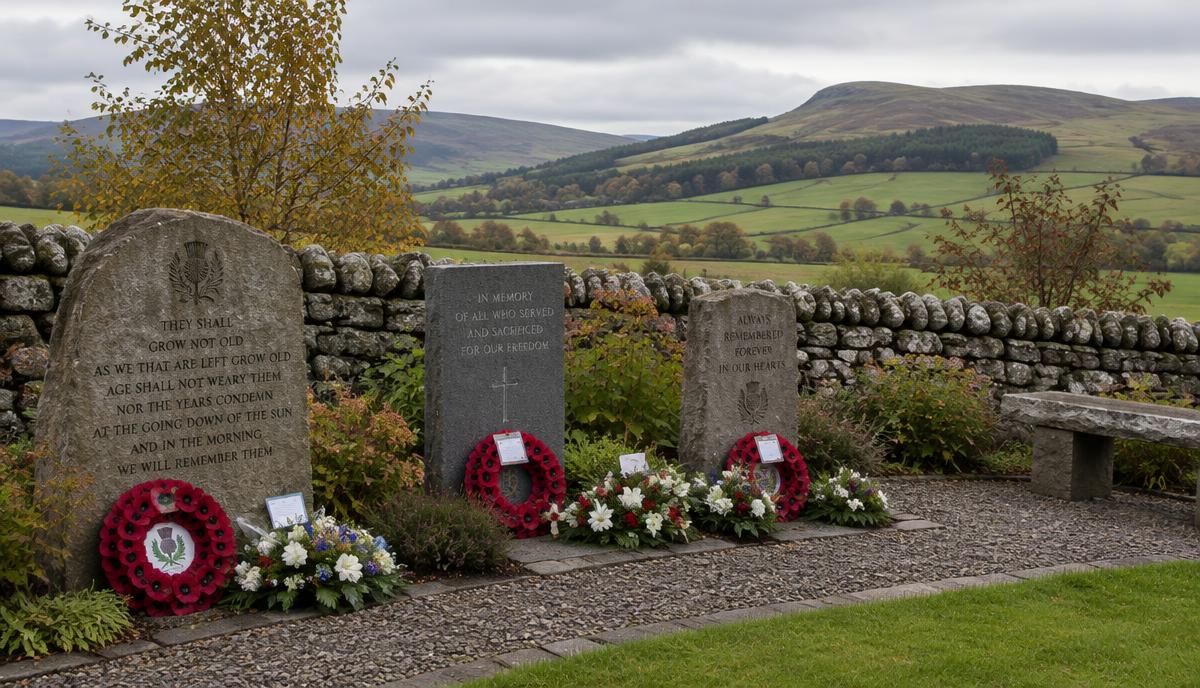
Pan Am Flight 103 was destroyed over the Scottish town on 21 December 1988, killing all 259 passengers and crew and 11 people on the ground. The aircraft had been flying from London to New York and came down 38 minutes into its journey.
The attack remains the deadliest act of terrorism in British history. Of the 270 victims, 190 were American and 43 were from the United Kingdom. Wreckage scattered across the town and the surrounding hills, and the investigation that followed became one of the largest in Scottish policing history.
The alleged confession was first made public in 2020, when the US Department of Justice announced charges against Mas’ud. An FBI criminal complaint stated that he had admitted his involvement when questioned by a police officer in a Libyan detention facility in 2012.
According to that account, Mas’ud said he acted alongside fellow members of the Libyan intelligence service under the orders of senior officials. He is said to have described taking a bomb hidden in a suitcase from Libya to Malta, where he met two accomplices. One was Abdelbaset al-Megrahi, the Libyan agent convicted of the bombing by a Scottish court in 2001. The other, Al Amin Khalifa Fhimah, was acquitted at the same trial.
A trial twice delayed
The trial in Washington was originally scheduled for August. It was postponed days before jury selection was due to begin after the disclosure of new evidence that defence lawyers wanted to examine. The nature of that material has not been revealed, although a recent hearing was told it involved one new witness.
The delay caused concern among victims’ relatives, many of whom are elderly after almost four decades of waiting. The new trial date has been set for 19 January. Prosecutors have committed to proceeding with the case despite the age of the evidence and the passage of time.
For the families of the 270 victims, Thursday’s ruling removes one of the last procedural obstacles before the trial. Groups representing American relatives described earlier rulings in the case as steps in a long fight for justice. Scottish investigators and prosecutors, who lost their own opportunity to try Mas’ud when he was taken to the United States, continue to work alongside their American counterparts as the case approaches its most important stage.