The Libyan man accused of building the bomb that destroyed Pan Am Flight 103 over Lockerbie has lost his bid to have the case against him thrown out of court.
Abu Agila Mas’ud Kheir Al-Marimi, often referred to as Masud, had argued that he was the victim of an illegal rendition when he was handed over to the United States from Libya in 2022. A US district judge has now ruled that the manner of his removal does not prevent his trial from going ahead in Washington.
Court transcripts obtained by BBC Scotland News show that Judge Dabney Friedrich rejected the defence motion. The trial is due to begin on 19 January, after three postponements.
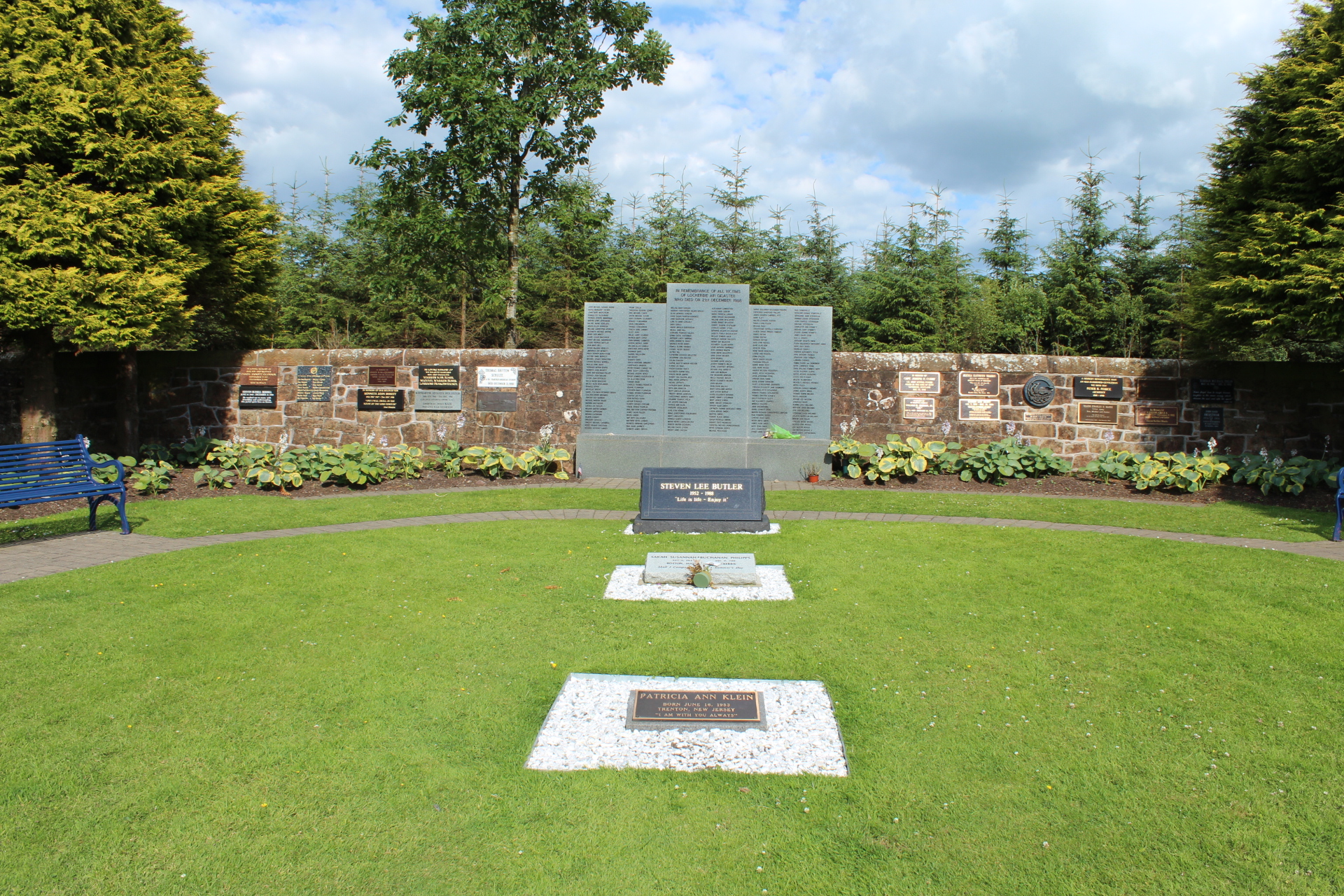
Mas’ud, who is 75, denies playing a key role in the attack on 21 December 1988, which killed all 259 people on board the New York-bound jumbo jet and 11 residents of Lockerbie on the ground. It remains the deadliest terrorist attack and the worst aviation disaster in British history.
A ‘cloak and dagger operation’
The bid to have the case dismissed was made public in documents lodged with the court in Washington.
Mas’ud’s lawyers said he was violently abducted from his home in Tripoli in 2022 by armed members of a militia, “in a cloak and dagger operation conducted in the middle of the night”.
They alleged that, weeks later, after being held in a detention centre without access to lawyers, he was handed over to FBI agents at an airport in Misrata and flown to the United States.
His legal team argued that the case should be dismissed because the US had violated his constitutional rights and breached extradition arrangements between the United States and Libya.
Why the judge said the trial can go ahead
Judge Friedrich relied on a long-standing American legal doctrine that a court’s right to try a defendant is not affected by the fact that he was brought before it by force.
“This rule rests on the principle that due process of law is satisfied when one present in court is convicted of a crime after a fair trial and in accordance with constitutional procedural safeguards,” she said.
“Put differently, there’s nothing in the Constitution that requires a court to permit a guilty person rightfully convicted to escape justice because he was brought to trial against his will.”
The judge said there were two exceptions to that rule. The first would apply if a defendant had been brought to court through a “deliberate, unnecessary and unreasonable invasion” of his constitutional rights by the US government, carried out by or at the direction of American officials.
She found that Mas’ud’s allegations “at best suggest that US government officials exerted pressure on Libyan officials to facilitate a rendition, not that US government officials directed or controlled the challenged conduct”.
The second exception would apply if the US had broken an extradition agreement that was the only lawful route for transferring a suspect between the two countries. The judge noted that prosecutors had relied on two international conventions to secure his appearance in court.
“Neither the Montreal Convention nor the Terrorist Bombings Convention provides that it is the only way by which one country may gain custody of a national of another country for the purposes of prosecution,” she said. “Accordingly, Libya was free to transfer Mr Al-Marimi to the United States using any method it chose.”
The disputed confession
The ruling is the latest in a series of legal battles between prosecutors and the defence in the run-up to the trial.
Earlier, the same judge rejected a defence attempt to suppress a confession Mas’ud is alleged to have made while in custody in Libya in 2012. According to the FBI, he admitted building the bomb in an operation carried out by the Libyan intelligence service, and an FBI criminal complaint says he made the admission freely.
Mas’ud says the confession is false and was made under duress, claiming that three masked men forced him to make the statement after threatening him and his family. He has been in US custody since December 2022.
The trial had been due to start in August, but was postponed just days beforehand. The judge has since warned against any further delay.
Nearly four decades without closure
The only previous criminal trial over the bombing was held between May 2000 and January 2001 at Camp Zeist in the Netherlands, where a specially convened Scottish court sat on a former US air base.
Three Scottish judges convicted Libyan intelligence officer Abdelbaset al-Megrahi of murder and jailed him for life. His co-accused, Al Amin Khalifa Fhimah, was acquitted.
Megrahi lost an appeal in 2002 and was released by the Scottish government on compassionate grounds in 2009 after being diagnosed with terminal prostate cancer. He died at home in Tripoli in 2012. His family’s posthumous appeal was rejected by judges in Edinburgh in 2021.
For many of the bereaved families in Scotland and the United States, the January trial represents what may be the last chance to see someone else held to account in court for the atrocity. Some relatives continue to question parts of the original case, while others hope the new proceedings will finally settle the questions that have hung over Lockerbie since 1988.