Seven people have been killed and at least 34 injured after gunmen opened fire on mourners at a church funeral in central Jordan, officials have said.
The attack took place on Friday at a Greek Orthodox church in Hmoud, a village in the Karak governorate south of the capital, Amman. One witness said between 150 and 200 people were inside the building when the shooting began.
The attackers are reported to have arrived by car, entered the church, opened fire and then fled. No group has said it carried out the attack, and the gunmen had not been caught by Friday evening.
Jordan’s Interior Minister, Mazen al-Faraya, told a news conference that the security services were working to track down those responsible, whom he described as a “group of extremists”. He called the shooting “painful and horrific” and said it was “unparalleled in the history of the Hashemite Kingdom of Jordan”.
King Abdullah II said the authorities would “confront the terrorist act that targeted Karak with the harshest penalties”.
A changing death toll
The number of dead shifted several times during the day. Initial reports said seven people had been killed. A government spokesperson later put the figure at six, before officials revised the death toll back up to seven.
Officials have not yet named the victims or said how many of the injured remain in a serious condition. Hospitals in Karak and the surrounding area received the wounded, many of whom were taken from the church courtyard by relatives and neighbours before ambulances arrived.
What the footage shows
CCTV footage verified by the BBC appears to show three gunmen walking from a road towards the church. Two of the men are seen approaching what looks like a vehicle entrance to the church grounds, before briefly retreating and returning with a third man. All three appear to be carrying handguns.
Separate footage, believed to have been filmed in the aftermath, appears to show several dead and wounded people lying on the ground amid chaotic scenes.
‘As if a war had just started’
A man who was at the funeral estimated that the attack lasted about 15 minutes and said he believed the attackers had used automatic weapons.
“I heard something as if a war had just started,” he said. “I thought it was an electrical short circuit. I looked, people lying on the ground, wounded. The scene was catastrophic.”
A woman who was inside the church said the gunfire began seconds after a prayer. “The sound of machine guns started, and the sound of glass. We began to realise that something was happening. People started screaming,” she said.
She described how the situation “continued to escalate for 10 continuous minutes”. When she managed to get out of the building, she said, “bodies were all in the courtyards”.
Security officials and crowds of local people gathered outside the church later on Friday as investigators examined the scene.
A rare attack in a stable country
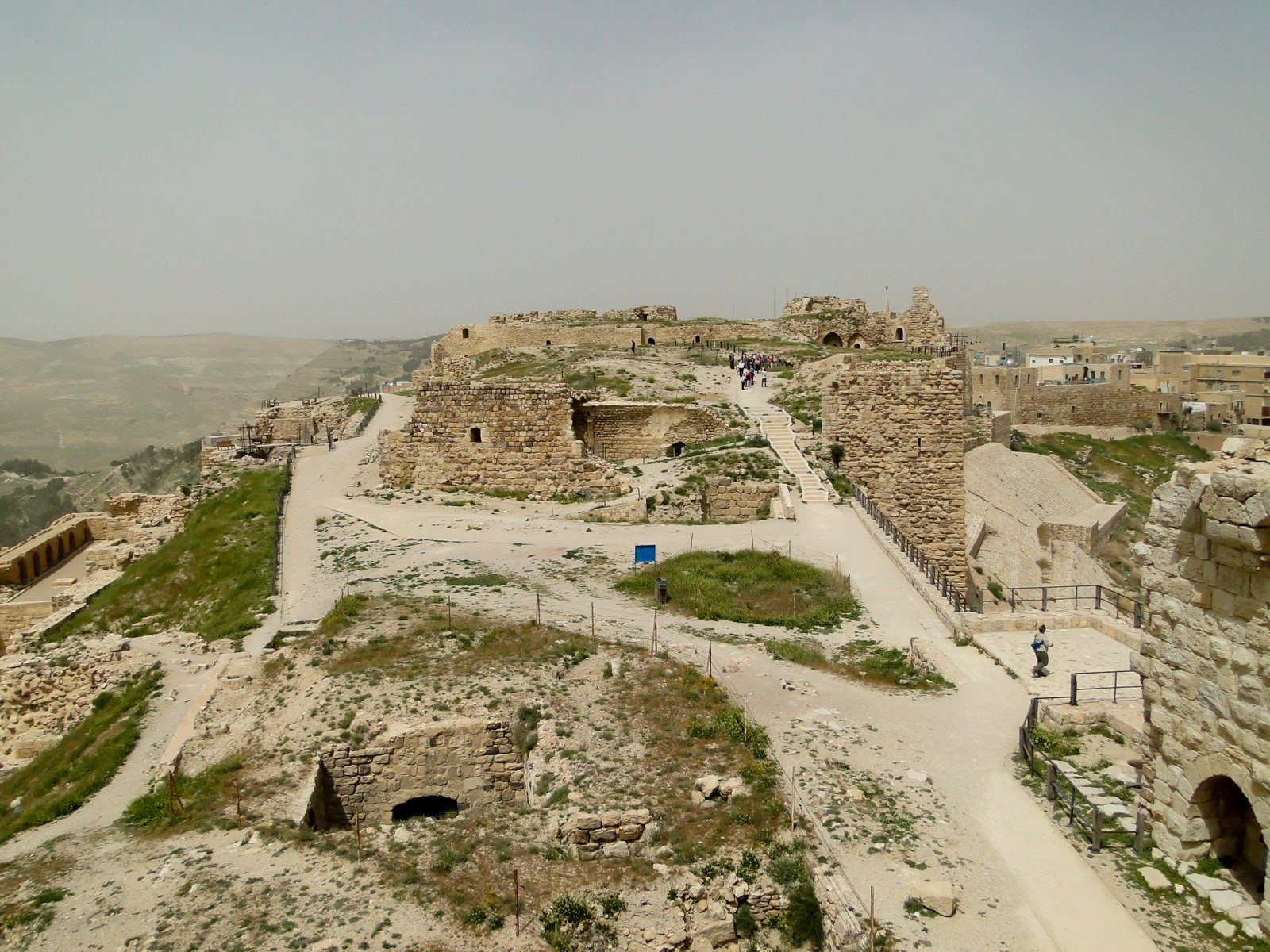
Jordan has long been regarded as one of the most stable countries in the Middle East, and attacks on places of worship are extremely rare. Christians make up a small minority of the population, estimated at under 3%, and have lived in the region since the earliest centuries of the faith. Karak, an ancient hill town best known for its crusader castle, has historic Christian communities that worship alongside a Muslim majority.
The governorate has nonetheless seen violence before. In December 2016, gunmen attacked police and tourists at Karak Castle, killing ten people including a Canadian visitor, in an assault later claimed by the Islamic State group. That attack prompted a major security review in a country that relies heavily on tourism to sites such as Petra and the Dead Sea.
Jordan’s government has repeatedly stressed national unity between Muslims and Christians, and the king has presented the kingdom as a guardian of religious coexistence, including through the Hashemite custodianship of Muslim and Christian holy sites in Jerusalem.
Questions for the investigation
Investigators will want to establish who the gunmen were, whether they acted alone or as part of a wider network, and how they were able to reach a crowded funeral armed and leave again. The interior minister’s description of the attackers as extremists suggests the authorities are treating the shooting as an act of terrorism rather than a local dispute, although officials have not said what evidence underpins that assessment.
The attack comes at a tense moment for the wider region, with Jordan bordering Israel and the occupied West Bank, Syria and Iraq. Officials did not suggest any link between the shooting and regional conflicts, and no claim of responsibility had been made by Friday evening.
Messages of condolence began to arrive from church leaders and foreign governments as news of the killings spread. Funerals for the victims are expected in the coming days, under heavy security.