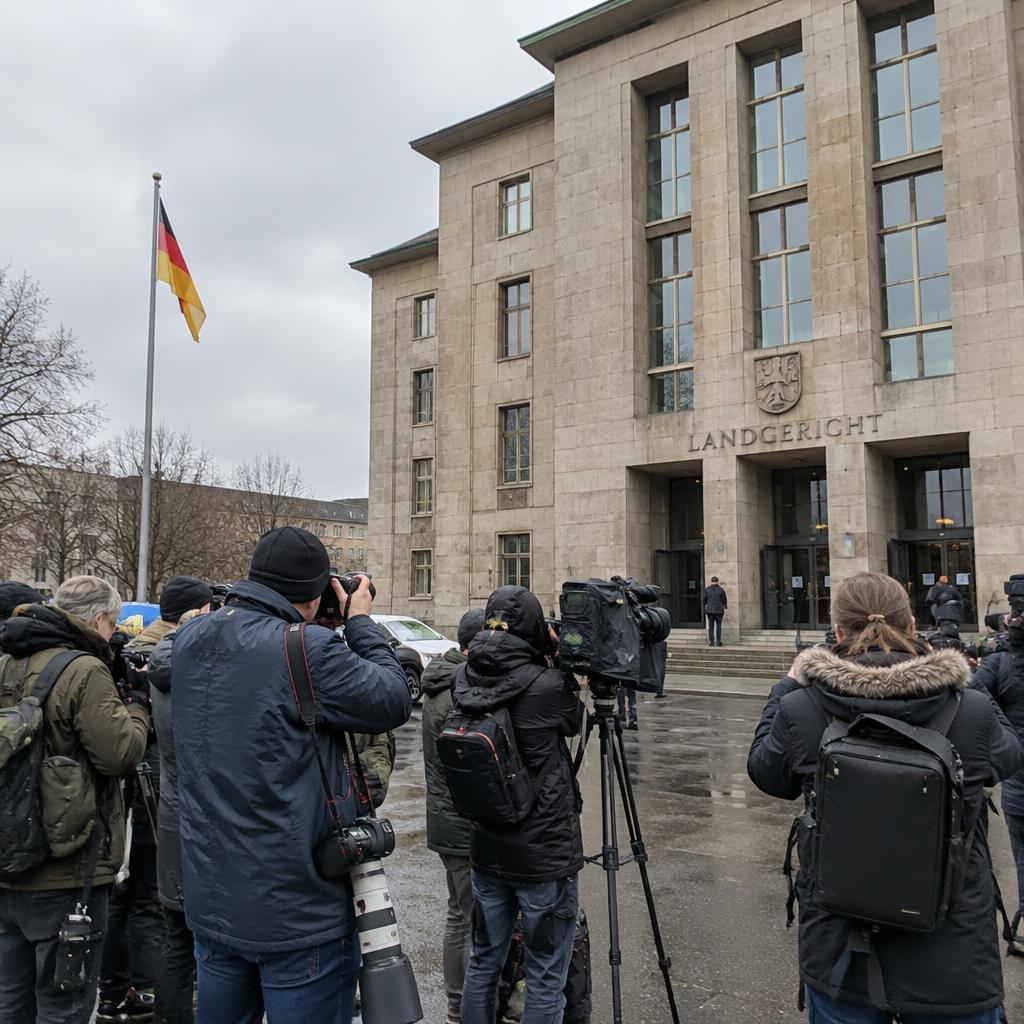
The trial of a German steakhouse heiress accused of spying for China has opened in Germany, in a case that has sent shockwaves through the country's political and business establishment and exposed the reach of foreign intelligence operations in Europe.
The defendant, an heir to the Block House restaurant fortune, is accused of passing sensitive information to Chinese intelligence. Prosecutors say the case is part of a wider pattern of Chinese espionage targeting German politics, industry and technology — a pattern that has produced a string of arrests and prosecutions over the past two years.
The defendant denies the charges. Her lawyers argue that the prosecution has built its case on innocuous social and business contacts, and that she is being made an example of amid rising geopolitical tension between Europe and Beijing.
A scandal with wide ripples
The case has attracted attention far beyond the courtroom because of what it reveals about how intelligence services operate in open societies. According to investigators, the alleged tradecraft was not the stuff of spy novels but of business dinners, networking events and cultivated friendships — access bought through wealth, charm and social position.
Germany has been particularly exposed. The country's economy is deeply intertwined with China, its largest trading partner for years, and its political class has long cultivated relations with Beijing. Security officials now concede that this openness was exploited systematically.
The trial follows other high-profile cases, including the arrest of an aide to a far-right member of the European Parliament accused of spying for China, and prosecutions of individuals accused of passing information about German military technology and industrial secrets.
The political fallout
The scandal has fuelled a fierce debate in Berlin about how Germany should manage its relationship with China. The government has adopted a strategy of "de-risking" — reducing critical dependencies while maintaining trade — but critics say the espionage cases show the strategy is not being enforced with sufficient rigour.
Intelligence officials have taken the unusual step of speaking publicly about the scale of the threat, warning that Chinese services are targeting everything from political parties and research institutes to small and medium-sized companies with valuable niche technologies.
Beijing has rejected the accusations, describing the prosecutions as politically motivated and part of a Western campaign to smear China. Chinese officials have warned that the cases will damage bilateral relations and economic cooperation.
A European problem
Germany is not alone. Britain's MI5 has warned repeatedly about Chinese intelligence activity, including attempts to cultivate parliamentary contacts, and several other European countries have brought espionage cases linked to Beijing in recent years.
Security services across the continent say the challenge is structural: the same openness that makes European societies prosperous — free movement of people, ideas and capital — makes them permeable to hostile intelligence operations.
The verdict in the steakhouse heiress trial, expected in the coming weeks, will be watched as a test of whether European courts can hold the line against espionage conducted not with dead drops and cipher pads, but with champagne receptions and business cards.
For Germany's intelligence agencies, the trial is also a moment of institutional vindication. The domestic security service, the BfV, has been warning about Chinese espionage for years, often against political resistance from a business community fearful of offending its biggest market. The recent run of cases has shifted that balance, giving the security agencies new political cover and new resources. But officials caution against complacency: for every operation uncovered, they assume several more are running undetected, and the line between legitimate engagement and hostile cultivation is one that businesses and politicians must learn to draw for themselves.