
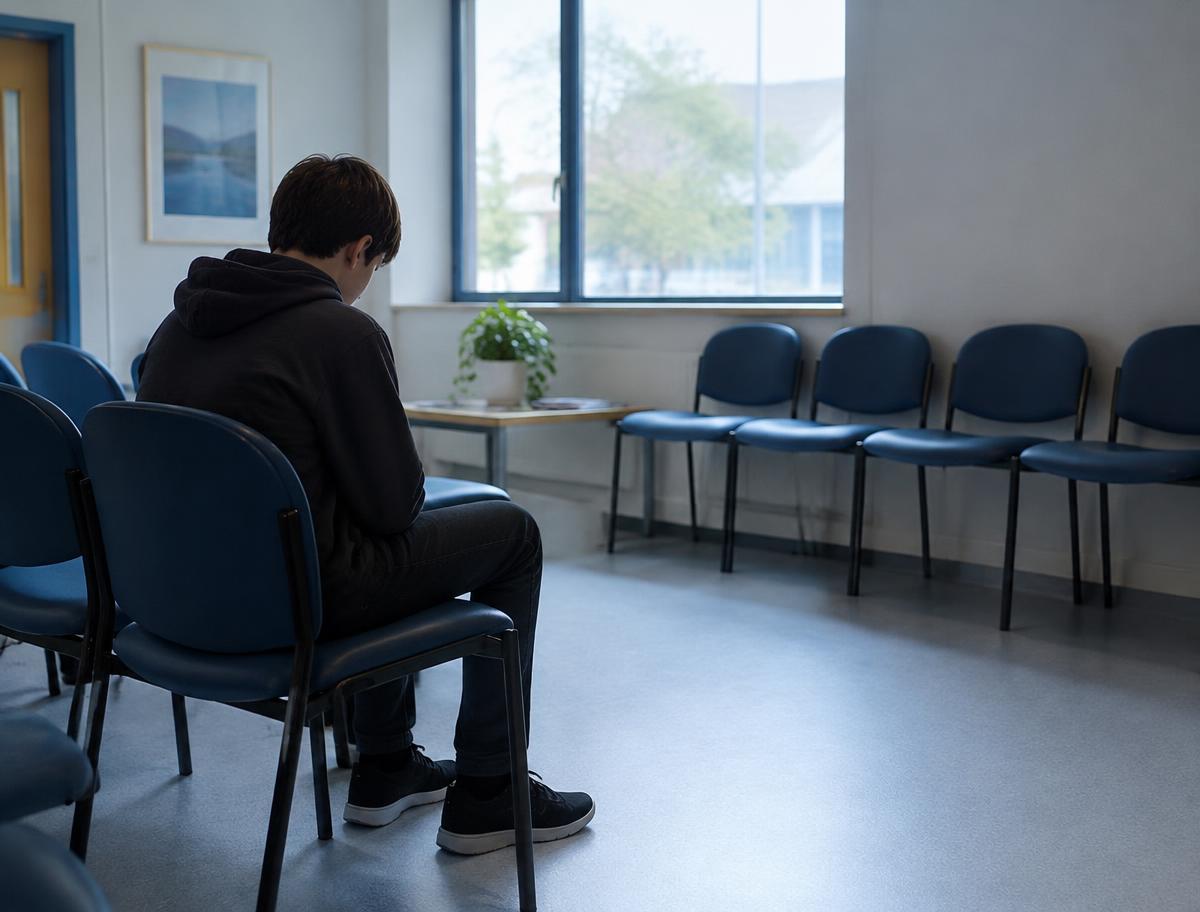
Young people's mental distress has risen sharply and is real, not the product of a generation of "snowflakes", according to a landmark review that warns NHS mental health, ADHD and autism services in England will be overwhelmed without radical change.
The 607-page report, led by Professor Peter Fonagy and published on Friday, says the rise in distress "cannot be explained by greater awareness alone". It calls for help to be available at the point of need, rather than locked behind a diagnosis that can take years to obtain.
The review was commissioned in 2025 by Wes Streeting, then health secretary, amid growing alarm that spiralling waiting lists threatened the health service's ability to cope.
A generation under strain
About one in four 16 to 24-year-olds is now thought to have a common mental disorder such as anxiety or depression, up from one in six in 1993. Self-harm, eating disorders, OCD, post-traumatic stress disorder and drug dependence have also increased.
Around four million children are in "serious distress", the report says. If current trends continue, that could reach 4.5 million by 2030. Self-harm cases across England's population could reach 2.5 million.
Not every measure is worsening. Rates of severe mental illness such as bipolar disorder and schizophrenia have remained broadly stable, and hazardous drinking has fallen.
The economic cost is vast. Mental ill health costs £300bn a year, and the report warns that "continuing as we are is not sustainable" — for those waiting weeks, months or years, for those with the most severe needs, and for a society paying the price of people being unable to work, study or take part in family life.
The diagnosis explosion
The most striking findings concern ADHD and autism. The proportion of the population estimated to have ADHD, about 3.8%, and to be autistic, about 1.2%, has stayed broadly stable.
Diagnoses, however, have exploded. The share of children aged six to 11 with an ADHD diagnosis has risen more than sixfold in five years, to 2.7%. Among 12 to 17-year-olds it has risen more than fifteenfold, to 3.9%.
More than 560,000 people are waiting for an ADHD assessment and more than 254,000 for an autism assessment.
Professor Sir Simon Wessely, the review's vice-chair, said the system had reached a tipping point at which people risk being misdiagnosed. The report is careful: it says the evidence does not by itself prove overdiagnosis at scale, but that the risks of misdiagnosis and overdiagnosis are becoming increasingly important.
Private providers under scrutiny
NHS spending on independent-sector ADHD services rose by 252% in three years, the review found. Private providers carried out more than a third of NHS-funded autism assessments in 2025-26.
The Health Secretary, Yvette Cooper, said all diagnostic assessments for ADHD and autism would be regulated by the Care Quality Commission, "so people can be confident that assessments are high quality and that the NHS is not being overcharged".
She stopped short of banning private firms from advertising assessments directly to the public. Instead, the Advertising Standards Authority will be asked to review the practice to ensure people are not "exploited by companies encouraging them to seek assessments they may not need".
'Not the only door'
Professor Fonagy said the NHS must move from a diagnostic labelling model to a flexible, needs-led system. "Diagnosis remains essential and must be protected," he said. "What has to change is that it is no longer the only door through which help can be reached."
Under the proposals, people could seek help through schools, GPs, community and mental health services, social care, employers and family hubs. A single service would bring mental health and neurodevelopmental support together.
Waiting lists would no longer work strictly on a first-come, first-served basis. Those with the highest needs — including self-harm, multiple difficulties or the risk of school exclusion or unemployment — would be assessed sooner.
The authors insisted that nobody would be removed from a waiting list without proper assessment and discussion.
The Department of Health and Social Care has committed to a major overhaul to deliver "earlier, needs-led support for children, young people and adults, without long waits for clinical diagnosis".
The challenge now is delivery. Families who have waited years for an appointment will judge the reforms not by the report's ambition, but by how quickly help actually arrives.