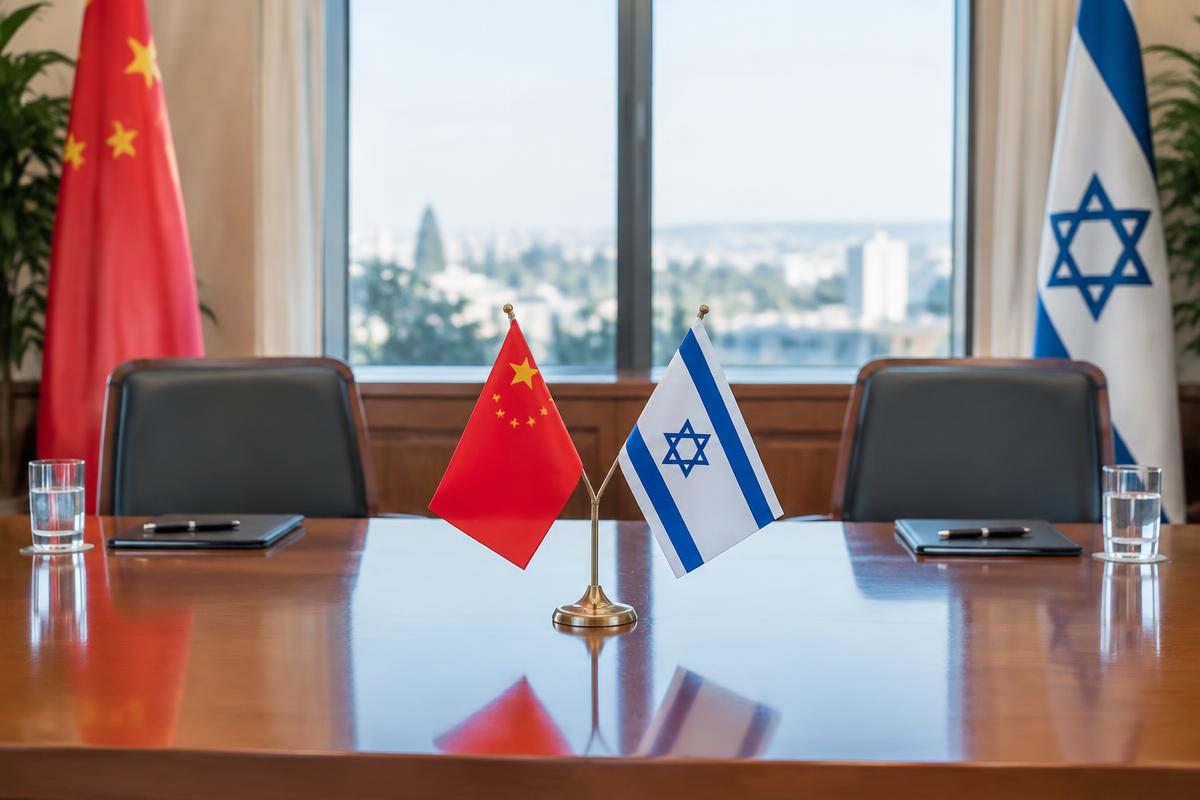
China’s foreign minister has urged Israel to halt what he described as the “forced establishment” of settlements in the West Bank and to open access to Gaza, bringing Beijing’s position directly to Israeli President Isaac Herzog during talks in Azerbaijan.
Wang Yi made the remarks at a meeting on the sidelines of a conference on Thursday, according to his office. Herzog gave a different emphasis in his own account, saying he had raised Israel’s desire for regional peace alongside what he described as security threats from Iran and its proxies.
The two public readouts show the distance between their priorities. China stressed Palestinian rights, humanitarian access and political dialogue. Israel’s president highlighted security and regional relationships. Neither account announced an agreement on settlements or a new arrangement for aid entering Gaza.
Beijing’s position
Wang described the Palestinian question as a profound historical injustice and repeated China’s support for a two-state solution. His language represents Beijing’s diplomatic position, rather than a neutral verdict agreed by all parties to the conflict.
He said the immediate priority was to open access to Gaza fully and prevent the further spread of a humanitarian catastrophe. China was willing to work with other countries to encourage a return to dialogue and a political solution, his office said.
The demand comes a year after the October 2025 ceasefire began. The BBC reports that large-scale bombardment has stopped but Israeli strikes have continued almost daily, leaving people in Gaza facing insecurity, displacement and difficulties obtaining food. A ceasefire’s existence is therefore not the same as a settled peace or unrestricted humanitarian access.
Progress towards the next phase of the agreement has stalled, with Israel and Hamas accusing each other of breaches. Those competing allegations must be distinguished from facts established about individual incidents. Thursday’s diplomatic meeting did not resolve that dispute or establish a timetable for moving the agreement forward.
Herzog stresses security
Herzog said he was pleased to meet Wang and that the discussion covered relations between the countries and events in the Middle East. He emphasised Israel’s wish for peace while identifying Iran and its allied groups as principal security threats.
That account places the discussion in a wider regional framework rather than treating settlements and Gaza in isolation. It does not, however, announce that Israel accepted Wang’s demands. Equally, China’s statement that it is ready to support dialogue is an offer of diplomatic involvement, not evidence that the parties have accepted Chinese mediation.
Beijing maintains close relations with Tehran and is the largest buyer of Iranian oil, according to the BBC. Those ties matter when assessing China’s role: access to regional governments can give it diplomatic influence, but its relationships and declared positions mean it should not simply be described as an impartial intermediary.
The conflict in Gaza followed the Hamas-led attack on Israel on 7 October 2023. The subsequent war and the stalled ceasefire process form the background to Wang’s demands, while the West Bank settlement issue remains a separate but connected obstacle in efforts to reach a wider political settlement.
Past diplomacy and present limits
China helped broker the restoration of diplomatic ties between Saudi Arabia and Iran in 2023. Earlier this year it was involved, alongside Pakistan, in efforts to propose a ceasefire in the US-Israel war against Iran. These initiatives demonstrate its growing regional diplomatic activity, not a guarantee that it can deliver an agreement between Israel and the Palestinians.
In 2024, Beijing brought rival Palestinian factions together around an agreement to form an interim national reconciliation government for Gaza and the West Bank after the war. That proposal was not implemented. The gap between a declaration and an operating political arrangement is particularly relevant to the new call for dialogue.
Thursday’s meeting gives both governments a channel through which to express their positions, but the published statements leave substantial differences intact. There is no announced change to settlement policy, no new access arrangement and no agreed next stage of the ceasefire.
The practical measure of any follow-up will be movement on those issues rather than the strength of diplomatic language alone. For civilians in Gaza, reliable access to aid and protection from further violence remain immediate concerns; for negotiators, the challenge is turning competing demands into commitments the parties will actually implement.