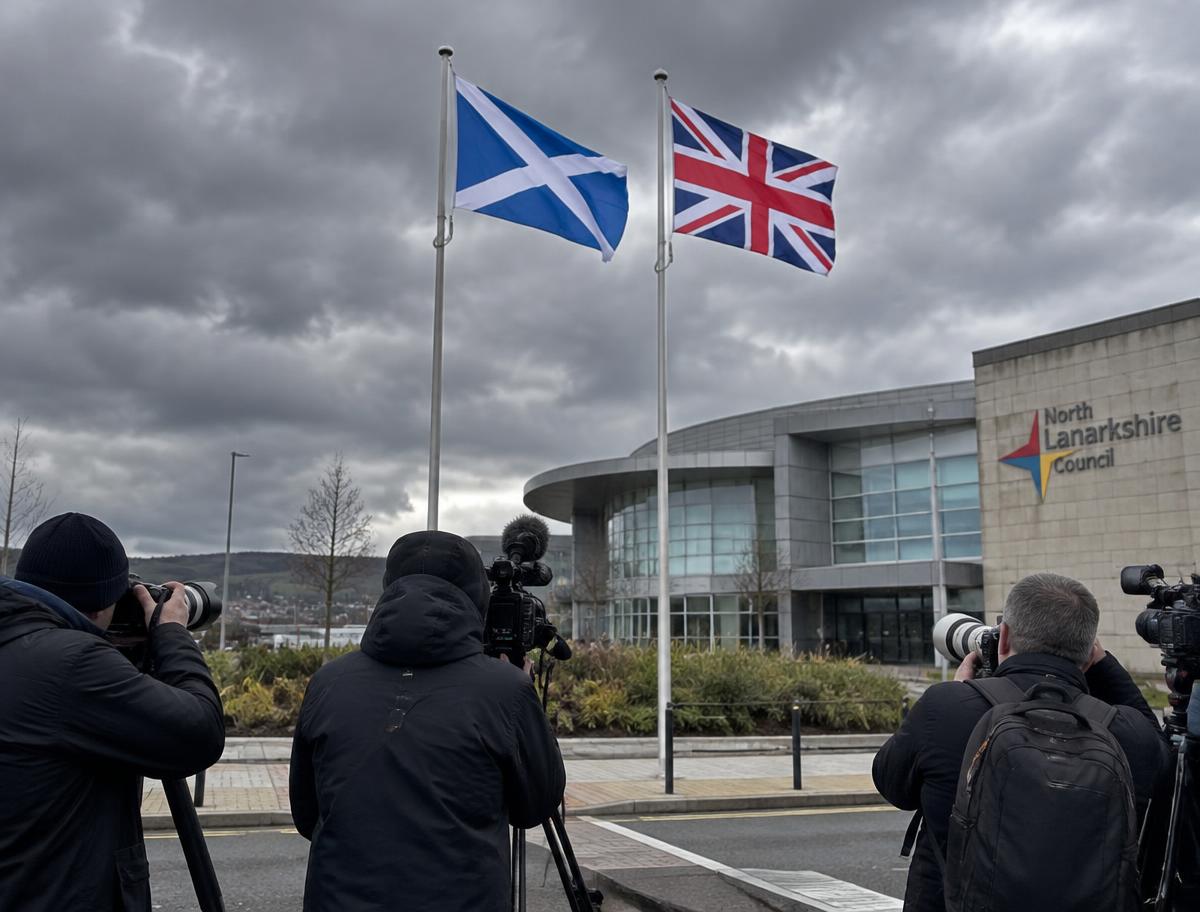
Andy Burnham has invited John Swinney to work with him on what he calls a “deeper” form of devolution for Scotland, using a visit to North Lanarkshire to argue that power should be pushed beyond Holyrood and into the country’s regions and cities.
The prime minister told an audience that “there is no limit to what we can achieve for the people of Scotland” if the two governments co-operate. But the offer came wrapped in a pointed criticism: that the Scottish government is one of the most centralised devolved administrations in Europe.
The timing was deliberate. Mr Burnham’s visit coincided with the SNP’s annual conference in Aberdeen, where the first minister is preparing to make a renewed case for independence, and with a visit to Glasgow by the Conservative leader, Kemi Badenoch.
An offer — and a challenge
“During my first week in office, I told the first minister that I wanted to work with him to spread opportunities to communities across Scotland’s regions and cities,” Mr Burnham said. “Through No10 North, we are rewiring the state and I want to make sure regions in Scotland are fully part of this. This is me making an offer to the Scottish government.”
No10 North is the prime minister’s project to move decision-making and civil service functions away from Whitehall. As mayor of Greater Manchester, Mr Burnham built his national reputation on demanding powers and budgets for city regions, and he has carried that argument into Downing Street.
He called on the Scottish government to work with No10 North and the Scotland Office to develop “a new model of regional empowerment for Scotland”, giving communities with “their own strengths, identity and ambitions” the means to seize new economic opportunities.
The centralisation charge
The sharpest element of the speech was Mr Burnham’s claim that, after 27 years of devolution from Westminster, Holyrood still does not give enough of a say to the people who know their areas best. It is an argument long made by Scottish council leaders, who complain that ring-fenced budgets and national targets leave them with little room to manoeuvre.
For the SNP, the charge is awkward. Ministers in Edinburgh have spent years arguing that Scotland is held back by decisions taken in London. Being told by a Labour prime minister that they, in turn, keep too tight a grip on Scotland’s towns and cities turns that argument back on them.
Mr Swinney has already warned the prime minister not to overstep. Any attempt to route money or powers directly from Westminster to Scottish regions, bypassing Holyrood, would be seen in Edinburgh as an assault on the devolution settlement itself.
Common ground, sharp limits
Yet local empowerment is one of the few areas where the two governments might genuinely agree. Both have said they are willing to push power down to city regions and communities, and city-region deals already bind Edinburgh, Glasgow and other areas to joint funding from both governments.
The deeper dispute is constitutional. Mr Swinney has called for a second independence referendum by 2031. He welcomed Mr Burnham’s earlier remark to MPs that a border poll could be considered in Scotland and Northern Ireland if there were a clear consensus and public opinion had changed. But at a meeting in Glasgow, the prime minister told him that a second referendum remains “off limits”.
The first minister is expected to use his keynote speech in Aberdeen on Saturday to promote his renewed push for independence, setting up a weekend in which the two leaders will offer competing visions of how Scotland should be governed.
Badenoch: devolution ‘not a religion’
The Conservatives added a third voice. Speaking in Edinburgh on Thursday, Mrs Badenoch said the party had “no plans” to take powers away from the Scottish Parliament, but suggested that “maybe we need a review” of how devolution is working.
“Devolution is a process. It’s not a religion which we should worship,” she said. “If a process isn’t working, how can you improve the process rather than just say the process is there, there’s nothing we can do? We are about solutions.”
What it means
Mr Burnham’s pitch is aimed at voters who may care less about the constitutional question than about jobs, transport and public services in their own area. By framing the debate around regional opportunity, Labour hopes to shift attention away from independence and towards delivery.
Whether Mr Swinney accepts the invitation will be an early test of the relationship between the new prime minister and the first minister. A refusal risks allowing Labour to portray the SNP as more interested in the constitution than in co-operation; acceptance risks lending credibility to a Downing Street project that, in the SNP’s view, could chip away at Holyrood’s authority. Either way, the battle lines for the next Holyrood debate on devolution have now been drawn.