Prime Minister Andy Burnham has said decisions on whether to approve two of the North Sea's most controversial oil and gas fields will be made "shortly" – with a ruling on one of them described by his energy secretary as "imminent".
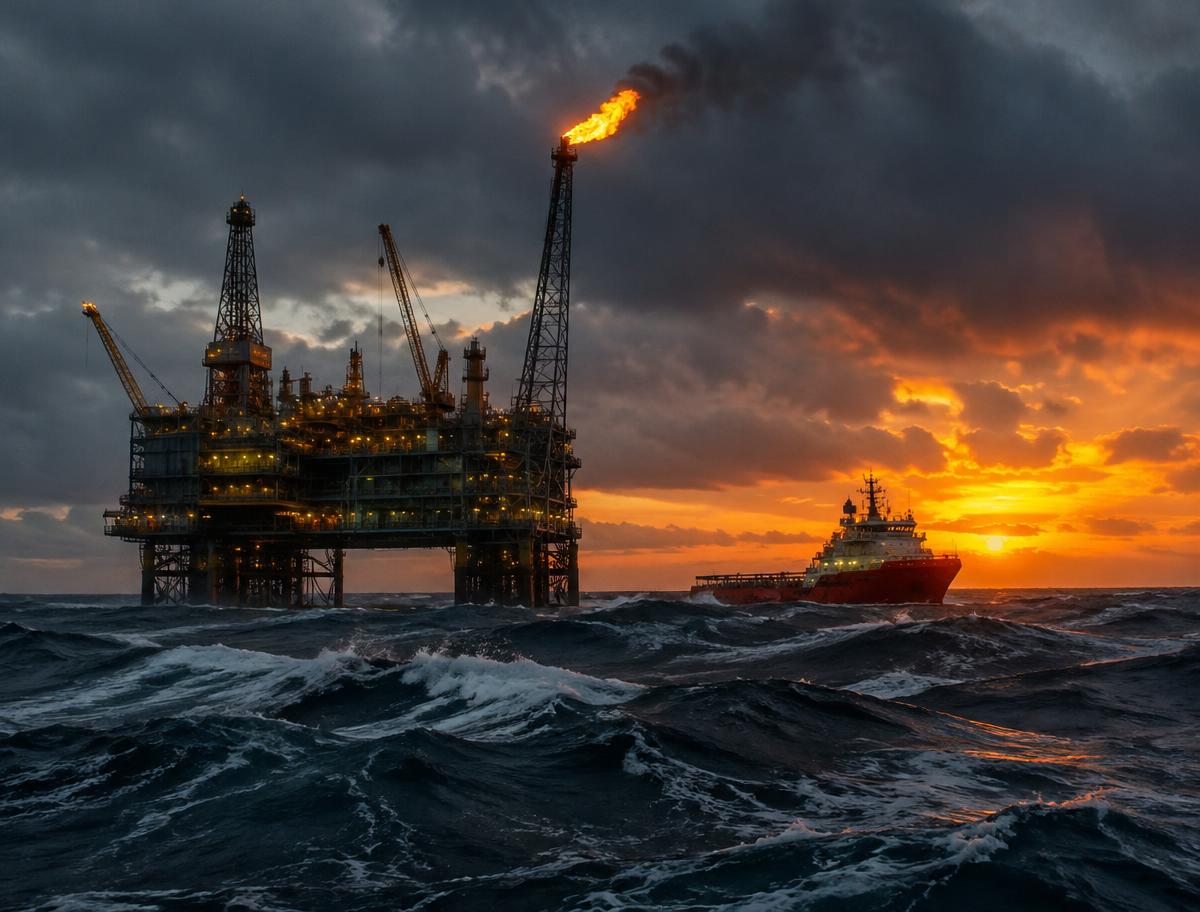
The government has been weighing up plans for Rosebank, an oil field off Shetland, and Jackdaw, a gas field east of Aberdeen. Both have been the subject of years of debate, legal challenges and public consultation.
Clash at PMQs
At Prime Minister's Questions, Conservative leader Kemi Badenoch urged Burnham "to stop faffing about".
"In July, he said he would approve the Rosebank and Jackdaw oil and gas fields in the North Sea. What's he waiting for?" she asked. "If he'd approved them back then, we would have British gas warming British homes this winter. All of the gas from Jackdaw goes onto the British grid, so will we now stop faffing about and approve Rosebank and Jackdaw?"
Burnham hit back: "She asked me what I'm waiting for – I've had to wait for the government process, which was struck down by the courts under the Conservative government, to be fixed because they messed it up, and we inherited that situation. So I will take a pragmatic approach on oil and gas, we will set out our decisions shortly."
Jackdaw first
Speaking at the Energy UK annual conference, Energy Secretary Miatta Fahnbulleh said: "We have got all the information on Jackdaw and the department has gone through that so there is a decision that will be imminent."
She said a decision on Rosebank would take a little longer.
Jackdaw lies about 150 miles (241km) east of Aberdeen. Its operators say it could be connected to the UK gas network within months of approval. Rosebank, about 80 miles (129km) north-west of Shetland, is Britain's largest untapped oil field and would also produce some gas.
Why the courts got involved
Licences for both fields were granted by the previous Conservative government in 2022 and 2023, prompting legal challenges from environmental groups.
Last year the Court of Session in Edinburgh ruled that the approvals had been unlawful because the government had failed to take into account the climate impact of burning the oil and gas extracted – known as "scope 3" emissions. The ruling followed a landmark Supreme Court judgment on the same principle. Developers were required to submit fresh environmental assessments, which ministers have since been considering.
Jobs versus climate
For the industry in the north-east of Scotland, the decisions are seen as a test of whether the UK still wants a future for domestic production. Trade bodies and unions argue that approving the fields would protect thousands of skilled jobs, provide tax revenue and reduce reliance on imported energy at a time when conflict in the Middle East is pushing up prices.
Environmental campaigners say opening new fields is incompatible with the UK's climate commitments, would do little to lower bills because oil and gas are sold on global markets, and would lock in emissions for decades. They point out that most of Rosebank's oil is expected to be exported.
A Scottish political flashpoint
The issue also cuts across Scottish politics. The SNP, whose conference opens in Aberdeen on Thursday, has shifted its position in recent years, while Scottish Labour faces pressure from both workers in the energy sector and voters concerned about climate change.
Burnham, who is due to visit Scotland this weekend, has described his approach as "pragmatic". That word suggests Jackdaw – a gas field feeding the domestic grid – may be the easier decision to approve, while Rosebank could prove harder.
Whatever ministers decide, a further legal challenge cannot be ruled out. For the north-east, after years of uncertainty, the most important word in Wednesday's exchanges may simply have been "shortly".