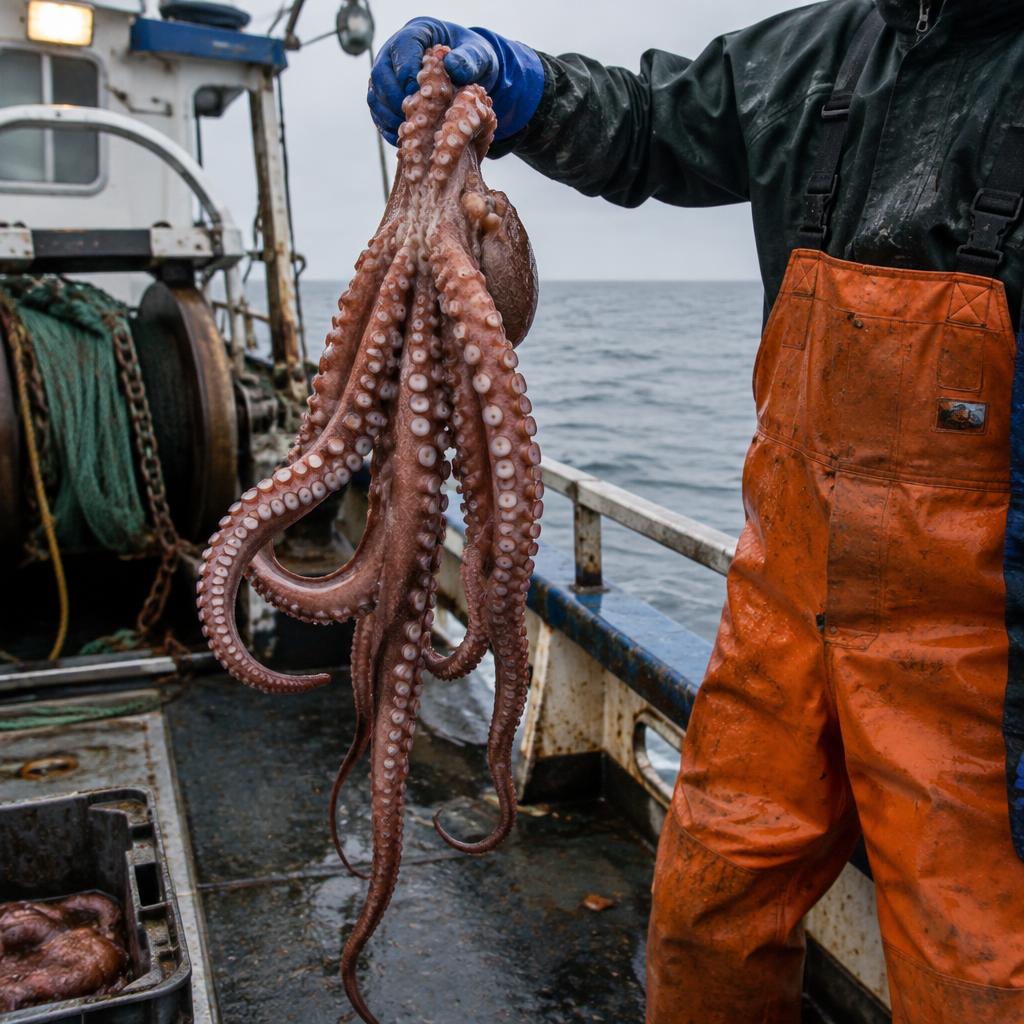
An extraordinary boom in octopus numbers off the British coast is transforming the fortunes of fishermen while giving scientists a vivid, real-time illustration of how climate change is reshaping the seas around the UK.
Landings of common octopus have surged to levels not seen in living memory, with fishermen in the Channel and off the south-west coast reporting catches many times higher than in previous years. For boats that have watched traditional stocks such as cod decline for decades, the tentacled newcomers represent an unexpected windfall.
But marine biologists say the boom is a symptom, not a blessing. Octopus thrive in warmer water, and their explosion in British seas is part of a broader reordering of marine life as ocean temperatures climb — a reordering whose full consequences are only beginning to be understood.
A fishery transformed
For the fishing industry, the adaptation has been rapid. Buyers who once rarely handled octopus are now taking regular consignments, and prices have held up as demand from restaurants and export markets — particularly in Spain and Portugal, where octopus is a staple — has absorbed the new supply.
Some vessels have switched gear and grounds to target octopus deliberately, using pots that catch them with minimal bycatch — a method that, ironically, makes octopus one of the more environmentally benign fisheries in British waters.
"Twenty years ago you'd see one in a season," said one skipper. "Now they're the backbone of the trip. You adapt or you go under."
The science of the surge
Scientists attribute the boom to a combination of warming waters, favourable currents and the octopus's own remarkable biology. The creatures grow fast, mature quickly and can exploit new habitats with a flexibility that slower-breeding fish cannot match.
Similar octopus blooms have been recorded in previous warm periods — historical records show a major outbreak off Plymouth in the early 20th century — but researchers say the current surge is consistent with the long-term warming trend driven by climate change, rather than a one-off fluctuation.
The worry is what comes with it. Octopus are voracious predators of crabs, lobsters and shellfish — the very stocks that sustain some of Britain's most valuable fisheries. Early reports of octopus raiding crab pots have raised fears that the boom could cannibalise other parts of the industry.
Winners, losers and an uncertain sea
Marine ecologists describe what is happening in British waters as a "tropicalisation" of the ecosystem: warm-water species moving in, cold-water species retreating north. Octopus are the most visible winners so far; the losers include species that have supported coastal communities for centuries.
For policymakers, the boom poses unfamiliar questions. Octopus are largely unregulated in British waters — there are no quotas, because until recently there was no fishery worth regulating. Officials are now considering whether management measures are needed before the boom either collapses or damages other stocks.
For the fishermen landing them, such questions feel remote. After years of quotas, fuel costs and shrinking catches, a new species at the quayside is simply survival. But as one scientist put it: "When the sea starts serving you a different menu, you should ask what happened to the old one."
The change is visible above the waterline too. Fishmongers and chefs report octopus appearing on menus in towns where it was once an exotic import, and seafood festivals on the south coast have begun celebrating a creature that barely featured in British cooking a generation ago. Whether the boom lasts is another question. Octopus populations are famously volatile, capable of collapsing as quickly as they surge, and a single cold winter or shift in currents could change the picture again. For now, though, the boats are full — and the scientists counting the catch are watching the thermometers as closely as the fishermen.