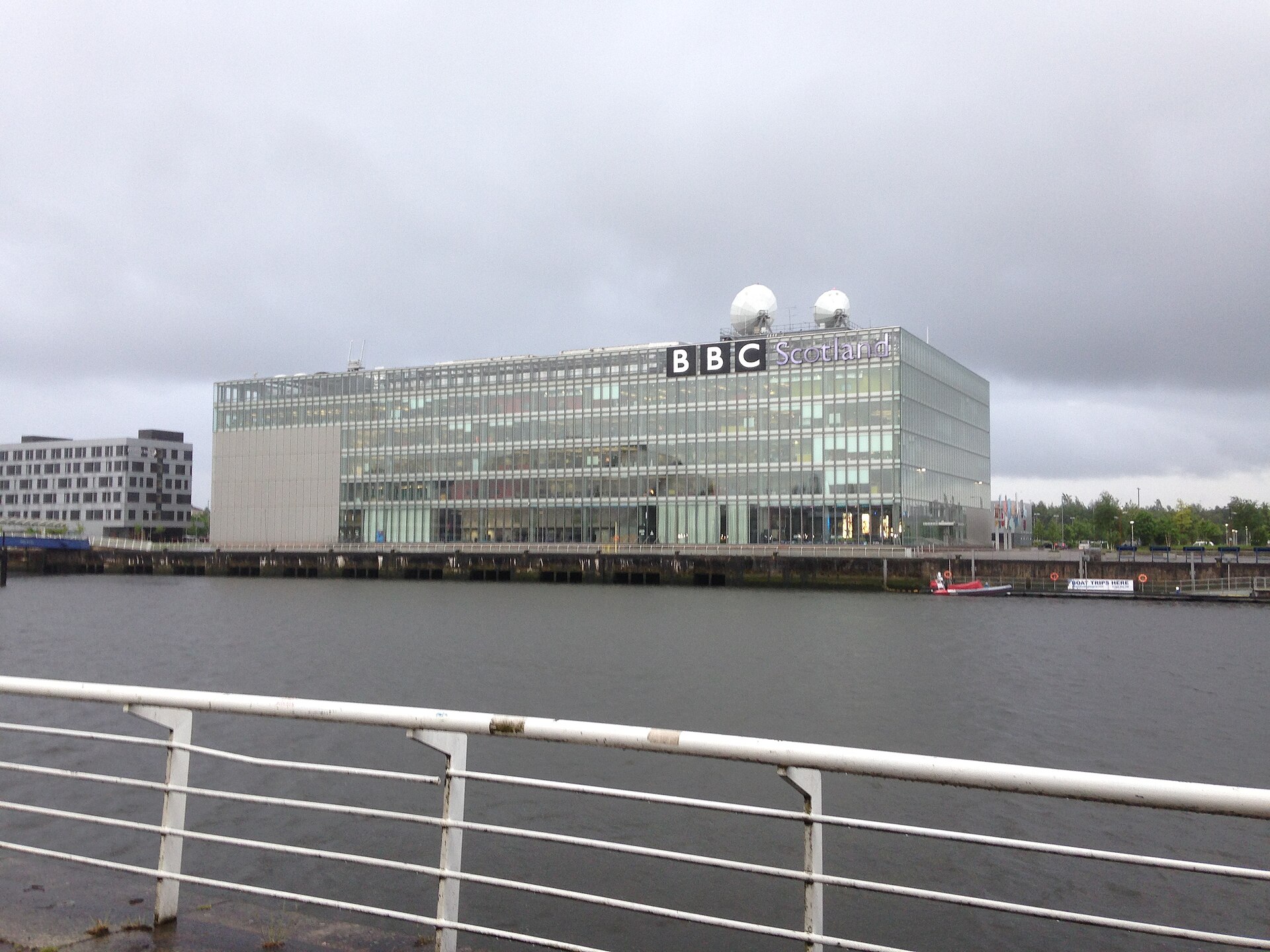
The BBC Scotland television channel is to close next spring, seven years after it was launched as a dedicated home for Scottish programmes, as the corporation pushes ahead with savings of £500m over two years.
The channel, broadcast from the BBC’s Pacific Quay headquarters in Glasgow since February 2019, will stop transmitting on traditional television and continue only as a channel on BBC iPlayer. Its nightly news programme, Reporting Scotland: News at Seven, will not make the move and will end when the linear service closes.
About 10 posts are expected to go as a result, on top of the 60 job cuts in Scotland the BBC announced earlier this year. The closure was confirmed on Tuesday alongside the end of BBC Three as a broadcast channel and the closure of the digital radio station Radio 4 Extra.
What happens to the programmes
The BBC said a wide range of programming currently shown on the channel would remain available online or would be shown on BBC One Scotland and BBC Two Scotland. Programmes named by the corporation include Scotland’s Home of the Year, Murder Case, Inside Barlinnie, coverage of the Scottish Cup final and Hogmanay.
Friday night SPFL Championship football, one of the channel’s regular fixtures, will move to BBC Two in Scotland. The corporation said audiences would continue to be served by its wider Scottish news offering, including Reporting Scotland, The Sunday Show, Radio Scotland Breakfast, Debate Night and the Scotcast podcast.
Hayley Valentine, director of BBC Scotland, said: “Against the backdrop of significant financial challenges, we must focus our resources where they will have the greatest impact for audiences.” She said that by continuing the channel on iPlayer, the BBC could “ensure Scottish content thrives in a digital environment”, and that BBC One and BBC Two in Scotland would “maintain a strong and distinctive Scottish presence on linear television”.
Valentine, who was launch editor of the channel’s original flagship news programme, The Nine, said it was “always sad” to see programmes end. “I am extremely proud of the News at Seven team and everything they have delivered since launching,” she said.
A channel that struggled for viewers
Plans for a dedicated Scottish channel were announced in 2017 by the then director-general, Tony Hall, who described it as a “bold, creative and ambitious” replacement for BBC Two Scotland as the main home of Scottish-produced programmes. It launched with the creation of 80 journalism jobs and was fronted by The Nine, an hour-long programme covering Scottish, UK and international news from a Scottish perspective.
The channel became home to Scottish drama, comedy, documentaries, current affairs and sport, including Debate Night and some national team football. But it struggled to attract large audiences. In 2024 the BBC scrapped The Nine, along with the entertainment programme The Edit and the weekly review Seven Days, replacing them with the shorter News at Seven and extended editions of Reporting Scotland.
Like BBC Three, the channel broadcasts only in the evenings, simulcasting BBC Radio Scotland for the rest of the day. Many of its programmes, such as the sitcom Two Doors Down, are repeats of shows first aired on other BBC channels.
‘Tough choices’
The BBC is seeking to cut between 1,800 and 2,000 jobs, almost one in 10 of its workforce, as income from the licence fee comes under pressure from a fall in the number of licences sold. About 550 job cuts have already been announced in news, and the corporation has cancelled programmes including Blankety Blank, Celebrity Mastermind, Live at the Apollo and Football Focus.
Director-general Matt Brittin said the corporation needed to “make every pound work harder for audiences”. He added: “While this follows media speculation, I recognise the confirmation of this news will be hard for audiences and colleagues.” Last month he warned that “we wouldn’t guarantee any programme or any channel will exist forever”.
Political reaction
The announcement drew criticism at Holyrood. Scottish Greens culture spokesperson Q Manivannan called it “a huge blow for staff” and “a backwards step that risks leaving viewers behind”, warning that moving away from a traditional channel would make BBC Scotland less accessible for older people and those without reliable internet access, the right devices or the confidence to use digital services.
The Greens said they were ready to support the Scottish Government in pressing for the protection of Scottish broadcasting during talks with Westminster over the renewal of the BBC’s Royal Charter next year.
Shadow Scottish secretary Harriet Cross said the channel had often explored subjects from rural Scotland that would otherwise not have been shown on the main channels, but acknowledged that fewer Scots were watching linear television and said the BBC had to provide value for money.
Media commentators were more measured about the wider package. Sir Peter Bazalgette, former chairman of ITV, described the closures as “modest and pretty well-judged”, arguing that they protected spending on content while cutting distribution costs. The entertainment union Equity said the announcement “does not signal a thriving BBC”.
For viewers in Scotland, the immediate change will come in the spring, when the channel disappears from television listings. Its programmes, and the BBC Scotland name, will continue on iPlayer, but the nightly Scottish news hour that began with The Nine will come to an end.