Bangladesh is battling a significant measles outbreak that global health officials describe as a "real warning" to other countries, as falling vaccination rates around the world leave growing numbers of children vulnerable to one of the most contagious diseases known to medicine.
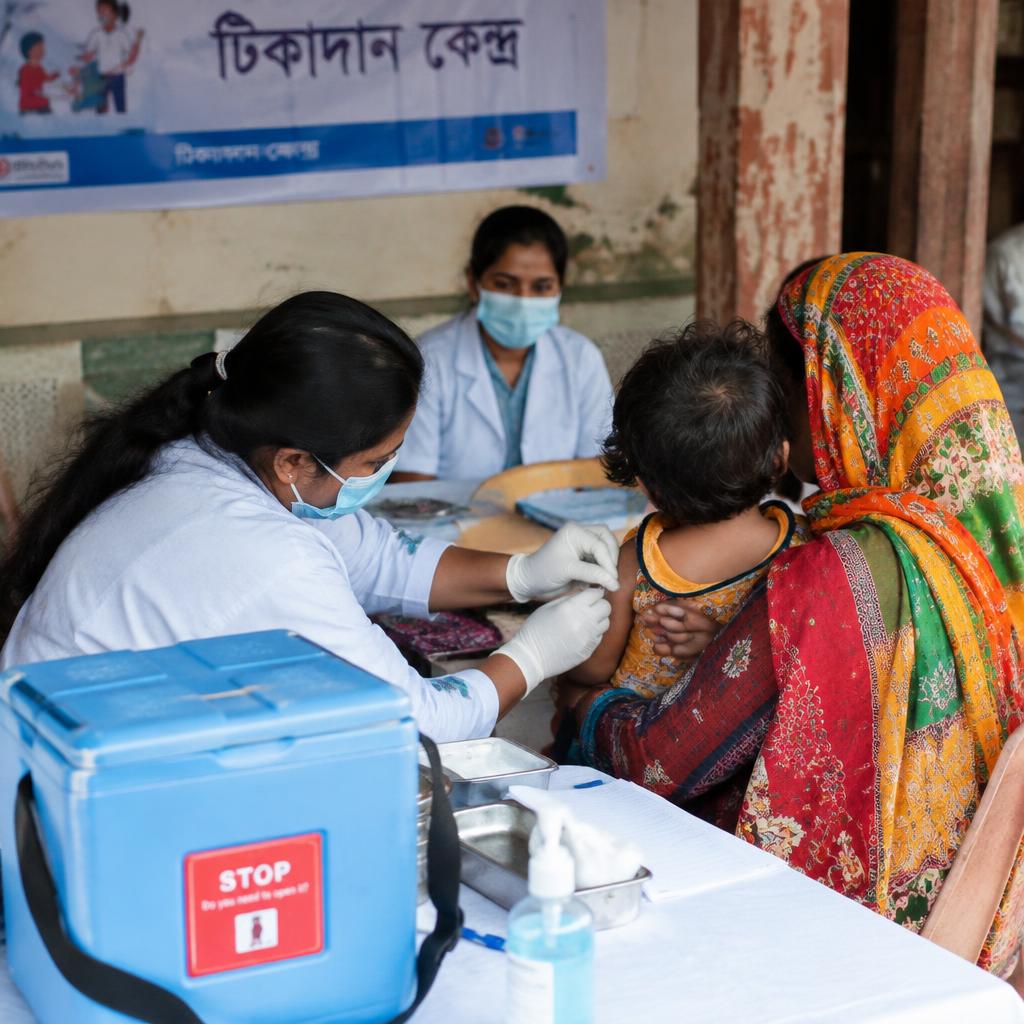
Health authorities in Dhaka have reported a sharp rise in cases, with hospitals in the capital and surrounding districts treating large numbers of children, many of them unvaccinated or only partially immunised. Measles kills through complications including pneumonia and encephalitis, and malnourished children are at the greatest risk.
The outbreak follows a pattern now familiar to epidemiologists: routine immunisation programmes disrupted by the pandemic and never fully recovered, vaccine hesitancy spreading through social media, and health systems too stretched to close the gap.
The immunity gap
Measles is so infectious that around 95% of a population must be immune to stop it spreading. The World Health Organization estimates that global coverage with the first dose of measles vaccine remains below pre-pandemic levels, leaving tens of millions of children unprotected — the largest immunity gap in a generation.
Bangladesh had previously been a success story, with high vaccination coverage achieved through one of the developing world's most effective immunisation programmes. But coverage has slipped, and in a densely populated country of more than 170 million people, even a small percentage fall leaves hundreds of thousands of children susceptible.
Health workers say the outbreak is concentrated in urban slums and among migrant and marginalised communities — precisely the populations that routine health services find hardest to reach.
A warning for the world
What alarms global health officials is not only the outbreak itself but what it signals. Measles is often described as the canary in the coal mine of immunisation: because it is so contagious, it is usually the first disease to resurge when vaccination systems weaken. Where measles appears, gaps that could admit diphtheria, polio and whooping cough are rarely far behind.
The WHO has recorded large measles outbreaks in dozens of countries over the past two years, including in Europe, where coverage in several nations has fallen below the safety threshold. Britain lost its measles elimination status after outbreaks driven by low uptake of the MMR vaccine.
"Bangladesh is not an outlier," said one WHO official. "It is an early indicator. Every country with sub-optimal coverage should be looking at this and checking its own defences."
The response
Bangladeshi authorities have launched catch-up vaccination campaigns in the worst-affected districts, deploying teams to schools, markets and informal settlements. International partners, including UNICEF and Gavi, the vaccine alliance, are supporting the effort with doses and funding.
But officials acknowledge that catch-up campaigns are a sticking plaster. The durable solution — restoring routine immunisation to near-universal coverage — requires investment, political commitment and a concerted effort to counter misinformation about vaccine safety.
For the parents queuing at Dhaka's clinics with feverish children, the global debate is abstract. What matters is that a disease the world knows exactly how to prevent is once again filling hospital wards — here, and increasingly, everywhere.
The economic argument for action is stark. A full course of measles vaccination costs a few dollars per child; treating a single severe case in hospital costs many times more, and the long-term consequences of complications — disability, lost schooling, lost earnings — fall on families least able to bear them. Economists at the World Bank describe routine immunisation as among the highest-return investments in all of development policy. Yet global funding for immunisation programmes has stagnated, and aid cuts by major donors threaten to widen the gaps further. The lesson of Bangladesh, officials say, is that the bill for neglect always arrives — the only question is who pays it, and in what currency.