
Ukrainian President Volodymyr Zelensky has said Vladimir Putin personally ordered Russia’s military to drop previous constraints on strikes against civilian sites, intensifying an aerial campaign that has recently hit schools, hospitals, telecommunications facilities and data centres across Ukraine.
Speaking to the Financial Times, Mr Zelensky said Ukrainian intelligence agencies had obtained information, including intercepted communications involving Kremlin officials, indicating the Russian president gave the instruction in September. “He said there are no rules now,” Mr Zelensky said.
An unverified but striking claim
Kyiv has not published the intercepts it says it holds, and their contents cannot be independently verified. Russia has not commented on the specific claim. Mr Zelensky’s assertion nonetheless reflects a marked escalation in Russian strikes on Ukrainian cities over recent weeks, which has been documented by independent reporting from the ground.
Speaking from a bombed school
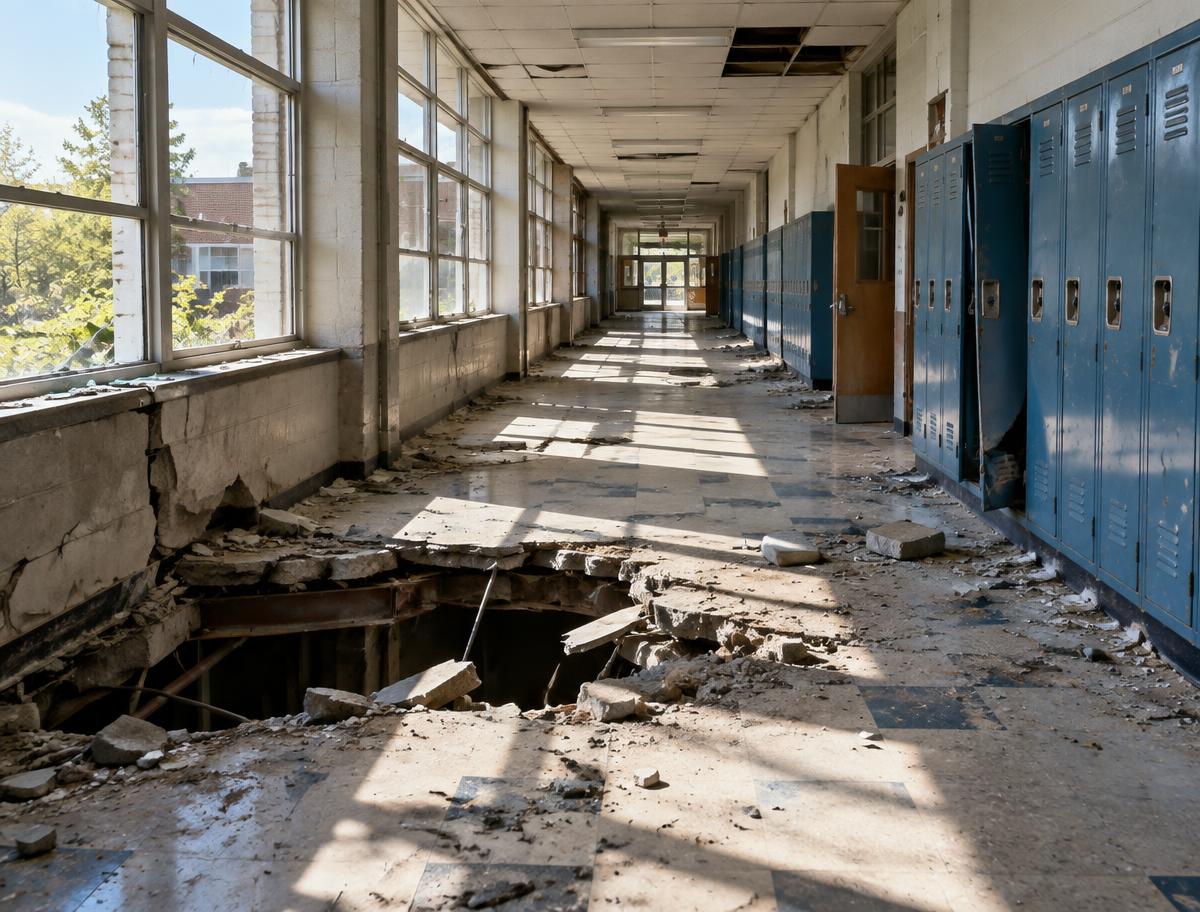
Mr Zelensky gave the interview inside the underground shelter of a Kyiv school that had been struck hours earlier by a Russian jet-powered drone. He pointed to the strike as evidence of how widespread attacks on civilian infrastructure have become.
The school’s director, named in reporting as Valentyna Chorna, said 104 pupils and 60 members of staff survived because they had reached the shelter before the drone hit, shortly after 9am. The drone’s roughly 50kg warhead pierced the building’s floor but did not detonate.
Russia’s wider campaign
Mr Zelensky said the shift in Russian tactics came as Moscow intensified strikes on Kyiv through September, part of what Ukrainian officials describe as a bid to regain the initiative after a largely stalled front line in the east. Recent Russian strikes have also forced the partial or full closure of bridges in Kyiv and have hit residential buildings and fuel stations, according to Ukrainian authorities.
Ukraine, in turn, has stepped up long-range strikes on Russian oil refineries, ports and fuel depots, attacks that Kyiv says are intended to disrupt the logistics and revenue underpinning Moscow’s war effort and which have contributed to fuel shortages reported inside Russia.
A static front line, a harsher sky
Analysts quoted in Western reporting note a growing contrast between the largely unchanged front line in eastern Ukraine, where Russian advances have been slow and costly, and an escalating air war over Ukrainian cities. Kyiv and other urban centres are bracing for a difficult winter, with officials warning that supplies of Western-made air defence interceptors, particularly the US-supplied Patriot system, remain insufficient to counter the stepped-up bombardment.
Mr Zelensky said the pattern reflected Russia’s failure to achieve battlefield breakthroughs. “The Russians couldn’t occupy us. So now they are doing massive attacks and massive killing,” he said in comments reported alongside the interview.
What comes next
Ukrainian officials are expected to press Western allies for additional air defence systems ahead of winter, when energy infrastructure is traditionally targeted by Russian forces. The claim about Mr Putin’s order is likely to feature in Kyiv’s diplomatic efforts to secure further military and humanitarian support, even as the underlying intelligence remains unpublished and unconfirmed by independent sources.
Reaction from allies
Western governments have condemned the intensified Russian strikes on civilian infrastructure, with European leaders reiterating calls for further sanctions on Moscow and additional air defence supplies for Ukraine. Officials in Kyiv have used the reported targeting of schools and hospitals to press allies for faster delivery of promised military aid ahead of winter.
NATO members have in recent months debated how to respond to the growing scale of Russian drone and missile attacks, including proposals to help Ukraine build up domestic production of interceptor systems. Mr Zelensky has repeatedly argued that a shortage of air defence capability, rather than any lack of political will in Kyiv, is the main constraint on protecting Ukrainian cities from the kind of strikes described in the Financial Times interview.
The toll on civilians
Winters earlier in the war saw Russia carry out sustained campaigns against Ukraine’s power grid, leaving millions of people without heating or electricity for extended periods during freezing temperatures. Ukrainian officials have repeatedly warned that a repeat of such a campaign this winter, combined with what Mr Zelensky describes as fewer restraints on targeting civilian sites, could leave the population facing an even harsher few months than in previous years of the war.


