
Liberal Democrat candidate Julie Calder has been elected to Highland Council after winning the Wick and East Caithness by-election, taking 1,522 first-preference votes to fill a vacant seat in the four-member ward.
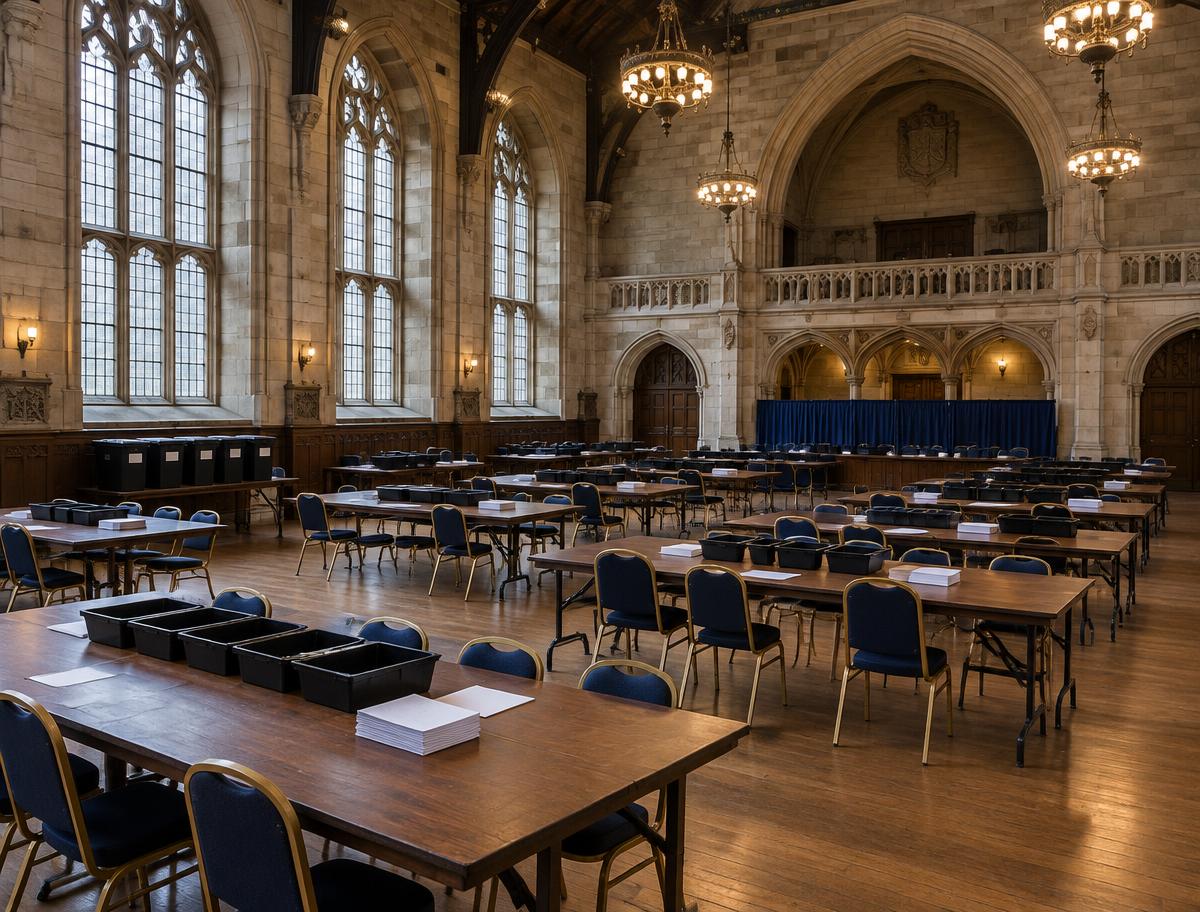
The count took place at the Assembly Rooms in Wick following polling on Thursday, with the result confirmed after ballots were verified and counted under the single transferable vote system used in Scottish local government elections.
The result in detail
Independent candidate Dave Buchanan finished second with 714 first-preference votes. The SNP’s John Glen received 424 votes, Reform UK’s Iain Richmond took 283, and Conservative candidate Charlotte Gibson received 79 votes.
There were 3,051 verified ballot papers from an electorate of 10,169, giving a turnout of 30%, a figure typical of local by-elections, which generally attract lower participation than scheduled council-wide elections.
Calder’s first-preference tally amounted to just under half of the 3,051 ballots cast. In a contest to fill a single seat, a candidate needs more than half of the valid votes to reach the quota, so lower-placed candidates were eliminated in turn and their voters’ later preferences transferred until she passed that mark.
Her lead was never in serious doubt. She won more than twice as many first preferences as Mr Buchanan, and more than the SNP, Reform UK and Conservative candidates combined.
A vast council area
Highland Council covers the largest local authority area in the United Kingdom, stretching from Caithness and Sutherland in the north to Lochaber and Badenoch in the south. Councillors in the far north often represent communities many hours’ drive from the council’s headquarters in Inverness, and issues such as roads, ferries, school provision and the cost of delivering services in remote areas regularly dominate local debate.
In Caithness, recent years have also brought concerns over the future of health services, the long-running decommissioning of the Dounreay nuclear site and the economic opportunities offered by offshore renewable energy, all of which are likely to feature in the casework of the ward’s councillors.
Why the seat was vacant
By-elections in Scottish council wards are triggered when a sitting councillor resigns, stands down or dies in office, requiring a fresh vote to fill the seat rather than waiting for the next scheduled election. Wick and East Caithness is one of Highland Council’s wards, electing multiple councillors under the single transferable vote system designed to produce broadly proportional results.
The use of first-preference votes with onward transfers means candidates can still be elected without an outright majority of first choices, as lower-placed candidates’ second and subsequent preferences are redistributed until a winner is confirmed.
Highland Council, like other Scottish local authorities, has used the single transferable vote system since 2007, replacing the previous first-past-the-post method for council elections as part of a wider reform intended to make the make-up of councils more closely reflect how people vote.
Calder’s election
Calder’s win adds a Liberal Democrat voice to the ward’s representation and reflects the party’s longstanding base of support in parts of the Highlands, including Caithness, where it has traditionally performed strongly in local elections.
Her election restores the ward to its full complement of four councillors, allowing Highland Council’s committee and ward business in Wick and East Caithness to proceed with its usual representation rather than operating with a vacant seat.
The Liberal Democrats have historically held a number of seats across the Highlands, and the party’s performance in Caithness by-elections has often been cited as a test of its continued local strength in areas where it once dominated parliamentary representation as well as council politics.
What happens next
Calder is expected to be formally welcomed to Highland Council in the coming weeks, taking up committee responsibilities alongside the ward’s other three councillors. Her term will run until the next scheduled local government elections.
The result will also be watched for what it signals about party strength in Caithness ahead of those wider elections, though by-election turnout and results in a single ward are not always a reliable guide to outcomes across the whole of Highland Council.


