
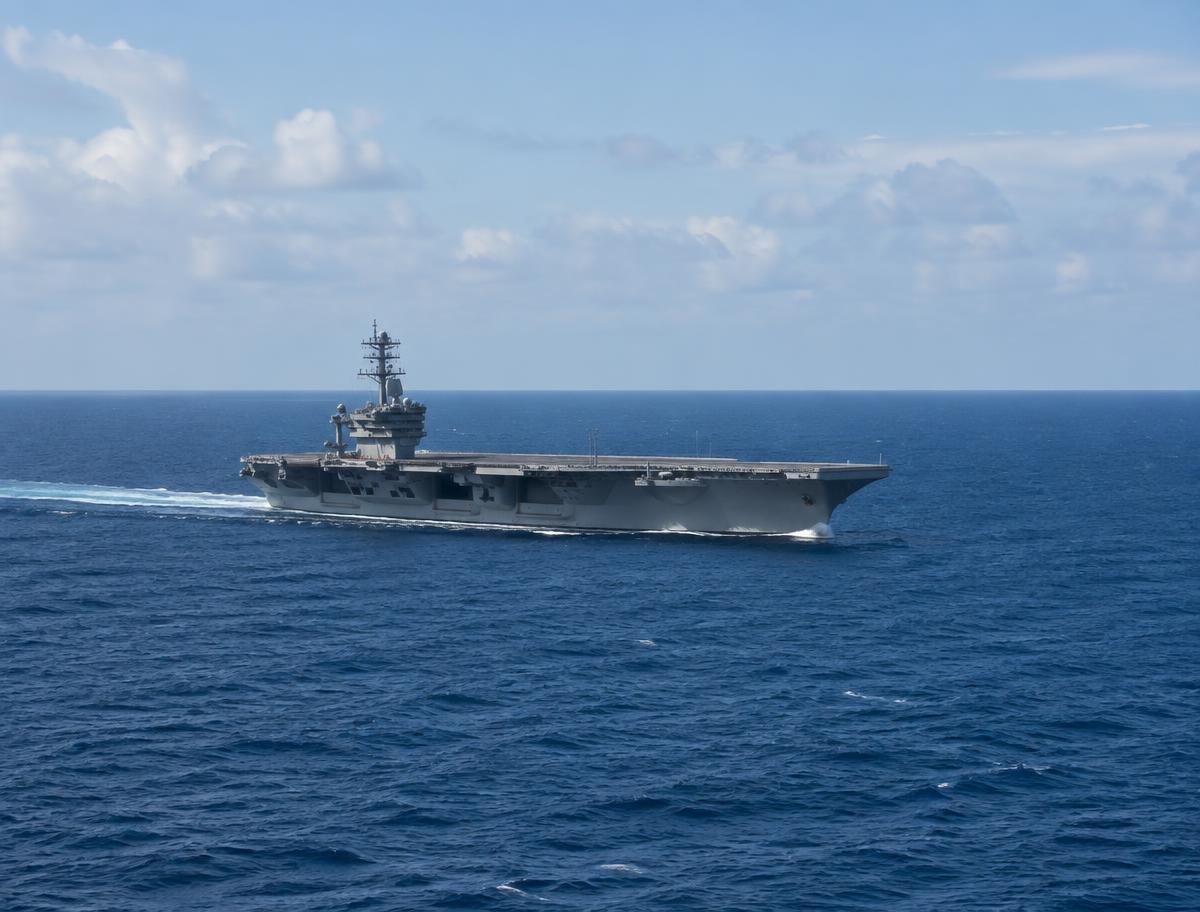
The United States is deploying a third aircraft carrier strike group towards the Middle East in a major build-up of forces around Iran, a US official told Al Jazeera, as the conflict between the two countries enters its eighth month.
The move would bring the number of US carrier strike groups in the region to three, alongside additional amphibious assault forces, representing one of the largest concentrations of American naval power deployed near Iran in recent memory.
The ships involved
The USS Theodore Roosevelt carrier strike group has departed its home port of San Diego and is heading towards the region. It is being followed by the Makin Island Amphibious Ready Group, which is carrying more than 2,000 US Marines, according to the official cited by Al Jazeera.
By the end of November, the US is expected to have three aircraft carrier strike groups and two amphibious ready groups positioned in or near the region, adding further firepower to an already substantial American presence that reportedly includes about 50,000 US military personnel stationed across the Middle East in connection with the conflict.
A carrier strike group typically consists of the carrier itself, several guided-missile destroyers and cruisers, and an air wing of dozens of fighter jets and support aircraft, giving each one significant independent strike capability. Massing three such groups in a single theatre represents a scale of naval power rarely seen outside of major conflicts, underscoring how seriously Washington is treating the current standoff with Tehran.
Background to the conflict
The deployment comes amid an ongoing conflict between the United States and Iran that has now stretched for roughly eight months, following a period of escalating confrontation that included direct military exchanges. The exact sequence of events that triggered the war has involved disputes over Iran’s nuclear programme, its support for regional proxy groups, and direct strikes exchanged between the two countries and their respective allies in the region.
The scale of the current naval build-up suggests Washington is preparing for the possibility of further military action or is seeking to project sufficient force to deter Iranian escalation, even as both sides continue to engage, intermittently, in indirect diplomatic contacts.
Iran, for its part, has long relied on a mixture of its own ballistic missile and drone arsenal, naval forces in the Gulf, and a network of allied militias across the region to offset the conventional military advantage held by the United States and its partners. Tehran has previously warned that it could target American bases and shipping in the Gulf in the event of further escalation, a threat that looms over any additional US deployment to the area.
Diplomacy at a standstill
Indirect talks aimed at de-escalating the conflict have stalled, with neither side reporting recent progress towards a ceasefire or broader settlement. The lack of diplomatic movement, combined with the scale of the latest military deployment, points to a conflict that shows no clear sign of winding down in the near term.
Regional mediators, including Gulf states such as Qatar and Oman that have historically played a go-between role in US-Iran tensions, are understood to remain engaged behind the scenes, though neither Washington nor Tehran has signalled a breakthrough is imminent.
Economic knock-on effects
The continuing war has kept global oil markets unsettled. CNBC has reported that oil prices remain above the levels seen before the conflict began, reflecting ongoing concern among traders about potential disruption to supplies from the Gulf region, through which a significant share of the world’s oil exports pass, including via the Strait of Hormuz, a chokepoint Iran has previously threatened to close.
Elevated energy prices arising from the conflict have had knock-on effects well beyond the Middle East, including contributing to higher household and business energy bills in the UK, where consumers remain sensitive to volatility in global oil and gas markets following the sharp price rises experienced after Russia's invasion of Ukraine.
What to watch next
Analysts will be watching closely for how Iran responds to the latest build-up, including whether Tehran makes any further moves in the Gulf or against US assets in the region. The continued absence of diplomatic progress, combined with the arrival of additional US forces, raises the risk of further escalation, even as both Washington and Tehran have periodically signalled openness to a negotiated resolution without yet reaching one.
Allied governments, including the UK, have historically urged restraint on both sides while also supporting freedom of navigation operations in the Gulf. Any further deterioration is likely to prompt renewed calls from European capitals for a diplomatic off-ramp, even as military planners on both sides continue to prepare for the possibility that the conflict could intensify further before any settlement is reached.


