
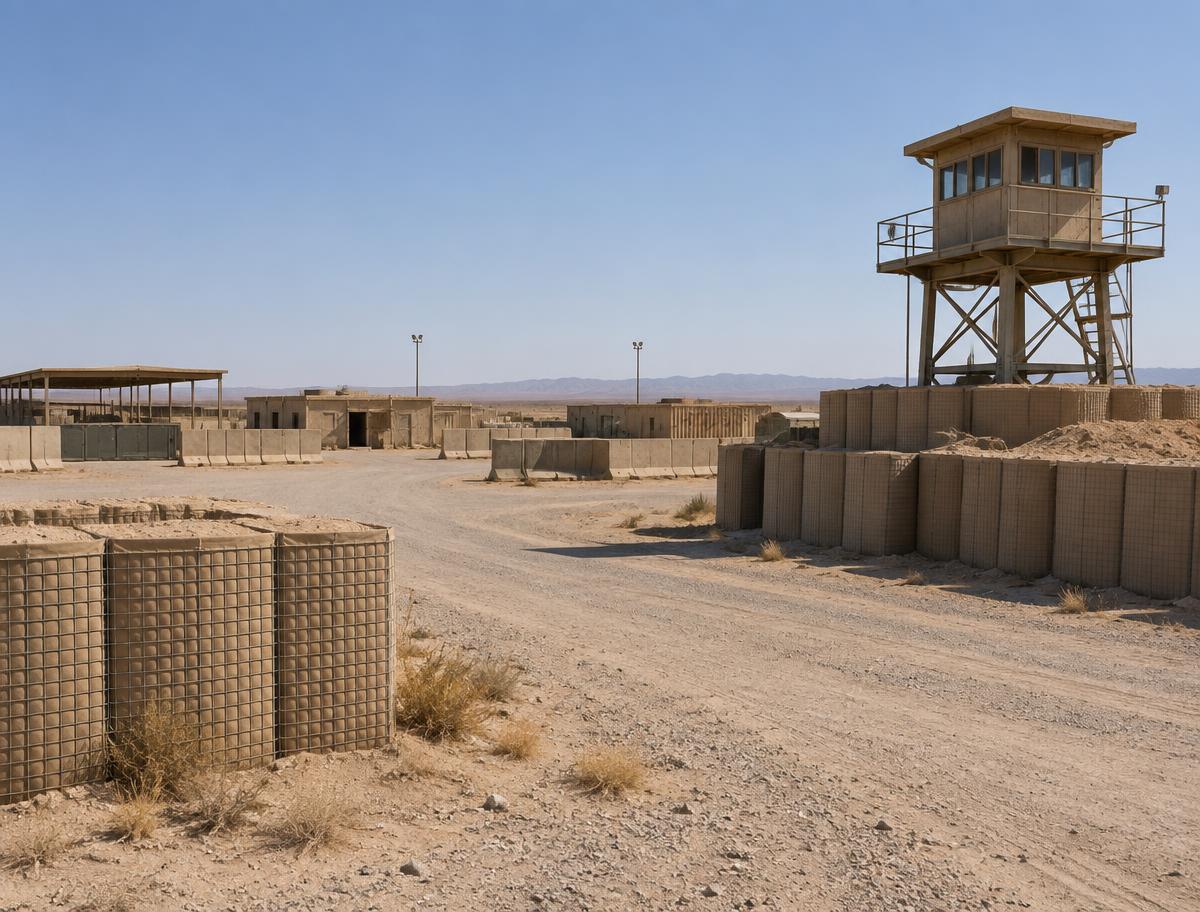
The last American and British troops have left Iraq, bringing to an end a military presence that stretched back more than a decade and closing out the international coalition mission against the Islamic State group.
The final roughly 100 UK personnel departed Irbil, in Iraq’s northern Kurdistan region, in a withdrawal coordinated over recent weeks with US forces, who also left on Wednesday 30 September.
A long-agreed exit
The pullout follows an agreement signed between Washington and Baghdad two years ago to withdraw foreign troops by the end of September 2026. British and American forces had been present in Iraq since 2014, when they joined the international coalition, known as Operation Inherent Resolve, formed to help defeat Islamic State after the militant group seized large swathes of Iraqi and Syrian territory.
Pentagon spokesman Sean Parnell said the coalition’s departure marked “the successful conclusion of the military mission” in Iraq, while the UK Ministry of Defence said Iraqi security forces and the Kurdish Peshmerga had “secured the enduring territorial defeat of Daesh in Iraq” and were now positioned to take primary responsibility for the country’s security.
Baghdad marks a ‘day of sovereignty’
Iraqi Prime Minister Ali al-Zaidi said the end of the coalition mission marked “Iraq’s transition to a phase in which it assumes full responsibility for its security and stability,” and the government has designated four “Sovereignty Days” as a national holiday to mark the withdrawal.
The withdrawal, which followed a major reduction of combat troops as far back as 2021, was accelerated under President Trump after being initially set in motion during the Biden administration).
Celebrated by Iran-aligned groups too
The departure was welcomed not only by the Iraqi government and the Pentagon, but also by Iran and Iran-backed armed groups in Iraq, who have long campaigned for the removal of US forces and who characterised the withdrawal as the result of years of pressure on Washington.
Lingering security concerns
The pullout comes against the backdrop of the ongoing US-Iran conflict, which has at times spilled over into Iraq, with Iran-backed militias previously firing on US positions and the US striking militia strongholds in response. Some Iraqis, particularly in the Kurdish region, have expressed concern that the departure of US forces could allow a resurgence of Islamic State activity, or embolden Iran-aligned militias that the Baghdad government has so far had little success disarming.
What happens next
Iraqi forces now carry sole responsibility for internal security without a coalition military presence on the ground, a transition officials in Baghdad have presented as a sign of growing national strength. Whether that transition holds will depend on the capability of Iraqi security forces to contain any resurgence of Islamic State activity and to manage the influence of Iran-backed militias in the absence of US troops.
Two decades of US presence
US forces first entered Iraq in the 2003 invasion that toppled Saddam Hussein, beginning a military presence that, aside from a brief full withdrawal between 2011 and 2014, lasted more than two decades. American troops returned in 2014 at the invitation of the Iraqi government after Islamic State militants seized Mosul and large areas of northern and western Iraq, prompting the formation of the US-led coalition, Operation Inherent Resolve, which eventually grew to include dozens of partner nations providing military, logistical and training support.
The coalition's campaign helped Iraqi forces retake Mosul in 2017 after a gruelling nine-month battle and ultimately drove Islamic State from its remaining territorial strongholds by the end of that year, though the group continued to mount insurgent attacks from remote areas for years afterward.
The road to withdrawal
Pressure for a full US withdrawal built steadily over subsequent years, driven both by Iraqi domestic politics, where many political factions demanded an end to foreign military presence, and by periodic flashpoints such as the 2020 US drone strike that killed Iranian general Qassem Soleimani near Baghdad airport, which prompted the Iraqi parliament to formally vote for the expulsion of foreign troops. Negotiations over the terms and timeline of withdrawal continued across multiple US administrations before the final agreement, signed two years ago, set the end-of-September 2026 deadline that has now been met.
Concerns over Islamic State resurgence
Despite its territorial defeat, Islamic State has continued to carry out sporadic attacks in parts of Iraq and neighbouring Syria, and counter-terrorism officials have repeatedly warned that the group retains the capacity to regroup if security pressure eases. The withdrawal of coalition forces removes a layer of intelligence-sharing, air support and training assistance that Iraqi and Kurdish forces have relied upon, raising questions among some Western security analysts about whether Iraqi forces alone can sustain the gains made against the group in recent years.
Iran's expanding influence
Iran-aligned militias operating within Iraq's official security structure, formally organised under the Popular Mobilisation Forces, have grown steadily more influential in Iraqi politics and security affairs over the past decade, and their welcoming of the US withdrawal reflects a long-standing goal of reducing American influence in the country. Analysts say the departure of coalition troops could further entrench the position of these Iran-aligned factions within Iraq's security apparatus, complicating Baghdad's efforts to maintain an independent foreign policy balanced between Washington and Tehran.
Kurdish concerns
In Iraq's semi-autonomous Kurdistan region, where much of the remaining coalition presence had been concentrated in recent years, officials have expressed particular concern about the security vacuum that could follow the US departure, given the region's history of tension with both Islamic State remnants and the federal government in Baghdad over disputed territories and oil revenues.
What happens next
Iraqi officials have pledged that national security forces and the Kurdish Peshmerga are ready to assume full responsibility, and the government's designation of commemorative 'Sovereignty Days' reflects its desire to present the withdrawal as a milestone of national strength rather than a source of vulnerability. Whether that confidence is borne out will depend heavily on how Iraqi forces perform without coalition support in the months ahead, particularly if Islamic State attempts to exploit the changed security landscape.


