
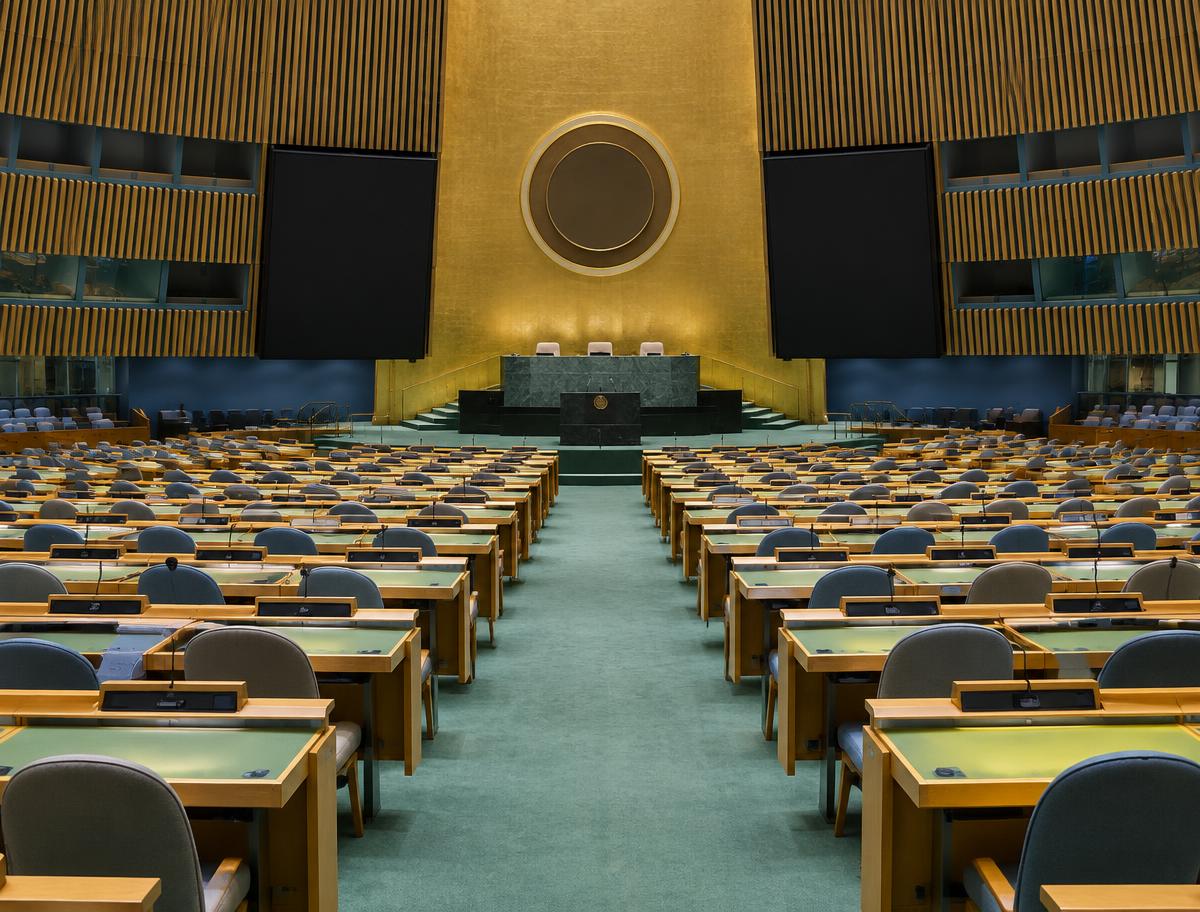
The UN General Assembly met on 1 October to debate a Security Council veto cast by China and Russia that blocked a US-backed panel of experts set up to monitor sanctions related to Iran’s nuclear facilities.
The session was convened automatically under a procedure adopted by the Assembly in 2022, which requires the 193-member body to meet within ten working days of any veto cast in the Security Council, giving all UN member states a chance to scrutinise and respond to the use of the veto even though they cannot overturn it.
How the veto works
Under the UN Charter, the Security Council’s five permanent members, China, France, Russia, the United Kingdom and the United States, each hold the power to block any substantive resolution with a single vote, regardless of how the other members vote. The arrangement dates back to the Council’s creation after the Second World War and has long been criticised by many states as giving a small number of powers outsized influence over international peace and security issues.
The veto that triggered the debate
China and Russia used their vetoes to block a US-backed proposal to establish a panel of experts tasked with monitoring sanctions connected to Iran’s nuclear facilities, reflecting continuing divisions among permanent members over how to handle Iran’s nuclear programme. The dispute follows years of tension over Iran’s nuclear activities, including the breakdown of the 2015 nuclear deal and subsequent efforts, including at the Security Council, to restore some form of international oversight.
The Assembly debate
During the debate, Assembly President Khalilur Rahman told member states that the veto-initiative process cannot substitute for effective action by the Security Council itself, underlining that the Assembly’s role is to scrutinise rather than override a veto. Member states used the session to set out their positions on both the veto itself and the broader question of Security Council reform.
Calls for reform
Many UN member states have for years called for curbing or abolishing the veto, particularly in cases involving mass atrocities, and for expanding the Council’s permanent membership to better reflect the modern world, including greater representation for Africa, Latin America and Asia. Proposals for reform have repeatedly stalled, in part because any change to the Council’s composition or powers would itself require approval from the current permanent members.
The background on Iran’s nuclear programme
Iran’s nuclear activities have been a source of international tension for two decades, culminating in the 2015 Joint Comprehensive Plan of Action, under which Iran agreed to curb its nuclear programme in exchange for sanctions relief. The United States withdrew from that agreement in 2018 and reimposed sanctions, and Iran subsequently scaled back its compliance with the deal’s restrictions, leading to renewed concern among Western governments about the pace of its uranium enrichment.
The panel of experts that China and Russia vetoed was intended to monitor compliance with sanctions measures connected to Iran’s nuclear and missile activities, in a role similar to expert panels that monitor sanctions regimes elsewhere, such as North Korea. Its blocking leaves a gap in independent, UN-mandated oversight of the sanctions regime at a time when diplomatic efforts to revive a broader nuclear agreement with Iran remain stalled.
The 2022 veto-initiative procedure
The mechanism that triggered this week’s debate was introduced following Russia’s veto of a resolution condemning its invasion of Ukraine, after frustration grew among member states that the Security Council could be paralysed by a veto with no formal mechanism for wider accountability. Since its adoption, the procedure has been invoked numerous times, turning the General Assembly into a regular forum for permanent members to explain their use of the veto, even though the Assembly cannot compel any change in the underlying decision.
What happens next
The veto-initiative mechanism does not change the outcome of the original vote: the sanctions panel on Iran’s nuclear facilities remains blocked. Diplomats say the debate nonetheless keeps pressure on the Council’s permanent members by putting their use of the veto on public record before the wider Assembly, and discussions on broader Security Council reform are expected to continue in UN bodies in the coming months, though without any set timetable for an agreed outcome.
Some diplomats have also floated narrower reforms, such as a voluntary pledge by permanent members not to use the veto in cases of mass atrocity crimes, an idea that has gained support from dozens of states but has not been adopted by all five permanent members.


