
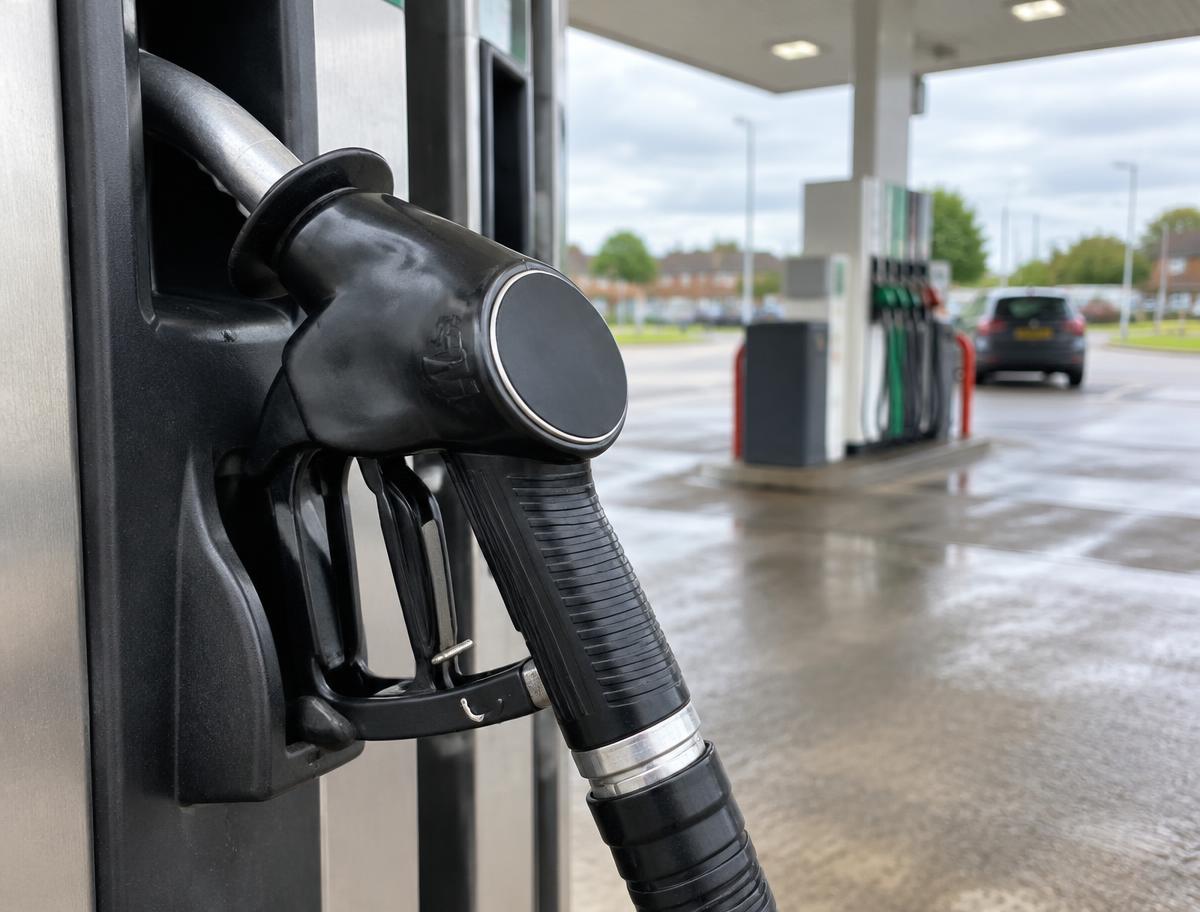
The average price of diesel at UK filling stations has broken through £2 a litre for the first time, as the fallout from the conflict in the Middle East continues to push up the cost of fuel for motorists and businesses.
The RAC said diesel reached an average of 200.01p a litre, with petrol also climbing to 174.71p a litre, in what the motoring organisation described as a price threshold “no-one wanted to cross”.
Why prices have surged
Over the past seven months, the war involving the United States, Israel and Iran has severely disrupted the production and transport of wholesale oil and refined fuel products from the region, driving prices higher. The conflict effectively closed the Strait of Hormuz, one of the world’s most important routes for shipping oil, liquefied natural gas and other commodities, limiting global supplies at a critical bottleneck.
Before the war began, Brent crude, the global benchmark for oil prices, was trading at around $73 a barrel. It peaked at about $120 a barrel in April, before falling back in June when the US and Iran agreed a framework deal to end the fighting, then rising again as tensions resurfaced; it currently sits at around $100 a barrel.
Russia’s export ban on diesel, introduced after Ukrainian attacks on its refineries, has added further pressure on global supply, while reports that the suspension of Saudi Arabia’s East-West pipeline has tightened markets further. Analysts estimate that every $10 rise in the price of a barrel of oil adds roughly 7p to the price of a litre of fuel at UK pumps.
The cost to drivers
RAC head of policy Simon Williams said the cost of filling an average family car with diesel was now £110, almost £32 more than at the start of the US-Iran war, while filling a typical petrol car now costs £96.09, up £23.03 over the same period. For an average 45mpg diesel car, Mr Williams said the fuel cost now works out at around 20p a mile, meaning a driver covering 10,000 miles a year is spending roughly £2,020 on diesel alone.
He warned the rising costs would be “very challenging” for households and businesses that depend heavily on driving, including commuters, haulage firms, delivery companies and fleet operators, who may have little choice but to pass the extra costs on to customers.
A record beaten
The previous high for diesel prices was 199.09p a litre, recorded in June 2022 in the aftermath of Russia’s full-scale invasion of Ukraine. The latest record has already surpassed that level, with the RAC warning prices were showing no sign of slowing.
Adding to the uncertainty, US President Donald Trump has floated the possibility of banning American diesel producers from exporting fuel overseas, a move that analysts say could push UK prices even higher if implemented. The UK government has reportedly held talks with allies including Germany, France, Italy and Ireland about releasing emergency diesel stockpiles to ease the pressure on prices.
What happens next
Industry trackers including PetrolPrices have urged ministers to review planned increases to fuel duty due to take effect from 2027, arguing that further rises would compound the pressure already facing drivers. A temporary 5p-a-litre cut to fuel duty has been extended until the end of December 2026, with the main rate due to rise by 3p from January 2027 and a further 2p from March 2027 under current policy. Much now depends on developments in the Middle East, with further escalation likely to push prices higher still, while any durable ceasefire could ease the pressure on pump prices in the months ahead.
How fuel prices are built up
The price drivers pay at the pump is made up of several components: the wholesale cost of crude oil and refined fuel, refining and distribution costs, retailer margins, fuel duty and VAT. Because fuel duty is charged at a fixed rate per litre rather than as a percentage, and VAT is charged on the combined total including duty, a rise in wholesale prices has an amplified effect on the final pump price, since motorists end up paying VAT on the higher duty-inclusive cost as well as the underlying increase itself.
This structure means that even modest swings in global oil markets can translate into more noticeable changes at UK filling stations than might first appear, particularly when, as now, a conflict disrupts both the physical supply of oil and the shipping routes used to move it to refineries and onward to consumers.
The Strait of Hormuz bottleneck
The Strait of Hormuz, a narrow channel between Iran and Oman, is one of the most strategically significant waterways in global energy markets, with roughly a fifth of the world’s oil and a substantial share of its liquefied natural gas passing through it on any given day. Any disruption to shipping through the strait, whether from military activity, mining or the threat of attacks on tankers, tends to have an outsized effect on global energy prices because so much supply depends on that single route, with few practical alternatives able to carry anything close to the same volume.
The conflict’s effective closure of large parts of the strait to commercial shipping earlier this year removed a significant share of global oil supply from the market almost overnight, a shock that rippled through prices even in countries, like the UK, that do not themselves import large volumes of oil directly from the Gulf, because oil is traded on integrated global markets rather than purely on a bilateral basis.
Impact beyond the forecourt
Rising diesel costs affect far more than private motorists. Diesel remains the dominant fuel for heavy goods vehicles, buses, agricultural machinery and much of the UK’s haulage industry, meaning higher pump prices tend to feed through into the cost of transporting food, retail goods and other supplies around the country. Economists have warned that sustained increases in diesel prices risk adding to broader inflationary pressure, since higher transport costs are often passed on, at least in part, to consumers through the prices of everyday goods.
Haulage industry groups have previously called on the government to consider further support for operators facing high fuel costs, warning that smaller firms with thin margins are particularly exposed to sudden spikes of the kind seen over the past year.
Government options and constraints
The UK government has limited direct levers over global oil prices, which are set by international markets rather than domestic policy. Its main tools are fuel duty, which it can choose to freeze, cut or raise, and diplomatic engagement aimed at reducing the underlying causes of market disruption, including working with allies on contingency plans such as releasing strategic fuel reserves. Fuel duty has been frozen or temporarily cut in various forms since 2011, a policy successive governments have maintained partly because of the political sensitivity of pump prices for voters.
Historical comparisons
The previous record for diesel prices, reached in June 2022, came in the aftermath of Russia’s full-scale invasion of Ukraine, which similarly disrupted global energy markets by removing a major oil and gas exporter from normal international trade. That episode eventually eased as alternative supplies were found and markets adjusted, offering a partial precedent for how today’s record prices might, in time, also recede if the current conflict de-escalates, though the timing and extent of any such recovery remain uncertain while hostilities in the Middle East continue.


