
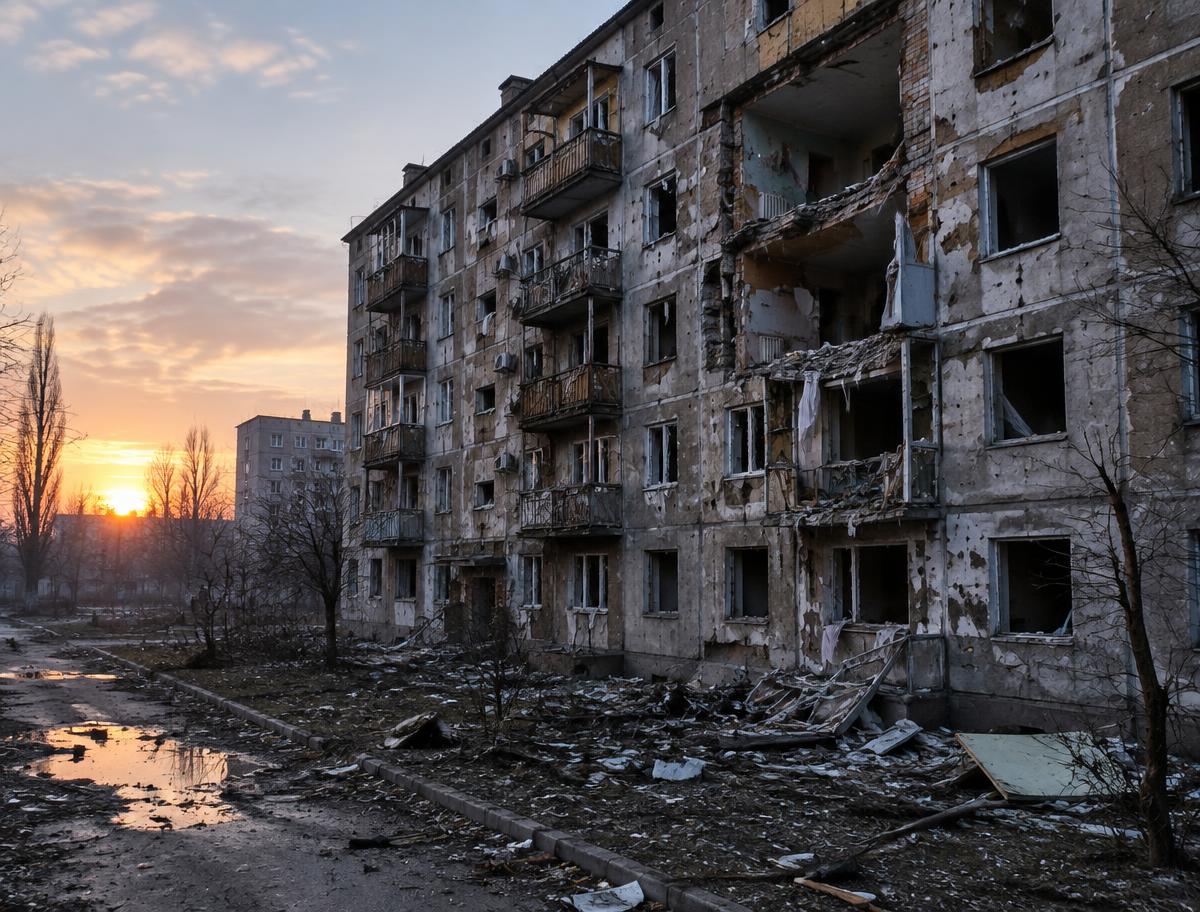
The United Nations’ top human rights official has warned that civilian casualties in Ukraine rose by 55% in the first eight months of 2026 compared with the same period a year earlier, as Russian aerial attacks on cities and energy infrastructure intensified.
UN High Commissioner for Human Rights Volker Türk told the Human Rights Council that his office had verified 15,280 civilians killed or injured between January and August this year, a figure he described as reflecting one of the deadliest periods of the war for people away from the front line.
Glide bombs and mounting toll
Türk said glide bombs, cheap and highly destructive munitions dropped from aircraft, accounted for nearly 2,500 of those civilian casualties. His office has repeatedly documented their use against towns and cities close to the contact line, where they often fall with little warning.
Verification of casualties by the UN takes time and depends on access to affected areas, meaning the confirmed total is generally considered a minimum rather than a complete count of everyone killed or hurt. Independent journalists and humanitarian agencies operating in Ukraine have separately reported a sharp rise in strikes on residential areas and infrastructure this year.
Attacks on energy infrastructure
Much of the increase in harm to civilians has coincided with renewed Russian strikes on power stations, substations and heating infrastructure, which Ukrainian officials say are aimed at crippling the country before winter. Such attacks do not only kill or injure people directly; they also cut off electricity, heating, water pumping and hospital services for large numbers of residents, compounding the toll in ways that are harder to capture in casualty figures alone.
Türk said the approach of the cold season made the protection of energy infrastructure and essential services an urgent humanitarian priority, warning that further attacks risked a repeat of last winter’s hardship, when millions of Ukrainians went without reliable power or heating for extended periods.
A call for de-escalation
In his address, Türk urged what he called a decisive shift toward de-escalation, including an end to strikes on energy facilities, local ceasefires in areas of intense fighting, and a comprehensive exchange of prisoners held by both sides. These were presented as recommendations from the UN human rights chief rather than steps that Russia or Ukraine have agreed to take.
The war, which began with Russia’s full-scale invasion in February 2022, has ground on for more than four years, with periodic spikes in intensity. Diplomatic efforts to secure a lasting ceasefire have repeatedly stalled, even as various countries have floated partial truce proposals covering energy infrastructure and Black Sea shipping.
What happens next
Türk’s office will continue to track civilian casualties as the conflict continues, with its figures likely to be cited by diplomats pushing for a negotiated end to the fighting. The immediate question for humanitarian agencies is whether renewed international pressure can translate into real protection for civilians and infrastructure before the depths of winter, rather than simply adding to a long list of unheeded appeals.
How the UN verifies casualty figures
The UN Human Rights Monitoring Mission in Ukraine has operated since the early stages of the conflict following Russia’s annexation of Crimea in 2014, and has developed a rigorous methodology for verifying individual casualty reports, typically requiring multiple independent sources before a death or injury is included in official figures. This cautious approach means the verified totals released by Türk’s office are widely regarded by researchers and diplomats as a conservative baseline, with the true toll considered likely to be higher, particularly in areas under active fighting or occupation where access for monitors is severely restricted or impossible.
Glide bombs and the changing character of strikes
Glide bombs, essentially unguided or lightly guided bombs fitted with wings and simple guidance systems to extend their range, have become a signature weapon of Russia’s aerial campaign in Ukraine, prized by Russian forces for their relatively low cost compared with precision-guided missiles. Their comparative inaccuracy, however, means they are more likely to cause civilian casualties when used against targets near populated areas, a pattern that has drawn repeated condemnation from human rights monitors and Ukrainian officials alike.
The humanitarian toll of energy strikes
Strikes on energy infrastructure carry consequences that extend well beyond the immediate casualties they cause. Loss of electricity disrupts water pumping and treatment, heating systems, hospital equipment, and communications networks, compounding hardship for civilian populations in ways that can be difficult to quantify through casualty statistics alone. Previous winters of the war have seen millions of Ukrainians endure extended rolling blackouts as the country’s energy operators worked to repair damaged infrastructure even as further strikes continued.
International legal context
Deliberate attacks on civilian infrastructure not serving a clear military purpose, and attacks that fail to distinguish adequately between military and civilian targets, can amount to violations of international humanitarian law, which requires parties to a conflict to take precautions to minimise harm to civilians. The International Criminal Court has previously issued arrest warrants related to the war in Ukraine, including over the unlawful deportation of children, though enforcement of such warrants remains limited given Russia’s non-cooperation with the court.
Diplomatic efforts and their limits
Various proposals for partial ceasefires covering energy infrastructure and Black Sea shipping have been floated by international mediators at different points in the conflict, with mixed and often short-lived success in practice. Türk’s call for a comprehensive prisoner exchange and local ceasefires reflects a broader pattern of human rights officials using public statements to press for incremental humanitarian steps even where a full ceasefire or peace settlement remains elusive.
The season ahead
With winter approaching, humanitarian organisations and UN officials alike have repeatedly stressed that the coming months are likely to prove a critical test of both Ukraine’s resilience and the willingness of combatants to spare civilian infrastructure from further attack, a concern that runs through Türk’s latest intervention and is likely to feature prominently in diplomatic discussions over the war in the weeks ahead.


