
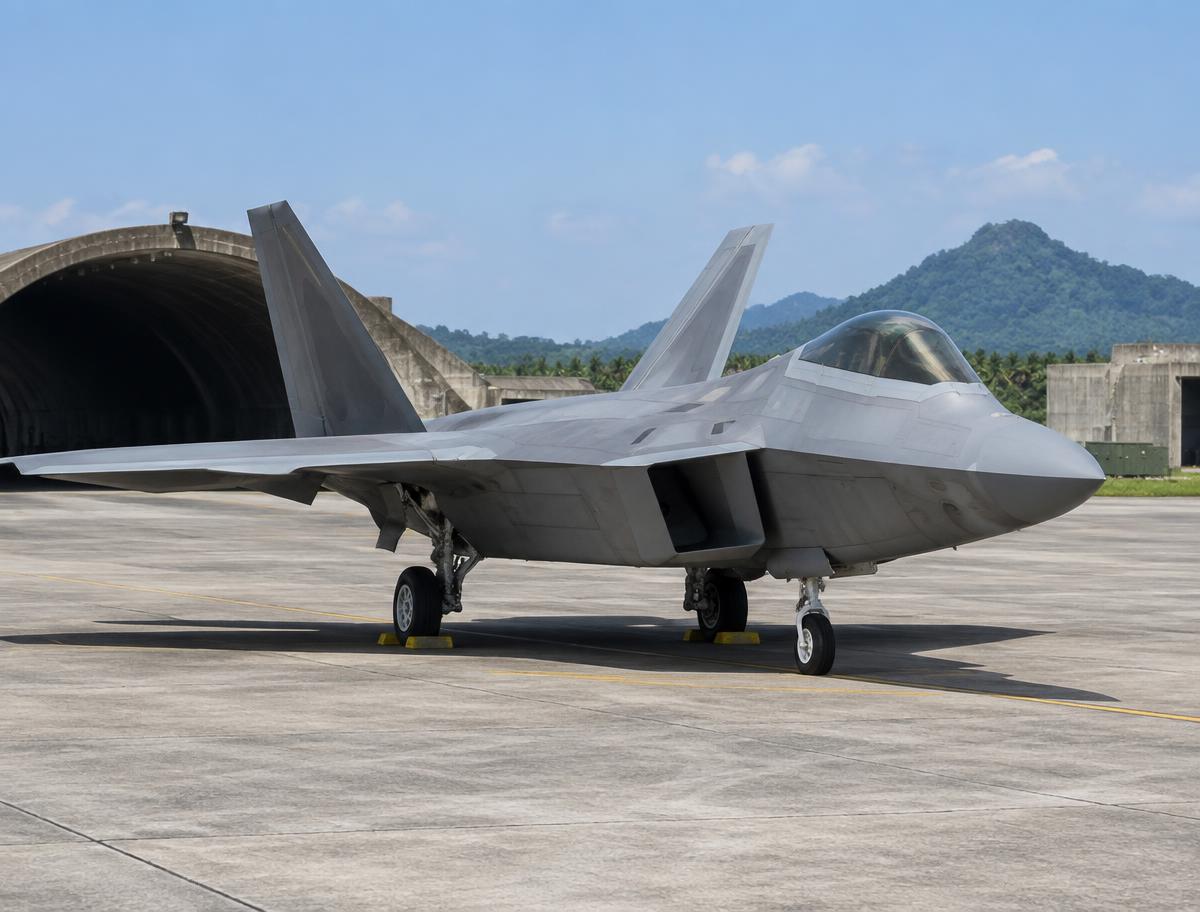
Taiwan has received its first two F-16V Block 70 fighter jets from the United States, the initial delivery from a long-delayed $8 billion order for 66 of the advanced aircraft, as the island continues to build up its defences amid sustained military pressure from China.
The jets landed at Chihhang Air Base in Taitung on Taiwan’s east coast, according to Al Jazeera, marking a milestone in a programme that was approved during President Donald Trump’s first term in office but has faced repeated delays since.
Years of delay
The order for 66 F-16V jets was agreed in 2019 as part of a broader push by Taiwan to modernise its air force in the face of growing concern over China’s military capabilities and its repeated incursions into Taiwan’s air defence identification zone. The programme has been beset by production and supply chain delays at Lockheed Martin, the manufacturer, meaning the jets are arriving years later than originally planned.
The delivery comes just a week after President Trump met Chinese President Xi Jinping, a meeting that will inevitably be read by observers in Taipei and Beijing for signs of how the US intends to balance its relationship with China against its commitments to Taiwan.
More jets to follow
Taiwan’s Defence Minister Wellington Koo said further aircraft from the order are expected to arrive by the end of the year, suggesting the pace of deliveries should pick up after this initial shipment. The F-16V is the most advanced variant of the F-16 fighter family, featuring an upgraded radar system, modern avionics and improved weapons capability compared with older models already in Taiwan’s fleet.
Taiwan currently operates a mixed fleet of older F-16A/B jets, many of which have already been upgraded to a similar standard under a separate retrofit programme, alongside domestically produced and French-made aircraft. The new F-16Vs are intended to further strengthen the island’s ability to respond to Chinese military activity in the region.
The US-Taiwan-China triangle
Beijing regards Taiwan as part of its territory and has not ruled out the use of force to bring the self-governing island under its control, a position it has reiterated often. China has significantly increased military activity near Taiwan in recent years, including regular incursions by fighter jets and naval vessels, which Taiwanese officials describe as a deliberate campaign of pressure.
The United States does not maintain formal diplomatic relations with Taiwan, having switched recognition to Beijing in 1979, but it is bound under the Taiwan Relations Act to help Taiwan maintain a sufficient self-defence capability. Successive US administrations, including the current one, have continued to approve arms sales to Taiwan, while avoiding explicit commitments about how the US would respond in the event of a Chinese attack, a long-standing policy often referred to as strategic ambiguity.
Reaction and next steps
Beijing has consistently objected to US arms sales to Taiwan, describing them as interference in China’s internal affairs, and has previously announced sanctions against US defence contractors involved in such deals. A formal Chinese response to this delivery had not been reported at the time of writing.
Taiwan’s government is expected to continue pressing for the remaining aircraft in the order to be delivered on schedule, amid broader efforts to boost defence spending and reduce the island’s reliance on any single supplier for military hardware, as concerns about the timeline for a potential Chinese move against Taiwan continue to shape defence planning in Taipei and Washington alike.
Taiwan's air defence modernisation
Taiwan has pursued a sustained programme of military modernisation over the past decade aimed at deterring potential aggression from China, which maintains a vastly larger military and has steadily increased its capacity to project force across the Taiwan Strait. The F-16V order forms part of a broader portfolio of defence acquisitions that has also included upgrades to Taiwan's existing F-16 fleet, submarine development programmes, and investment in asymmetric capabilities such as mobile missile systems designed to complicate any potential Chinese invasion plan.
Why the delays occurred
The lengthy delay in delivering the F-16V order has been attributed to production bottlenecks at Lockheed Martin's manufacturing facilities, compounded by global supply chain disruptions affecting the defence industry more broadly in recent years, as well as competing demands from other international F-16 customers placing orders around the same time. Such delays are not unique to Taiwan's order and have affected deliveries to several other countries purchasing the same aircraft variant, though the strategic stakes attached to Taiwan's acquisition have made the delays a particular source of frustration in Taipei.
Cross-strait tensions
China has significantly intensified military pressure on Taiwan in recent years, including near-daily incursions by fighter jets and naval vessels into airspace and waters close to the island, large-scale military exercises simulating a blockade or invasion, and increasingly assertive rhetoric from Beijing reiterating its claim over Taiwan and its willingness to use force if necessary. Taiwanese officials have characterised this activity as a deliberate campaign of pressure intended to wear down the island's defences and test the resolve of its population and international supporters without crossing the threshold into open conflict.
The US policy of strategic ambiguity
Washington's approach to Taiwan, balancing continued arms sales and informal support against the absence of a formal defence treaty or explicit commitment to intervene militarily in the event of a Chinese attack, has been a consistent feature of US policy since diplomatic recognition shifted to Beijing in 1979. This policy of strategic ambiguity is intended to deter both a Chinese attack on Taiwan and any move by Taipei toward a formal declaration of independence that could trigger such an attack, though debate continues within US policy circles over whether the approach remains the best way to deter conflict as Chinese military capabilities grow.
The Trump-Xi dynamic
The timing of the delivery so soon after a meeting between President Trump and Chinese President Xi Jinping will likely be scrutinised closely by analysts seeking to understand how the broader US-China relationship, encompassing trade, technology competition and regional security, might affect Washington's approach to Taiwan going forward. Previous administrations have sought to manage arms sales to Taiwan carefully to avoid unnecessarily inflaming tensions with Beijing while still meeting commitments under the Taiwan Relations Act.
Taiwan's broader defence strategy
Beyond the F-16V acquisition, Taiwan has increasingly emphasised asymmetric defence capabilities, investing in mobile missile systems, naval mines and other lower-cost systems designed to make any Chinese invasion attempt as costly and difficult as possible, a strategy partly informed by lessons drawn from Russia's invasion of Ukraine and the extended resistance Ukrainian forces have been able to mount against a numerically superior adversary.
What happens next
With Defence Minister Wellington Koo indicating further aircraft are expected before the end of the year, attention will turn to whether the pace of deliveries can be sustained and whether Beijing responds with further military pressure or formal diplomatic protest, a pattern it has followed after previous US arms sales to the island.


